
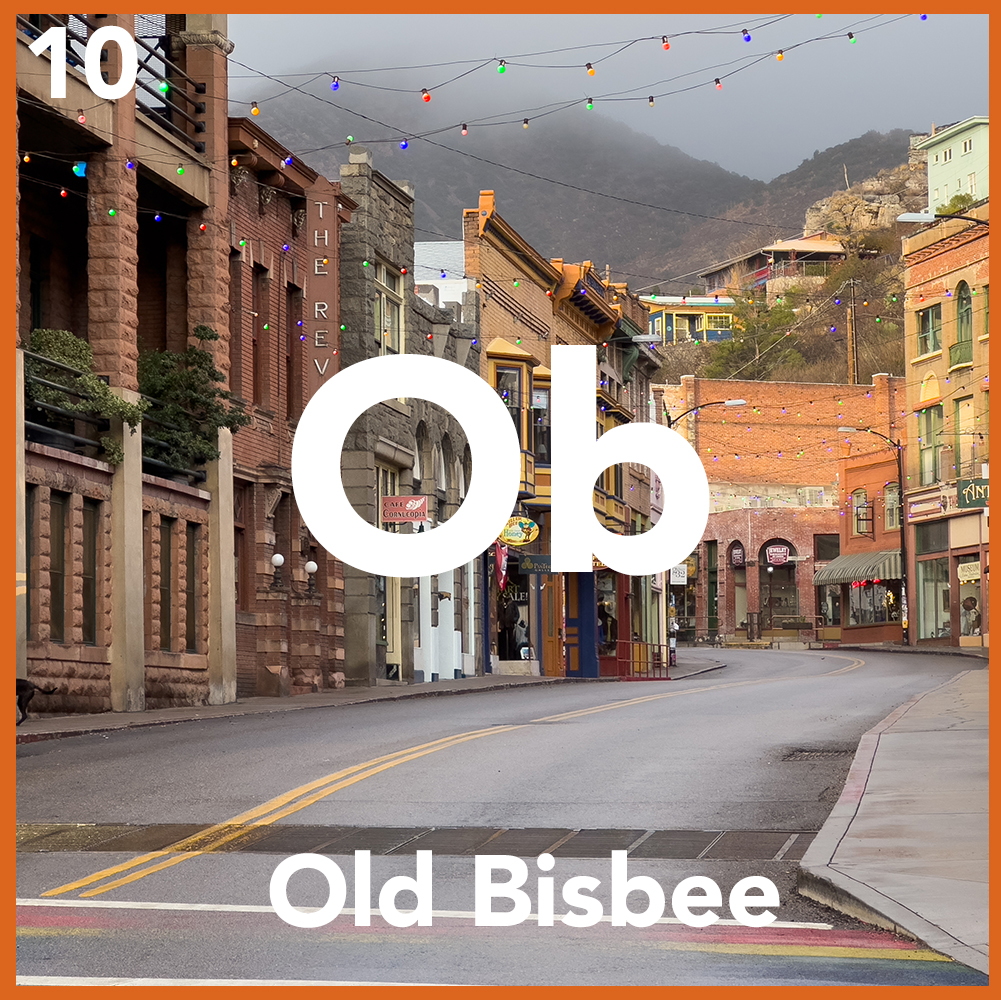
The Vertical Labyrinth: Old Bisbee as the Geologic Heart
If the surrounding districts of Warren and San Jose are the town’s rational extensions, Old Bisbee is its primordial core—a dense, high-velocity cluster of architecture wedged into the narrow throat of Tombstone Canyon. It is a place of precipitous urbanism, where the human desire for shelter has been forced to adapt to the unforgiving verticality of the Mule Mountains.
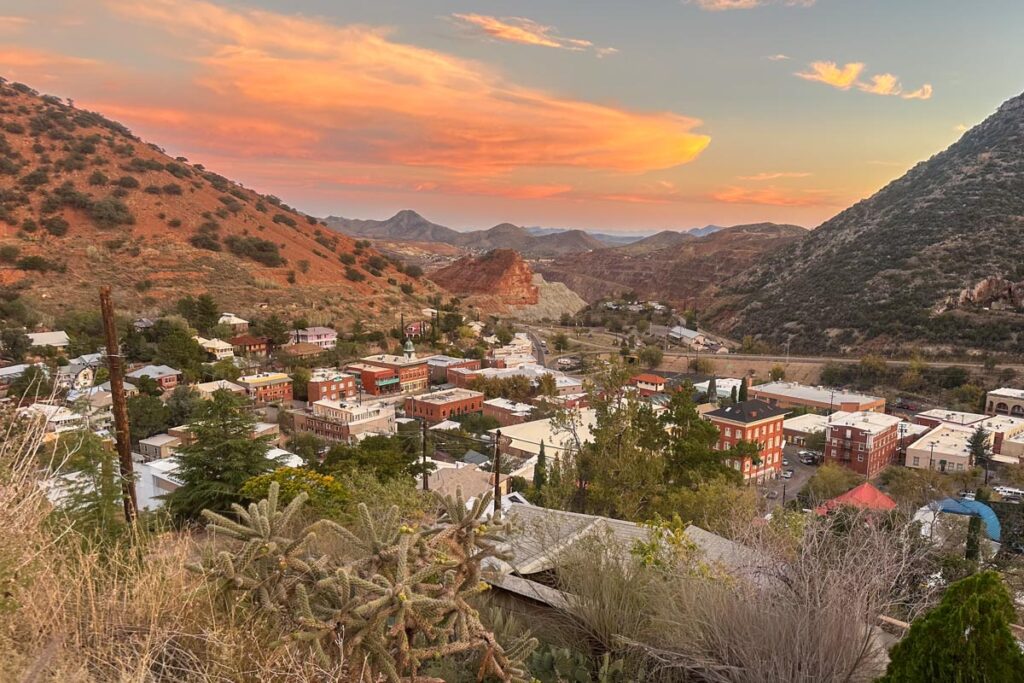
The Topographical Anchor
In the terraced amphitheater of Old Bisbee, the architecture functions as a vertical museum of the industrial ego. Built on the precipitous slopes of Tombstone Canyon, the town is a dense, high-altitude labyrinth where the Victorian impulse toward order has collided with the chaotic geometry of the Mule Mountains.
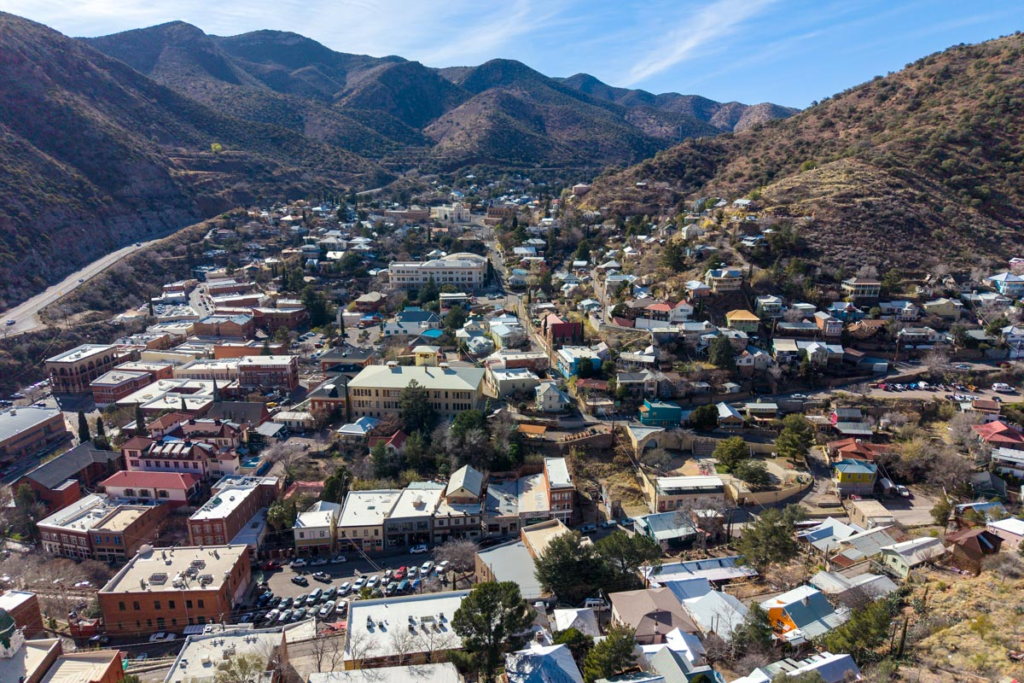
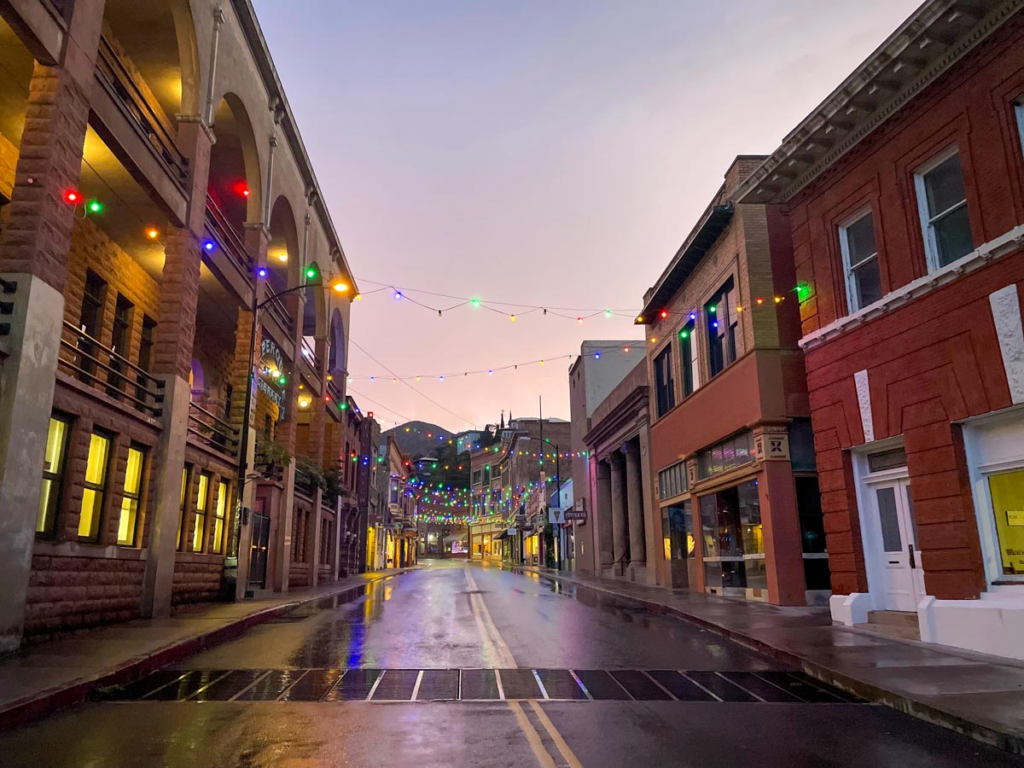
Old Bisbee is situated at the northern apex of the town’s geography, a limestone amphitheater where the elevation begins its dramatic ascent toward the Mule Pass Tunnel. It is the gravitational center of the community, a zone defined by a single, winding artery—Main Street—that follows the natural drainage of the mountain, flanked by monolithic brick structures that block out the desert sun.
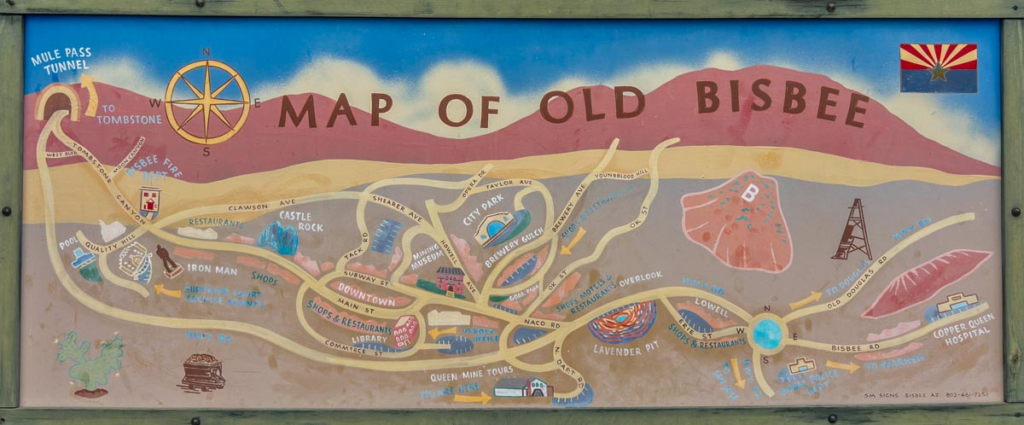
The district sits directly atop the veins of the Copper Queen, creating a psychic tension where the world above is inseparable from the hollowed-out voids below.
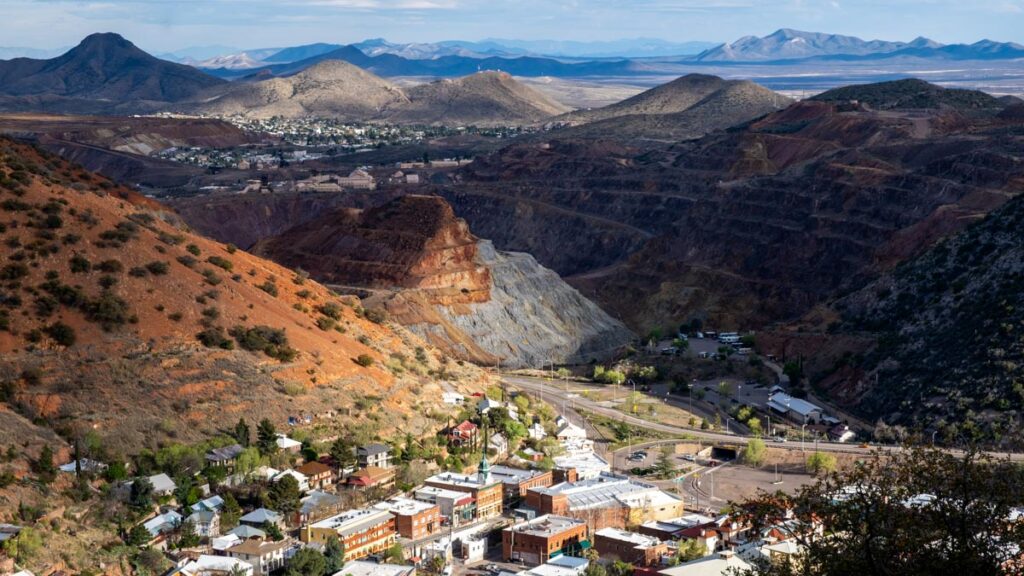
An Architecture of Defiance
The architecture of Old Bisbee is a palimpsest of necessity and ego. Denied the luxury of flat ground, the builders of the late 19th and early 20th centuries created a staircase city.
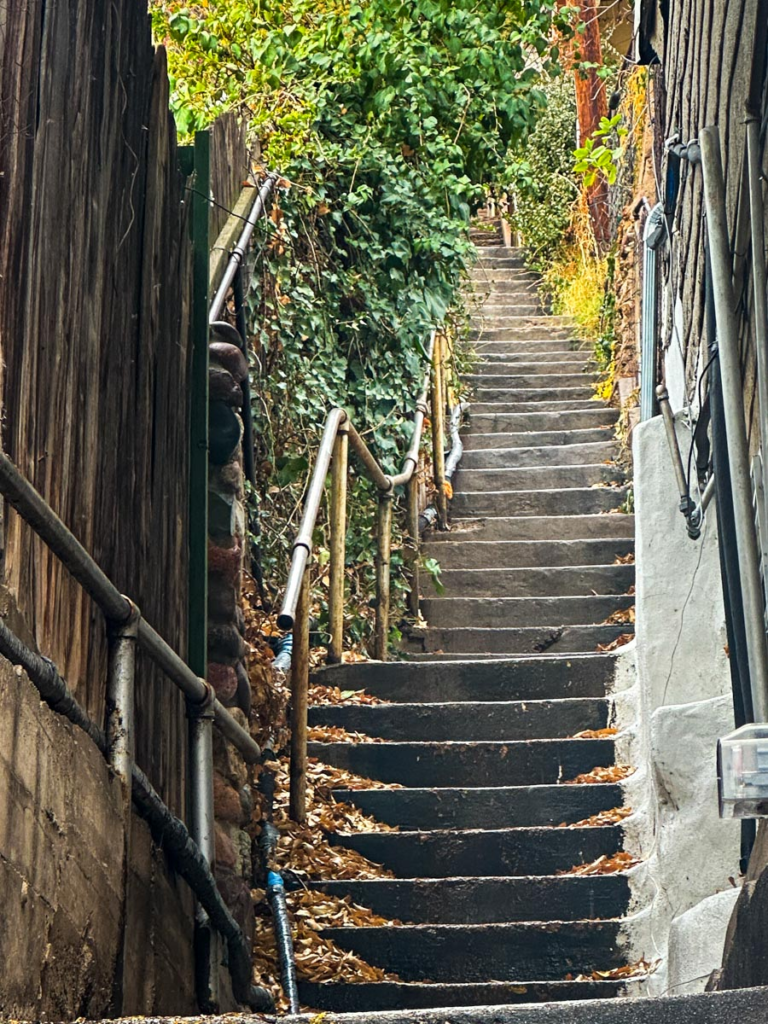
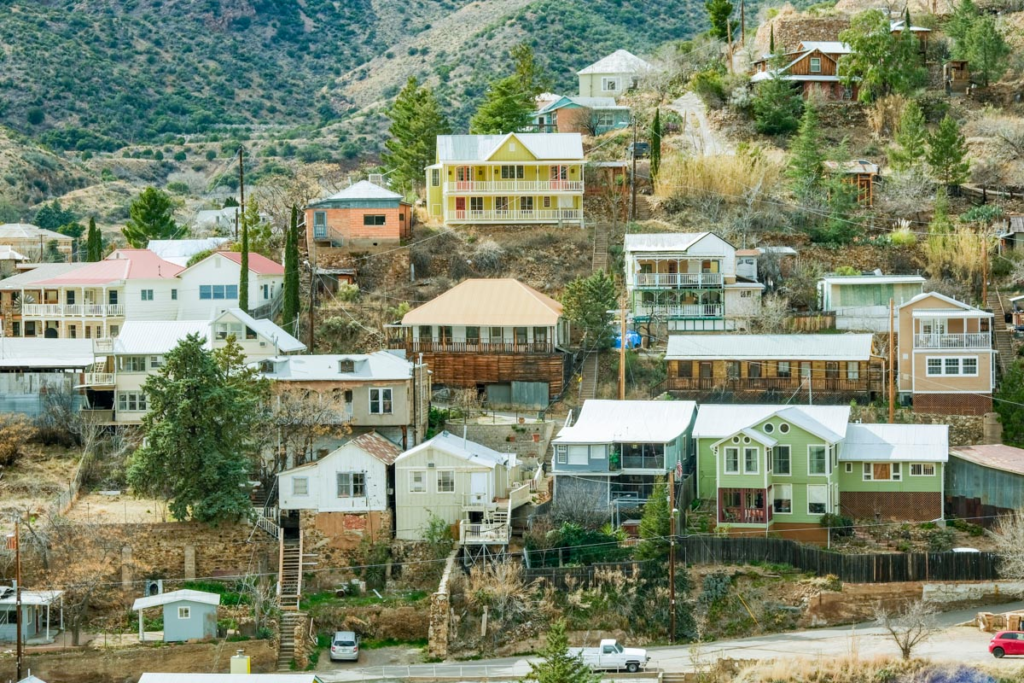
Victorian Verticality
Elegant Queen Anne and Italianate facades cling to the slopes, their foundations often level with the chimneys of the houses below.
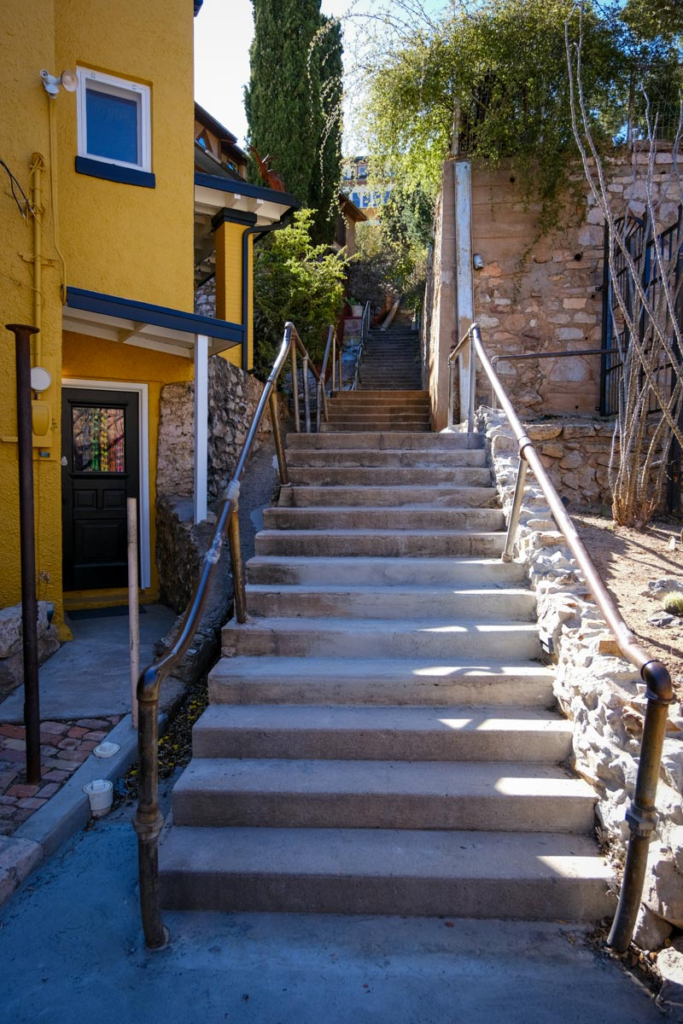
The Concrete Arteries
The district is famously networked by over 3,000 historic stairs, a skeletal system of concrete and stone that replaces traditional streets. These stairs act as the metabolic pathways for residents, turning the act of going home into a feat of climatized endurance.
The Material Contrast
The heavy, permanent masonry of the commercial district contrasts with the fragile, timber-frame miners’ shacks that seem to drift like flotsam up the canyon walls.
The Psychic Center
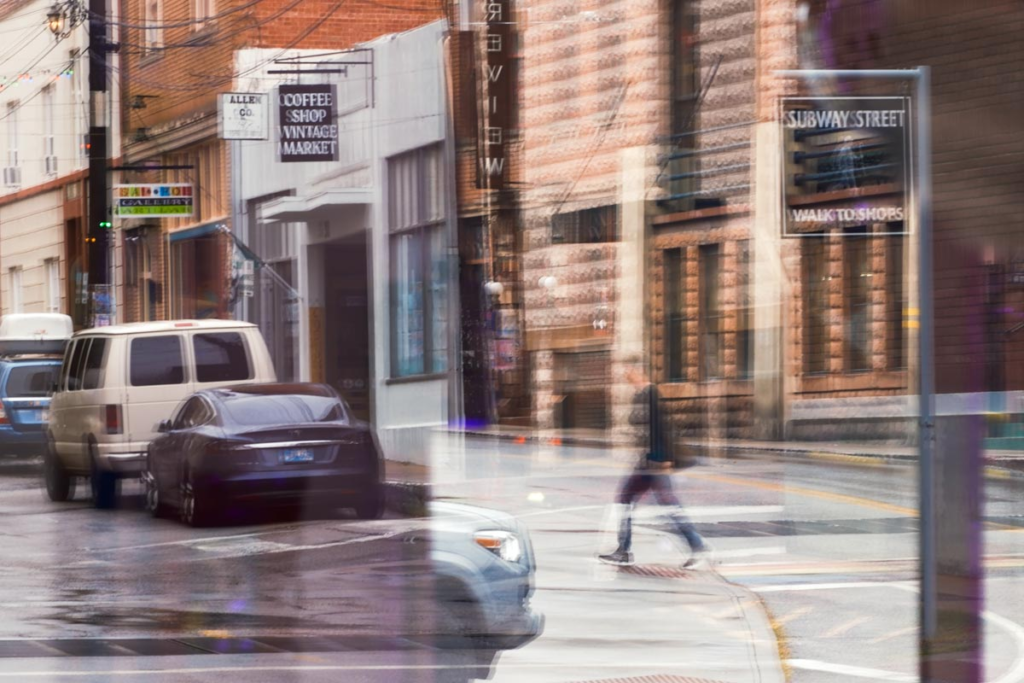
Old Bisbee remains the metabolic heart because it is where the town’s conflicting identities—industrial ghost and bohemian enclave—most violently intersect. It is here that the museums, galleries, and bars are concentrated, creating a high-density theater of human interaction. To walk these streets is to experience a displacement of scale, where the mountains loom as permanent spectators to the flickering light of the art galleries below.
Navigating the Core
- The Landmark: Start at Copper Queen Plaza, the geographic zero-point where the canyon splits.
- The Experience: Wander up Brewery Gulch, once the “wickedest street in the West,” to see the oxidized ruins of the town’s nocturnal economy.
- The Ascent: Take any concrete staircase upward for a panoramic view of the town’s geometric density and the distant rim of the Lavender Pit.