

The Termite Architecture: Miners’ Shacks as Industrial Debris
In the precipitous canyons of the Mule Mountains, the miners’ shacks of Bisbee represent a failed geometry—a frantic, high-altitude sprawl of timber and tin that suggests a biological colonization of the cliffs rather than a planned urbanism.
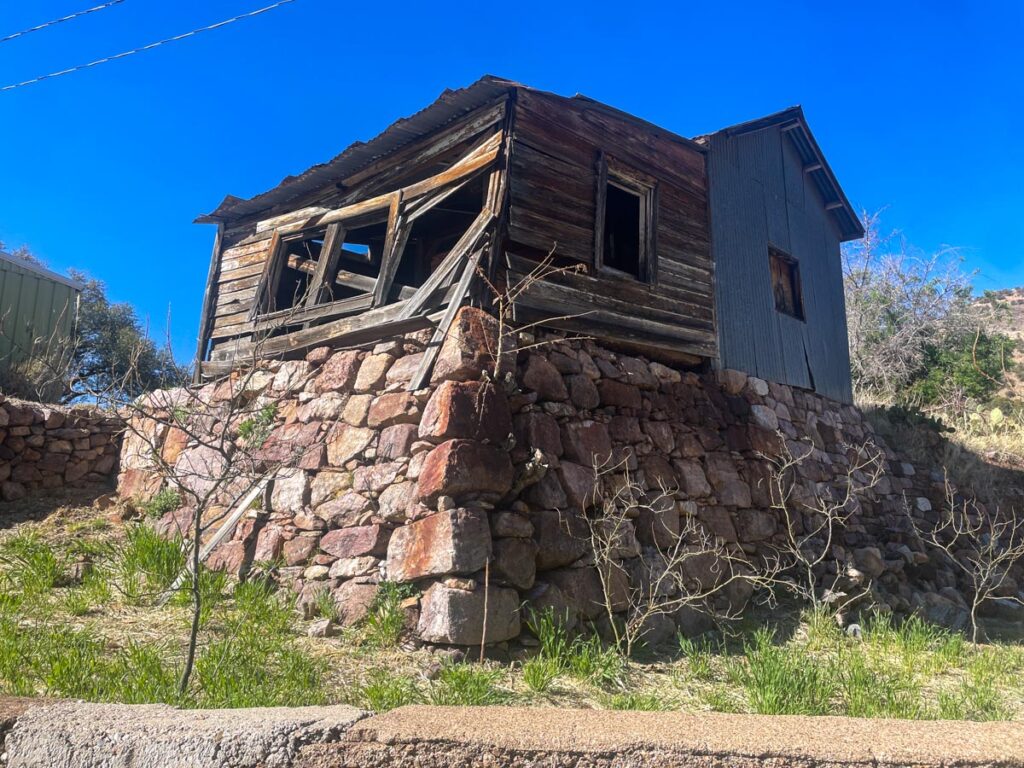
These dwellings are the primary cellular units of a town built on the logic of extraction, existing as a precarious residential crust stretched over the subterranean vaults of the Copper Queen.
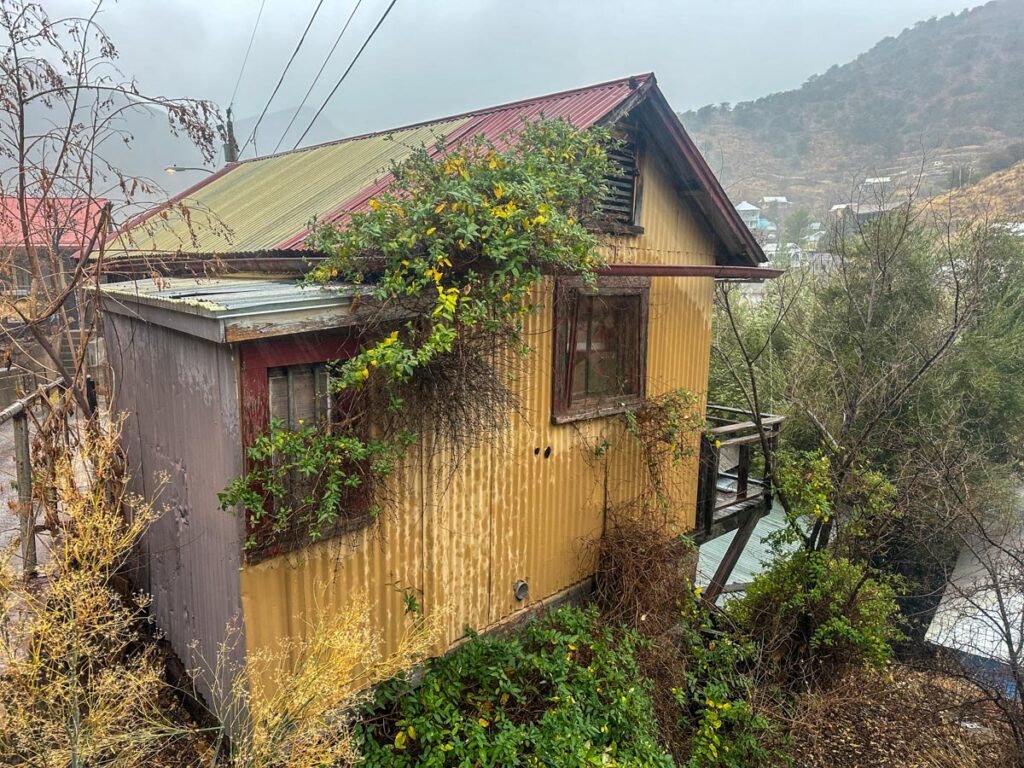
The Anatomy of the Vertical Cell
Built between the late 1800s and the 1920s, these shacks were never intended for permanence. They were transient modules designed to house the human machinery of the Phelps Dodge Corporation. Their design is a vernacular of scarcity.
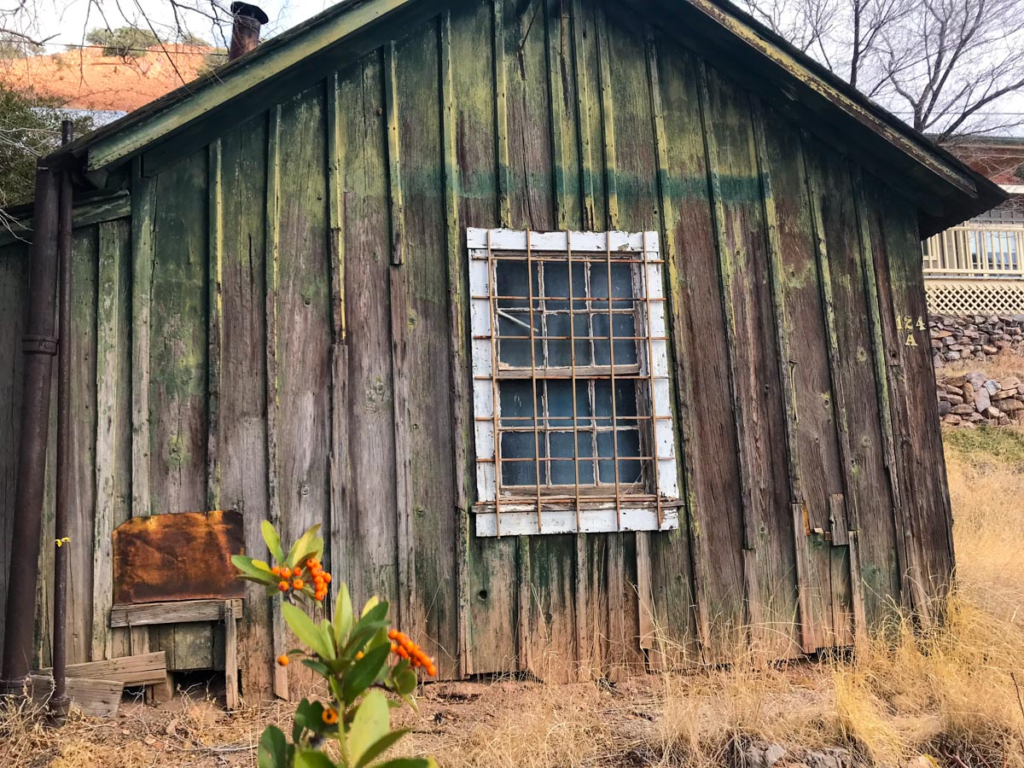
The Material Palimpsest
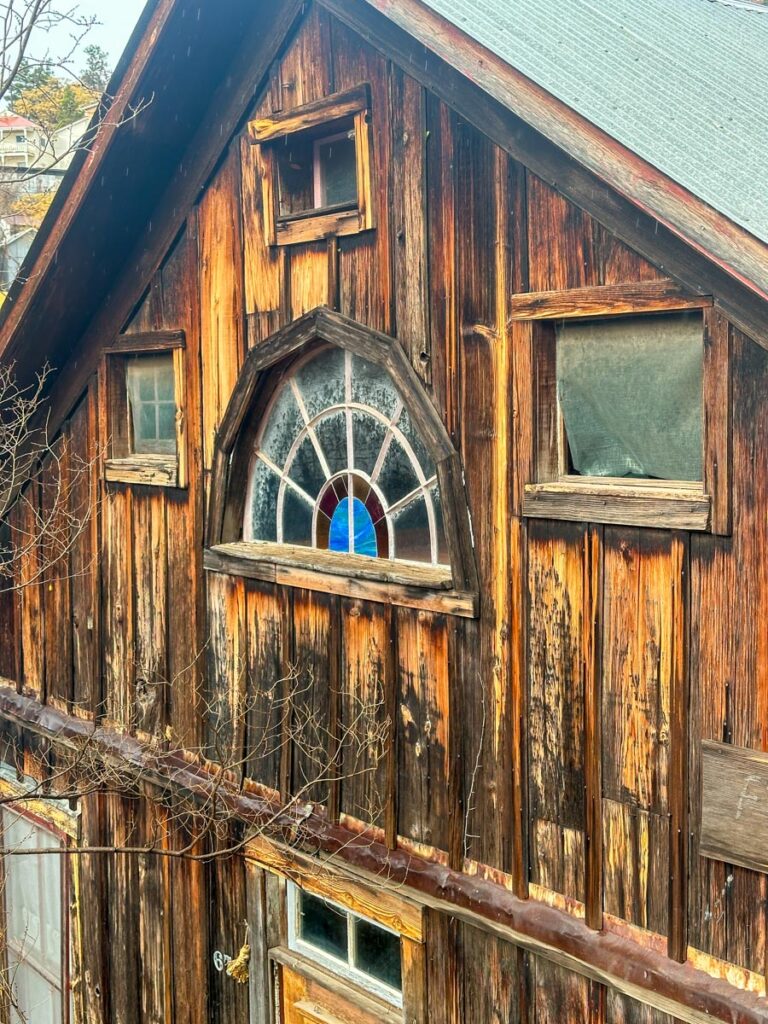
Constructed from untreated timber, corrugated iron, and stone-rubble, many shacks were assembled using reclaimed lumber from the mines themselves. They are architectural parasites, feeding on the industrial waste of the very mountain they cling to.
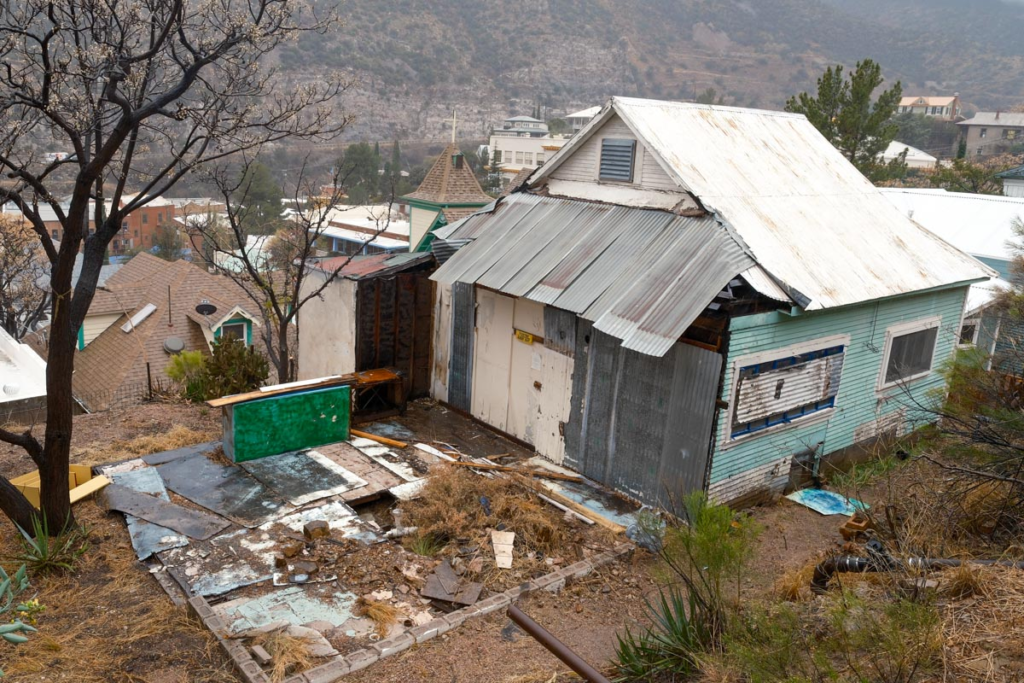
The Gravity-Defying Grid
Because the canyon floor was reserved for commerce, the workers were forced into a vertical exile. The shacks utilize minimal foundations, often propped up by unstable timber stilts that create a hallucinatory tilt.
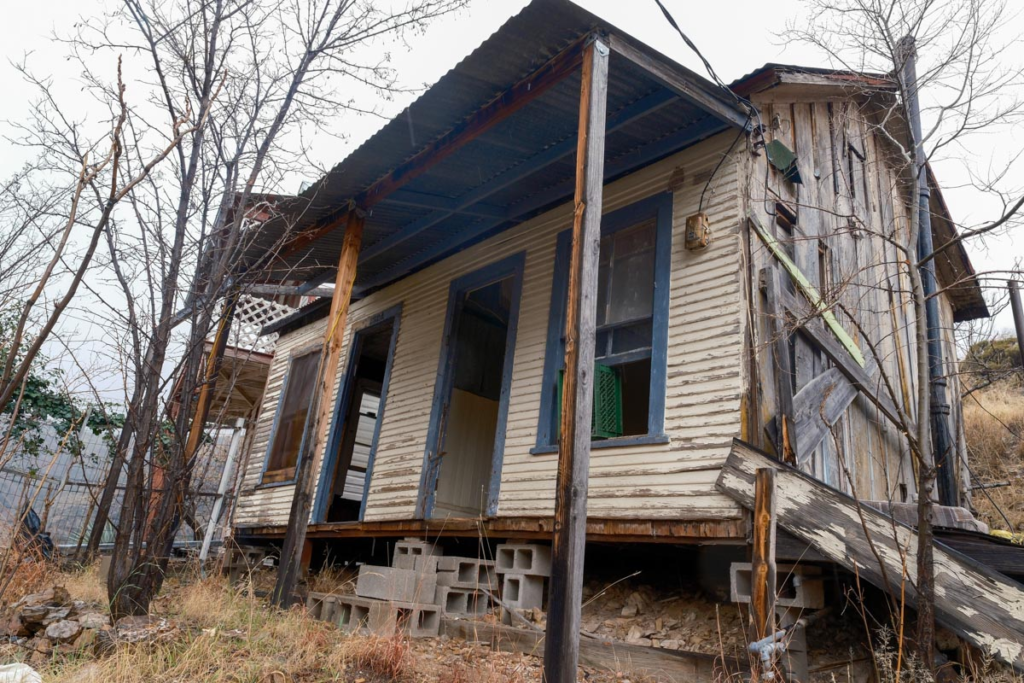
The Porch as Metabolic Lung
In these narrow, windowless cells, the front porch became the only habitable zone. It served as an observation deck overlooking the industrial trauma of the pits, a liminal space where the miner could momentarily escape the claustrophobia of the shaft.
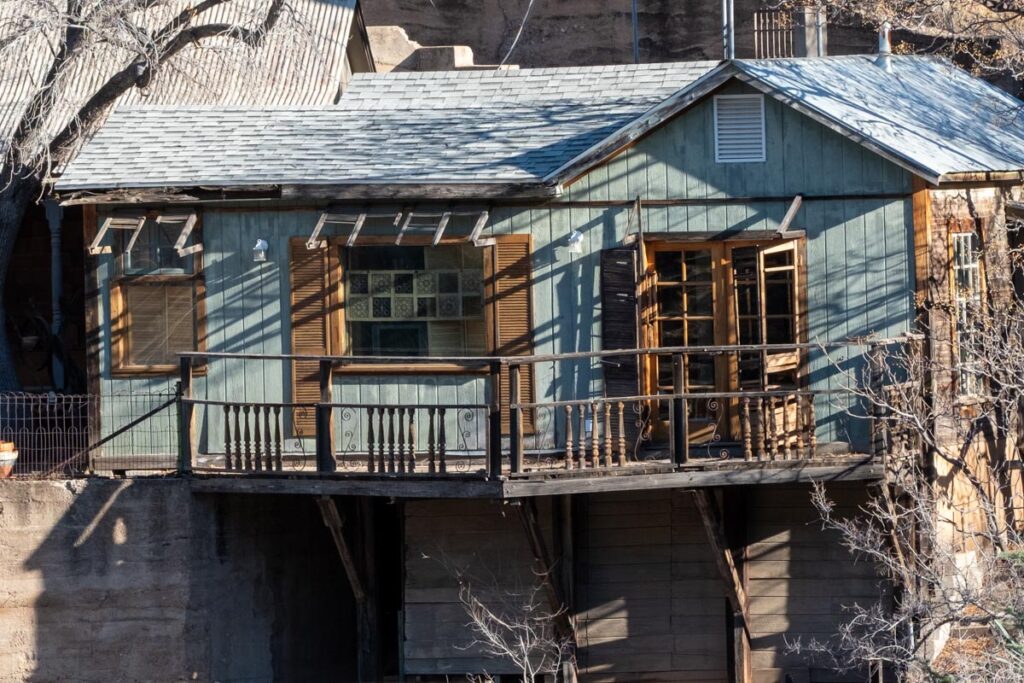
The Function of the Aesthetic Re-Entry
The significance of the miners’ shacks lies in their surreal survival. Following the collapse of the mining economy in the 1970s, these decaying relics were not demolished but recolonized.
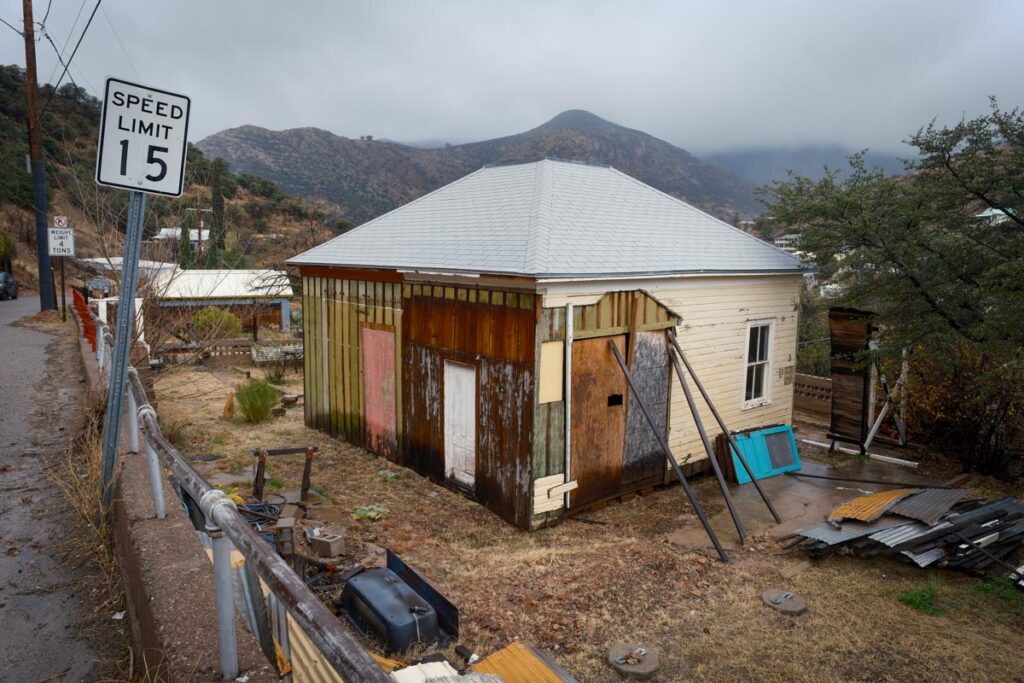
The Bohemian Graft
A diaspora of artists and outliers repurposed the shacks as hermetic laboratories. The oxidized tin and rotting wood were overwritten with vivid pigments and psychedelic murals, transforming the dwellings of the laboring class into high-altitude boutique retreats.

The Ghostly Architecture
Today, the shacks act as temporal bridges. To walk the 3,000 historic stairs is to navigate a social archaeological dig, where the original trauma of the miner is hidden beneath the shimmering mirage of the arts colony.
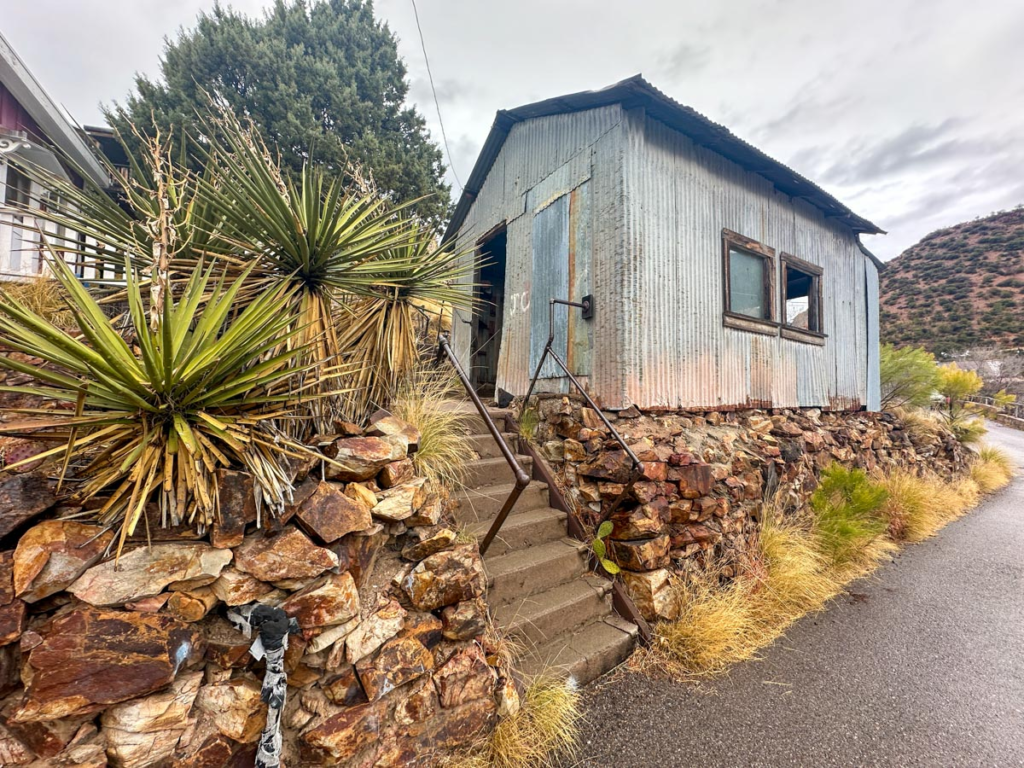
To inhabit a Bisbee shack is to participate in a slow-motion apocalypse. These structures prove that in the high desert, the most resilient artifact is the unyielding human desire to build a permanent, jagged future out of the splinters of a shuttered empire.
Navigation for the Urban Explorer
- The Primary Transit: Ascend any staircase in Tombstone Canyon to observe the terraced density of the shacks.
- The Aesthetic Pivot: Visit the Lowell District to see the terminal point where the housing was consumed by the void.
- The Interior View: Many historic shacks are now vacation rentals, providing a tactile experience of the vertical stasis.