
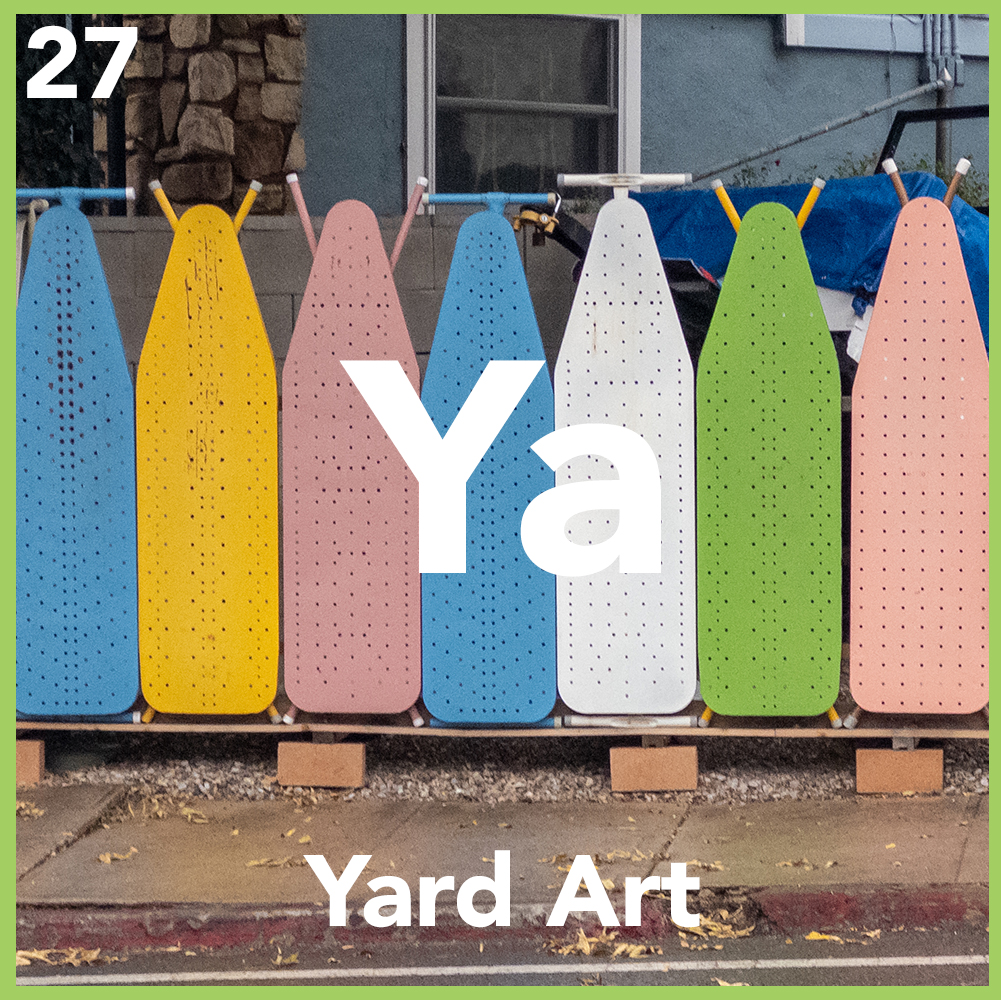
Whimseyland in the West: Bisbee’s Yard Art as a Folk-Art Ecosystem
In the terraced residential zones of Bisbee, the private yard has been repurposed as a theater of the irrational. In the steep, terraced canyons of the Mule Mountains, the traditional “yard” has been replaced by a curated thicket of the subconscious.
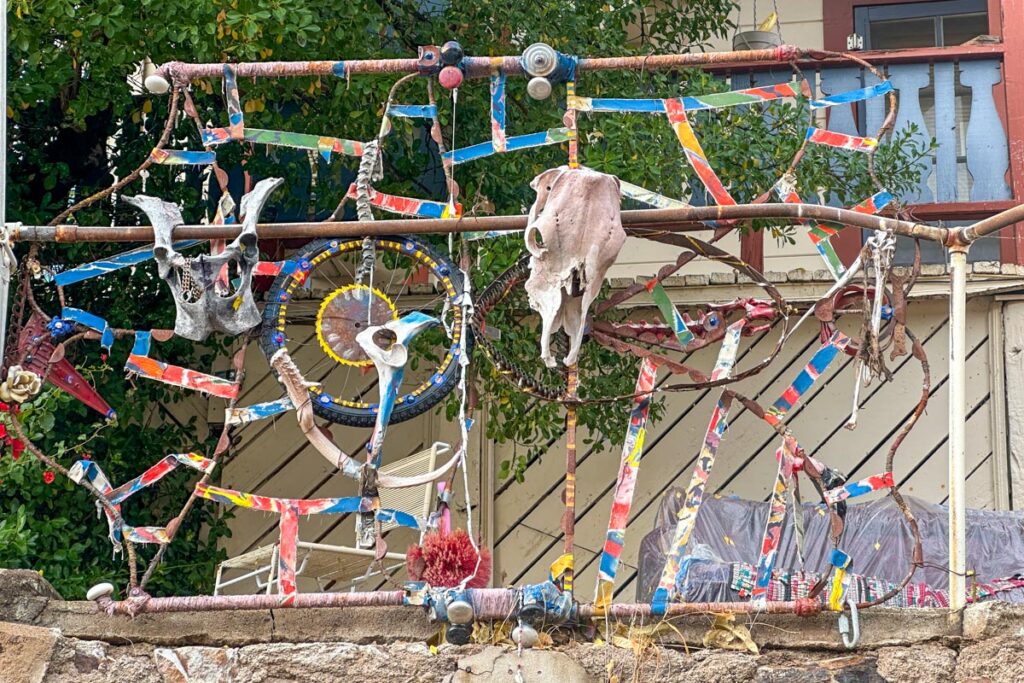
Bisbee’s domestic spaces—the narrow porches, the vertical gardens, and the precipitous retaining walls—function as hermetic theaters of the soul. This is where the bohemian metabolism of the town is most visible, a non-linear collection of folk art that blurs the boundary between private residence and public exhibition.

The Anatomy of the Outlier Garden
A Bisbee garden is rarely a lawn; it is a tectonic assemblage. In a landscape where level ground is a commodity, the inhabitants have developed a unique botanical and sculptural language.

The Porch as Observation Deck
The Victorian porches serve as liminal zones where the heavy gravity of the past meets the drifting present. They are crowded with wind-chimes made of industrial scraps and altars to desert deities, creating a visual noise that baffles the standardized logic of the suburban world.

The Anthropomorphic Junk-Heap
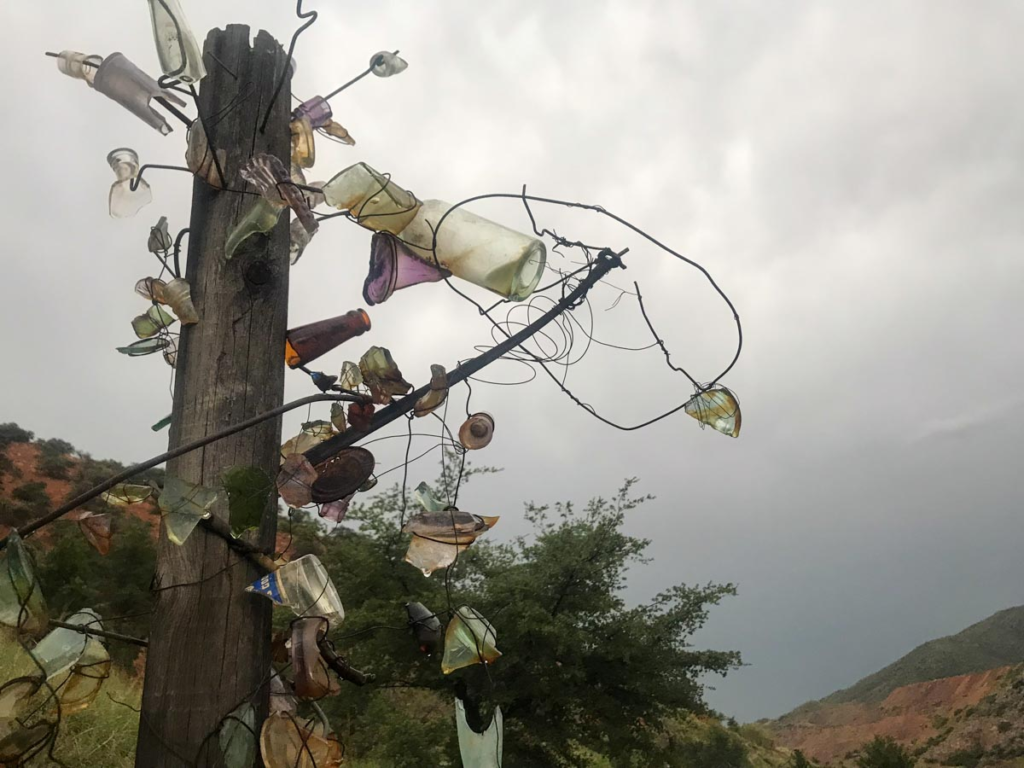
Front porches are colonized by outsider art sculptures—mannequins dressed in miners’ rags, rusted tricycles suspended from Victorian transoms, and totems made of blue cobalt bottles that capture the high-altitude light.

The Xeriscape Assemblage
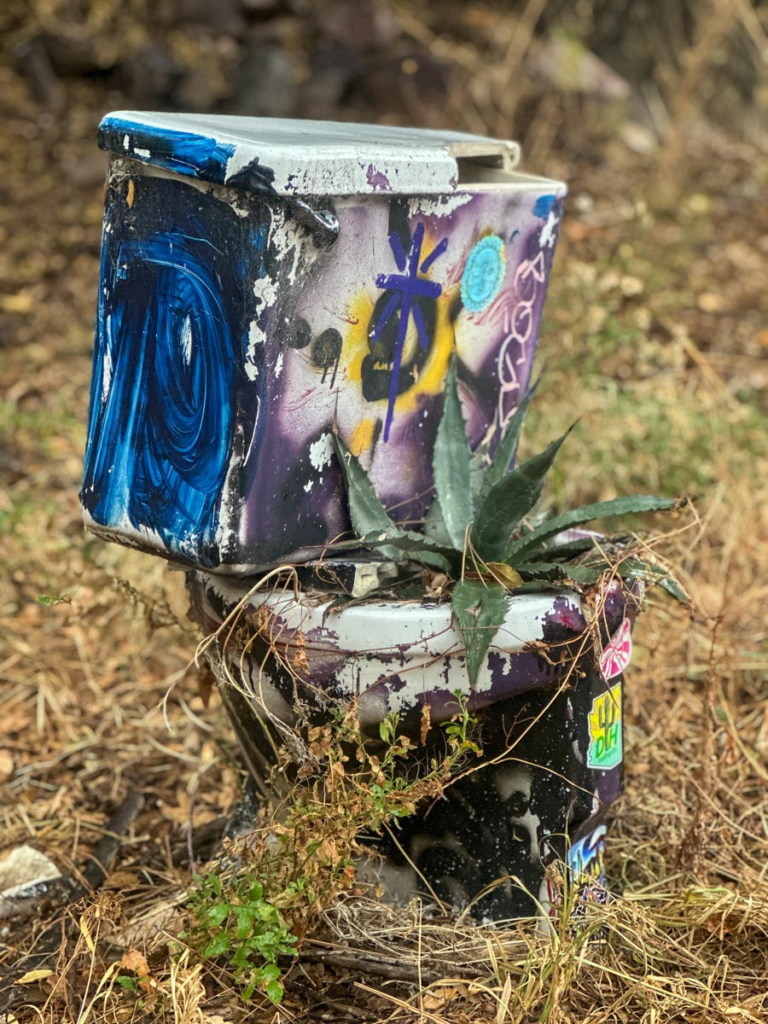
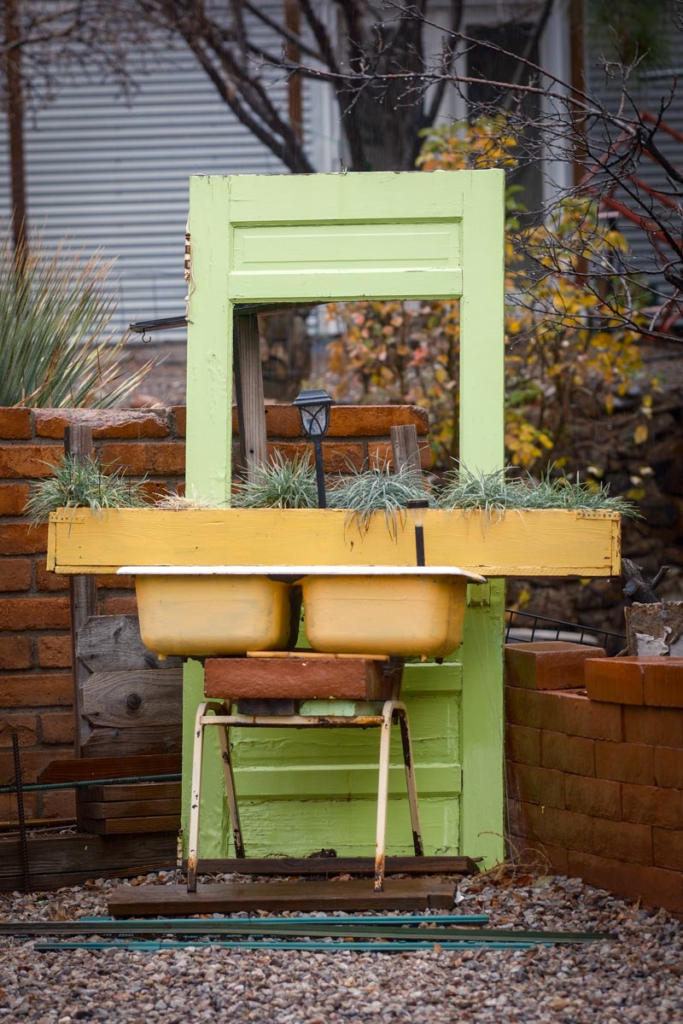
Gardens are composed of drought-resistant succulents growing out of discarded mining boots or old toilets. This biological-mechanical fusion reflects the town’s own repurposed history.
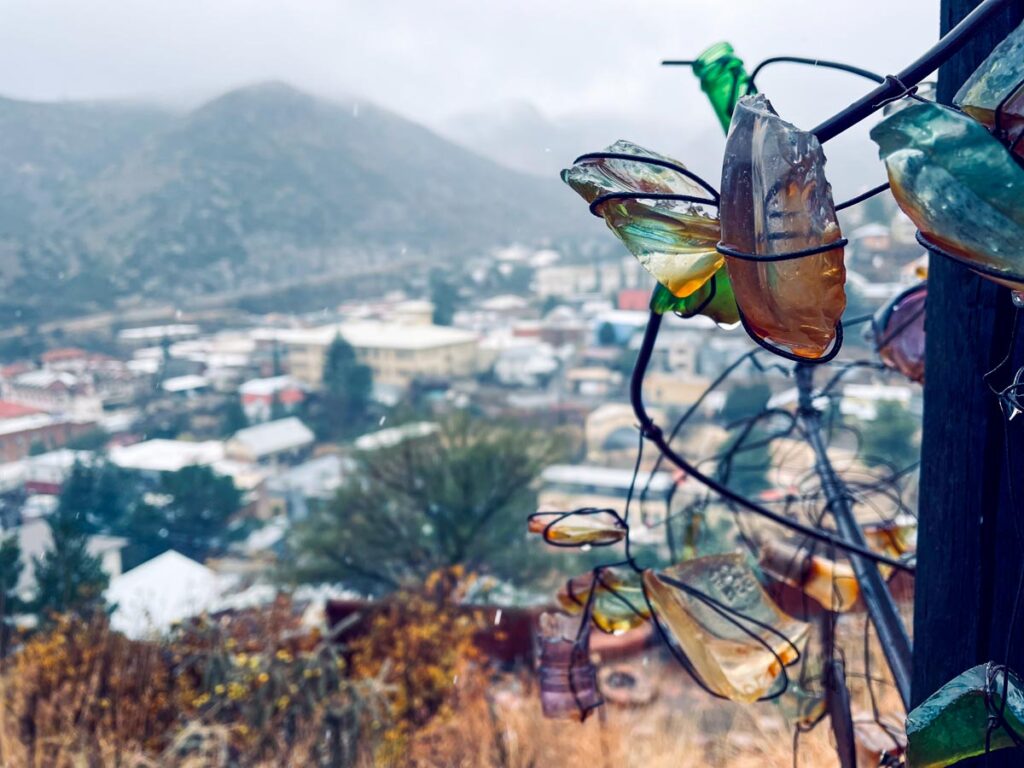
In many yards, bottles and fragments of colored glass are arranged into “bottle trees” or mosaic walls, catching the high-altitude light to create a shimmering, kaleidoscopic shield against the desert heat.
The Function of the Aesthetic Thicket
These personal museums serve a vital structural role in the town’s creative ecosystem.
The Psychological Buffer
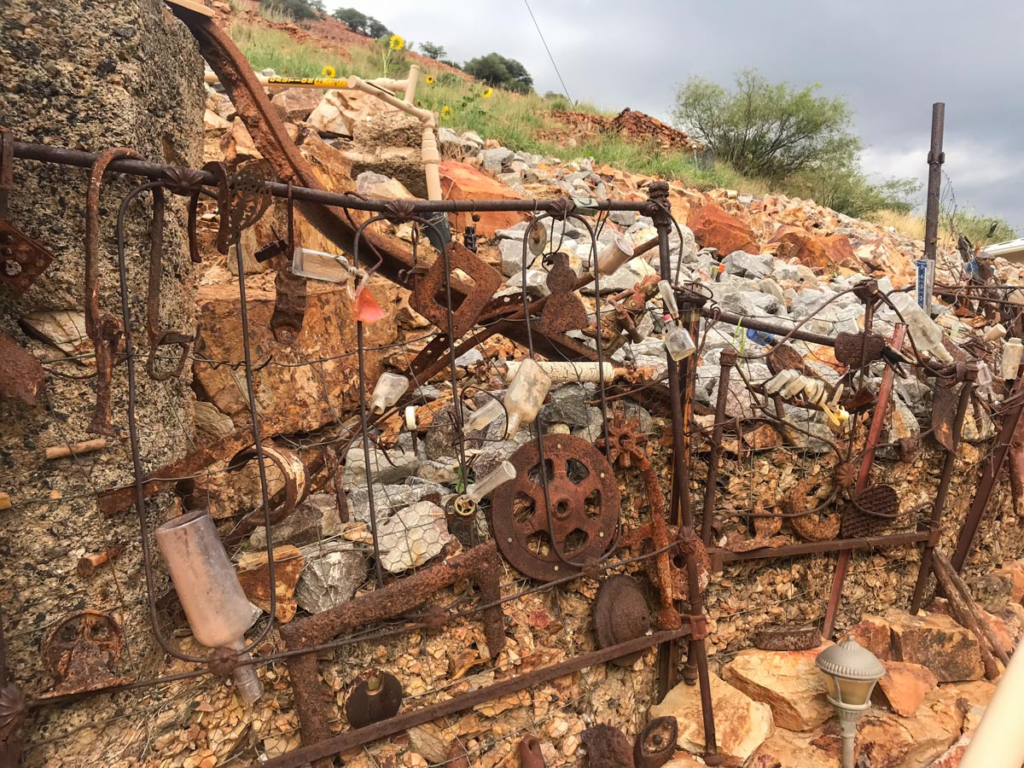
The eccentric density of the yard art acts as a sensory shield against the indifferent scale of the mountains. It is a way for the outlier individual to claim territory in a landscape once dominated by corporate monoliths.
The Navigational Theater
For the pedestrian voyager, the yard art provides a constant stream of visual data. To walk the stairs of Old Bisbee is to engage in a slow-motion archaeological dig of the town’s bohemian subconscious.
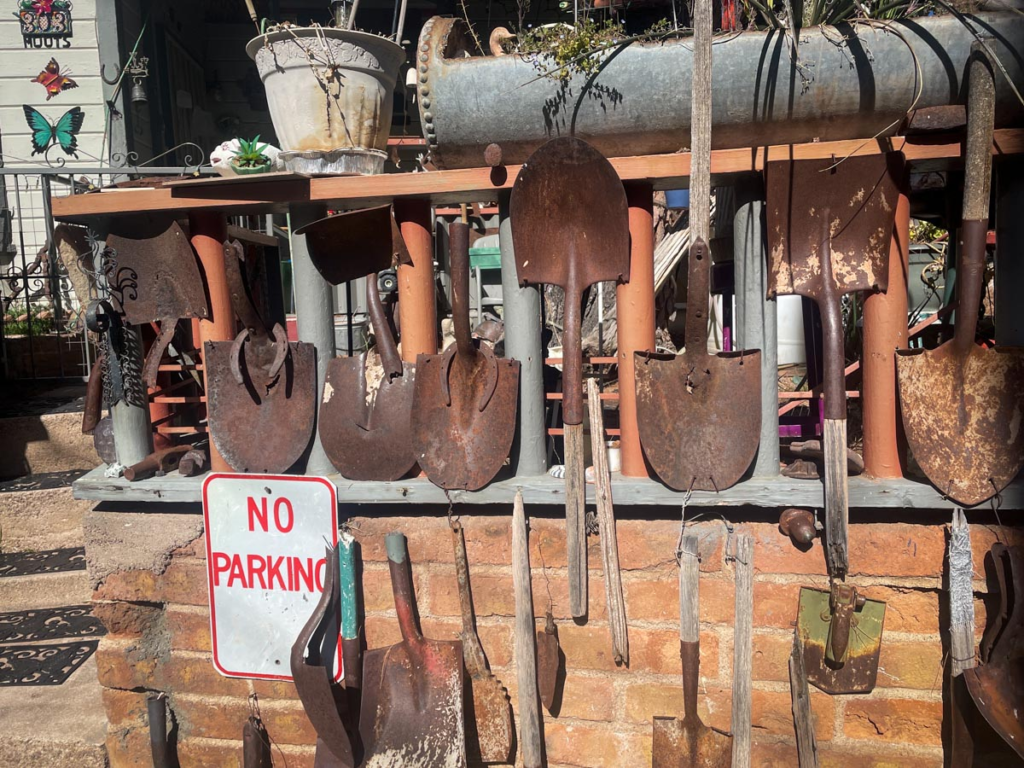
To navigate Bisbee is to wander through a hallucinatory botanical workshop. These are not manicured lawns, but pressurized environments where homeowners act as curators of the eccentric.
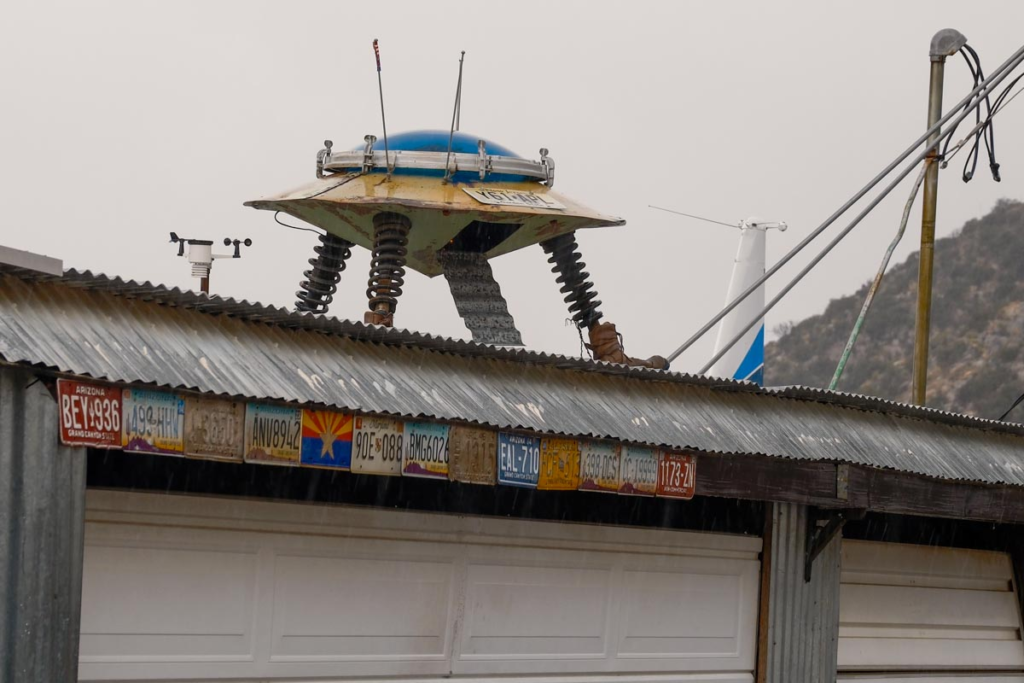
The artifacts are diverse, yet share a common DNA of extraction and reuse. In Bisbee, the yard is no longer a place of leisure, but a site of permanent artistic revolution—a landscape where the dream-life of the resident is permanently on display.
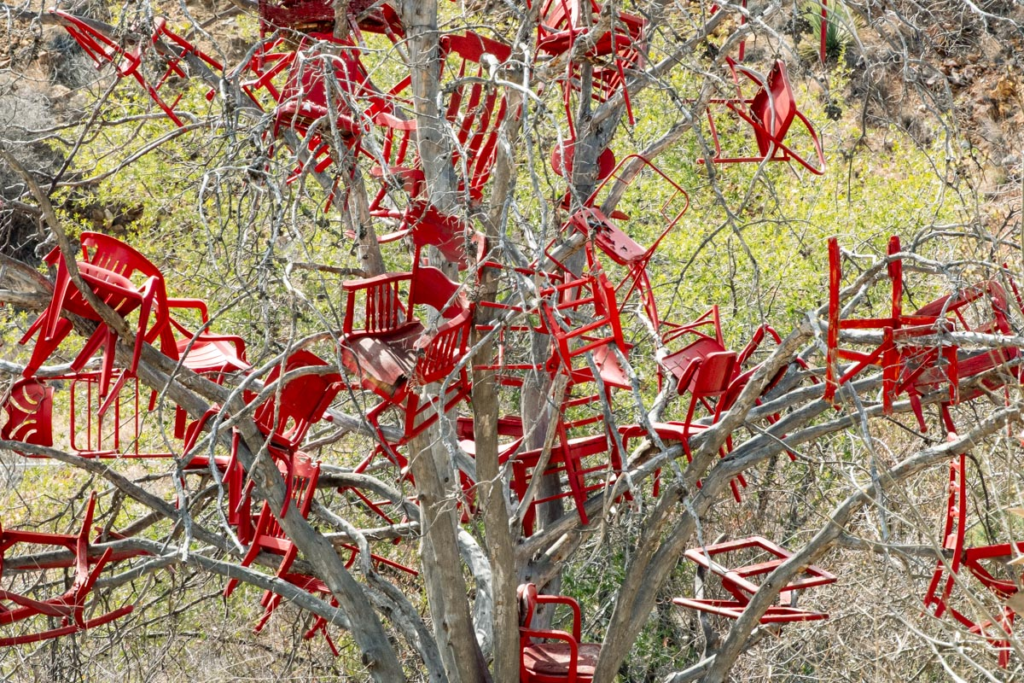
The yard art proves that in the desert, the most resilient crop is the unfettered human imagination, blooming in the oxidized soil of a shuttered empire.

By surrounding themselves with these colorful, hand-built monuments, the inhabitants of Bisbee have created a personalized buffer zone between the massive, indifferent void of the Lavender Pit and the intimacy of their own living rooms.
Folk-Art Navigation
- The Prime Transit: Explore the narrow residential loops above Brewery Gulch for the most concentrated folk-art displays.
- The Stairway Circuit: Ascend the historic staircases for a bird’s-eye view into the hidden, terraced gardens of the resident outliers.
- The Seasonal Bloom: Look for locally curated garden tours which occasionally offer a sanctioned entry into these private, visionary worlds.