
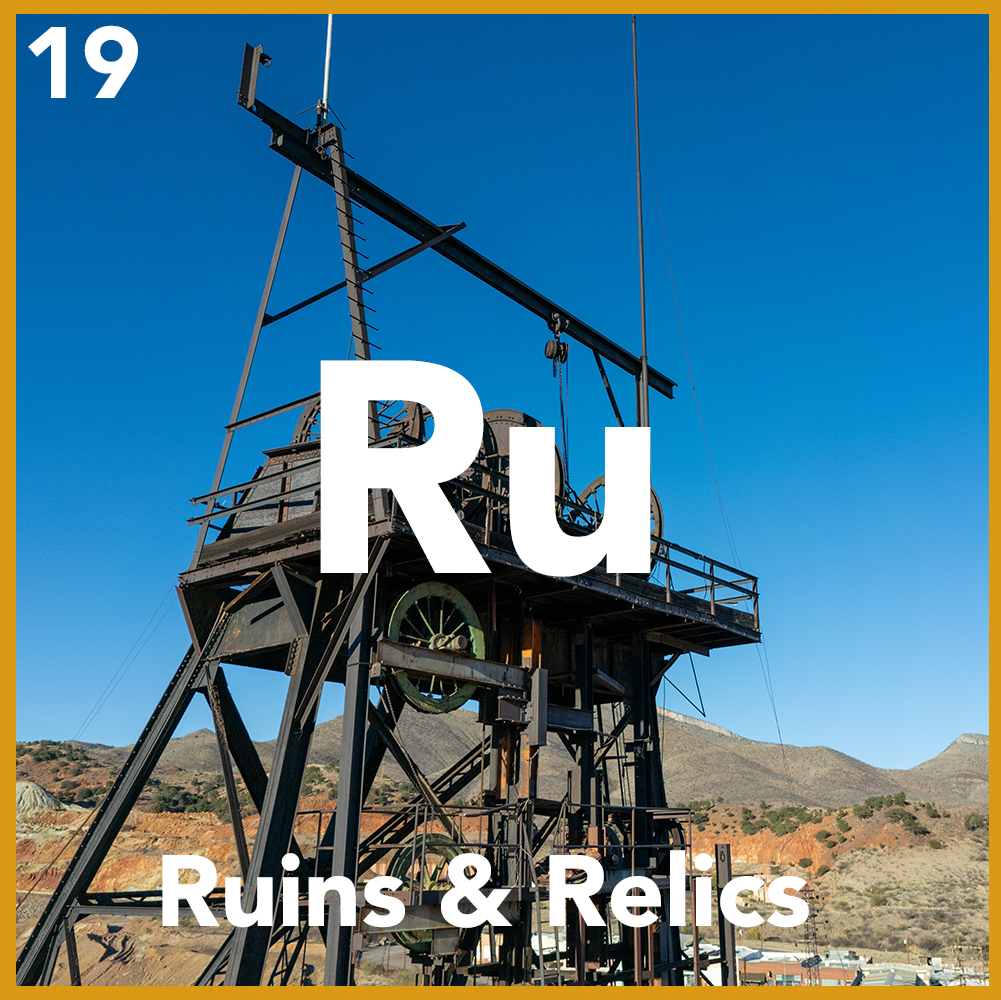
The Iron Skeleton: Bisbee’s Industrial Necropolis
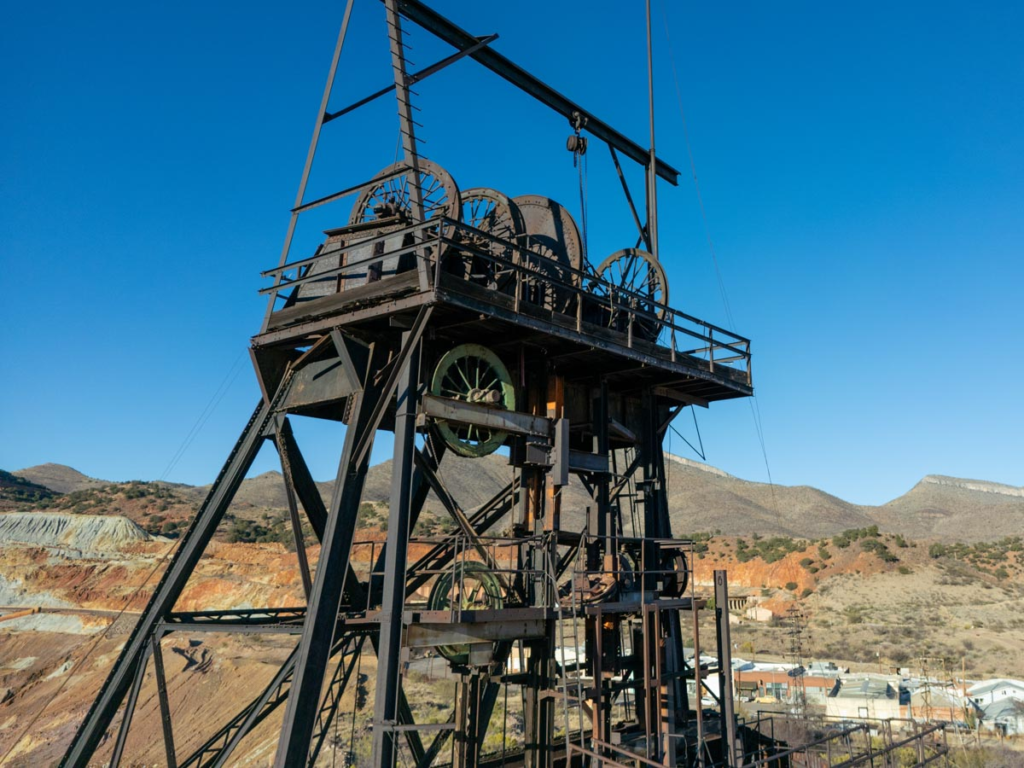
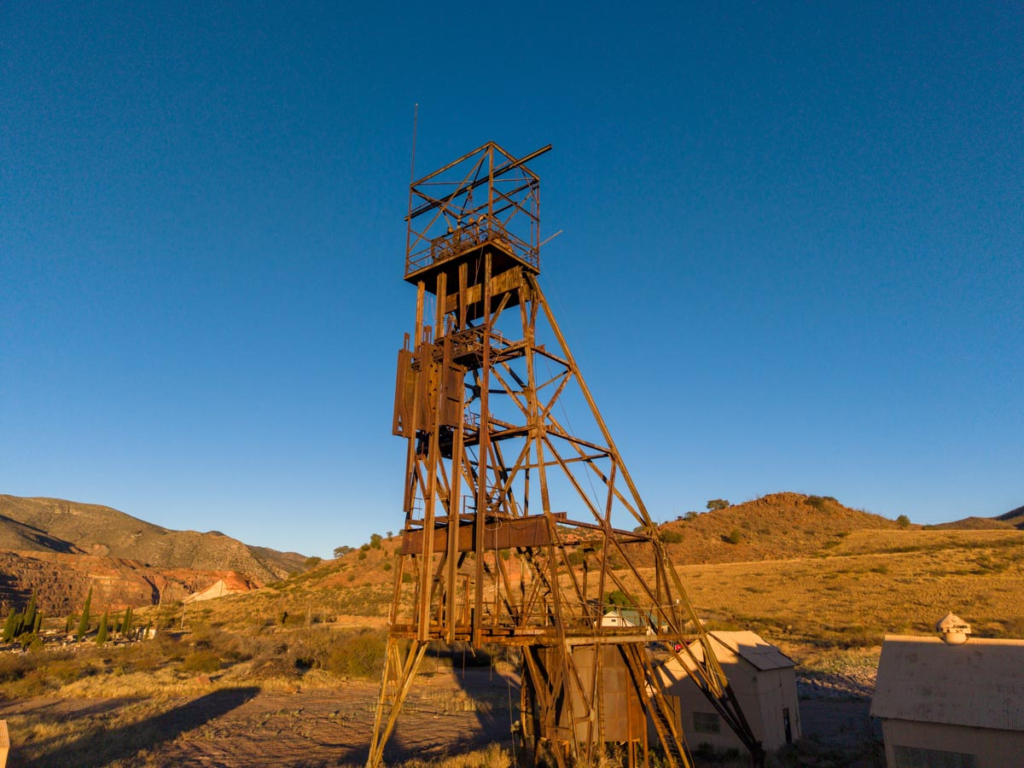
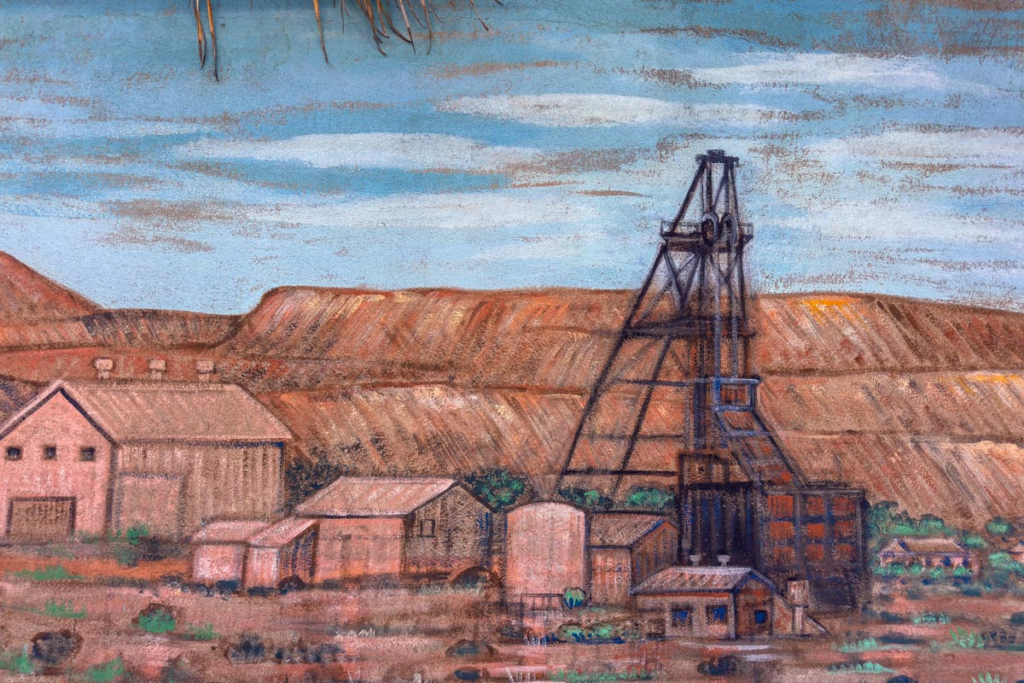
In Bisbee, the landscape is a “technological graveyard” where the bones of the 20th century have been left to bleach in the high-altitude sun. The town does not merely sit near its ruins; it is entwined with them, a sprawling architectural collage where Victorian lace curtains flutter within sight of rusting steel headframes that resemble the gallows of a vanished titan. These structures—towering, skeletal derricks—function as “inverted steeples,” pointing not toward a celestial heaven but toward the 2,500 miles of subterranean inner space that honeycombs the Mule Mountains.
The Taxonomy of Debris
The surrounding ridges are populated by a series of “industrial fossils,” each representing a specific stage in the town’s mechanical evolution.
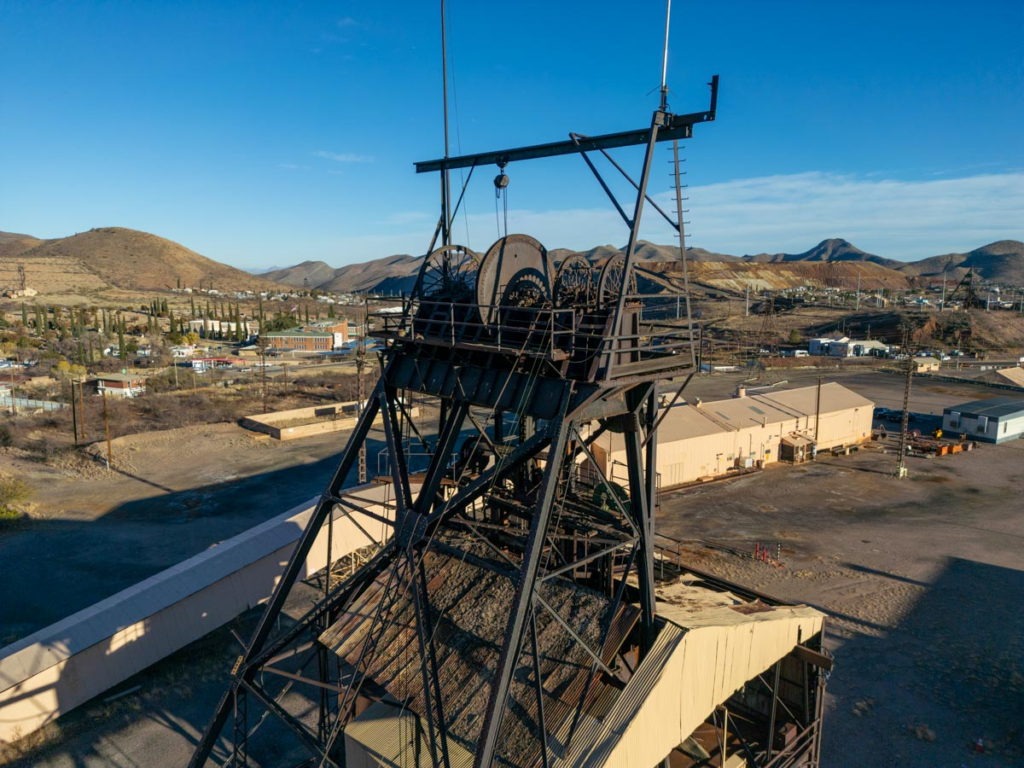
The Campbell Shaft
A towering monolith of corrugated iron and steel, this headframe marks the site of the deepest vertical extraction. It stands as a “sentinel of the void,” guarding a shaft that drops 3,000 feet into the earth’s pressurized core.
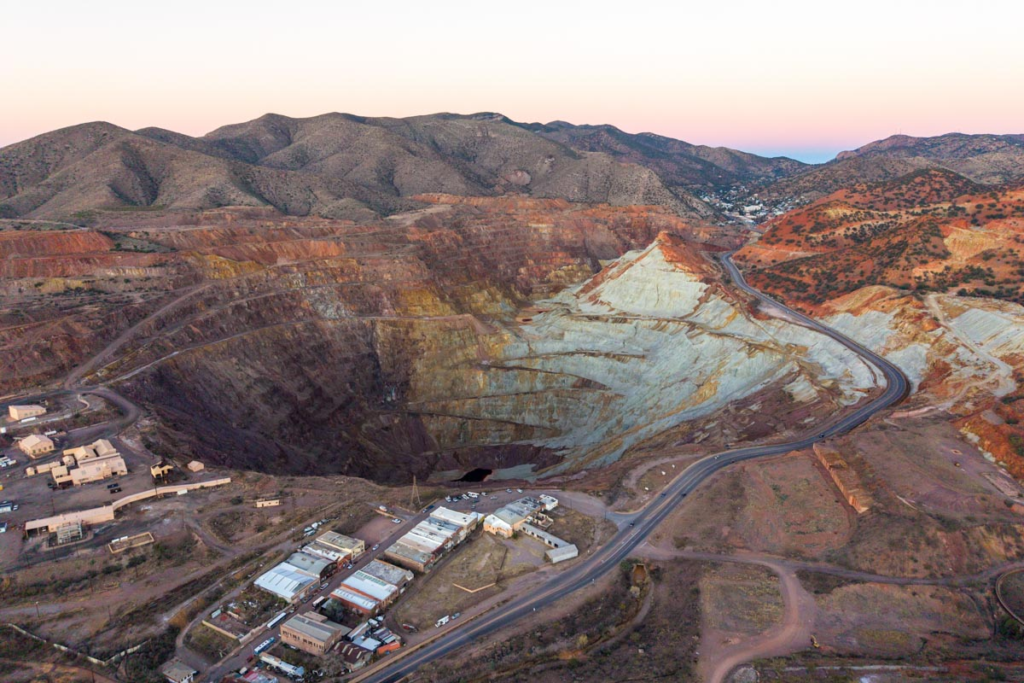
The Lavender Pit Overlook
Visitors standing at the gravel overlook peer into a man-made abyss 850 feet deep, where the terraced walls—stained in hues of oxidized copper and lavender—resemble the foundations of a buried, futuristic city. It is a masterpiece of negative architecture, a 4,000-foot-wide testament to the millions of tons of ore stripped away to feed the world’s power grids.
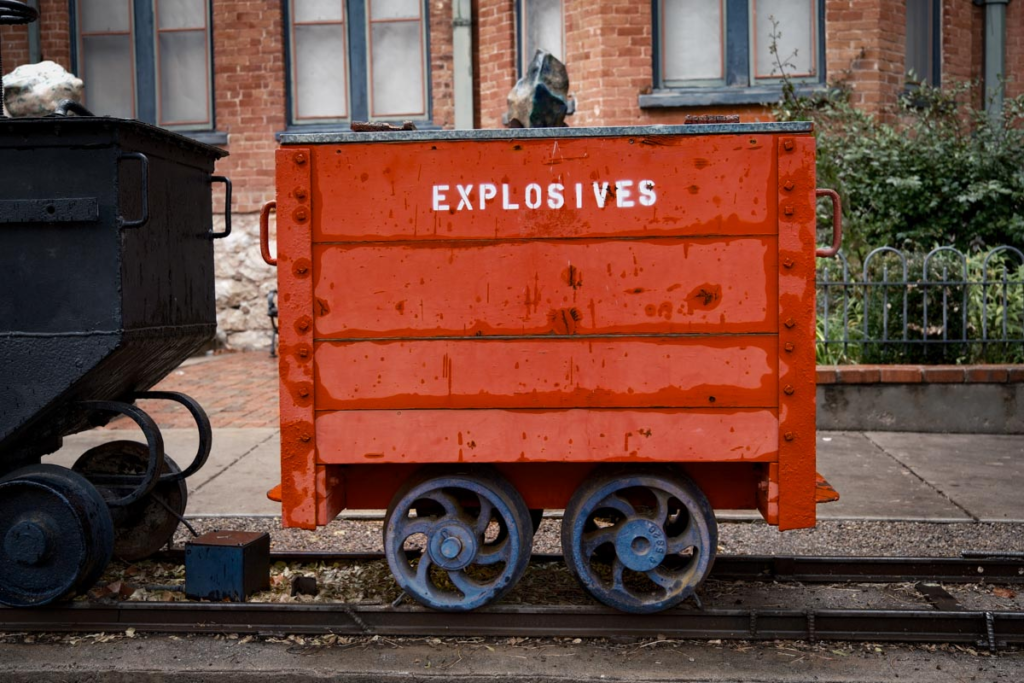
The Ore Car Altar
Scattered throughout Old Bisbee and the Lowell district, rusting ore cars sit on disconnected tracks—static capsules that once transported the town’s mineral wealth through the dark, oxygen-deprived arteries of the mountain.
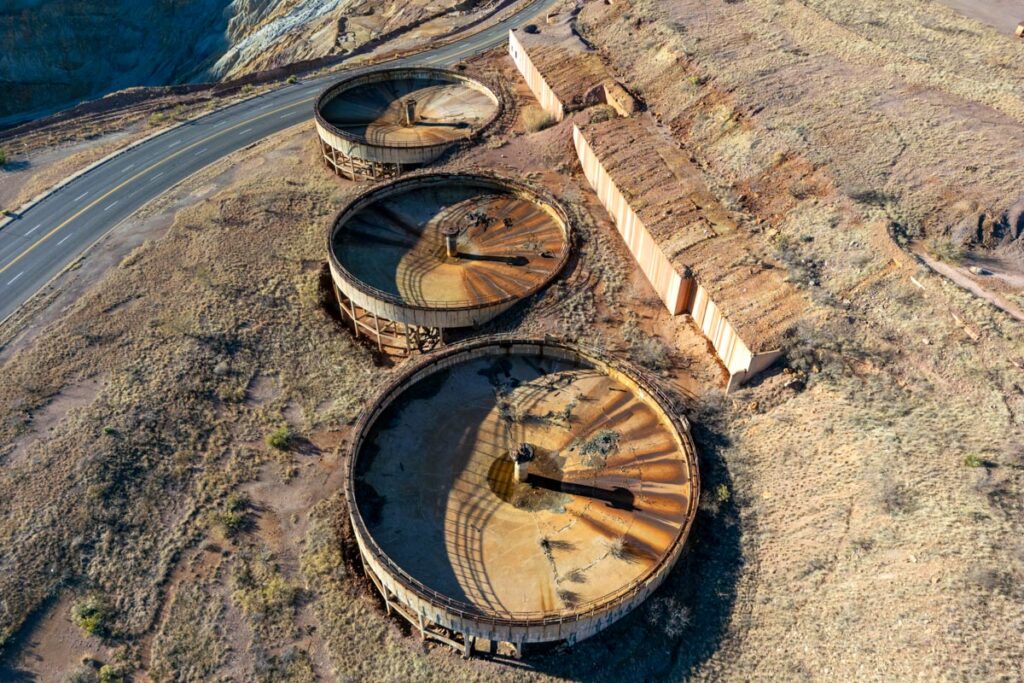
The Abandoned Future
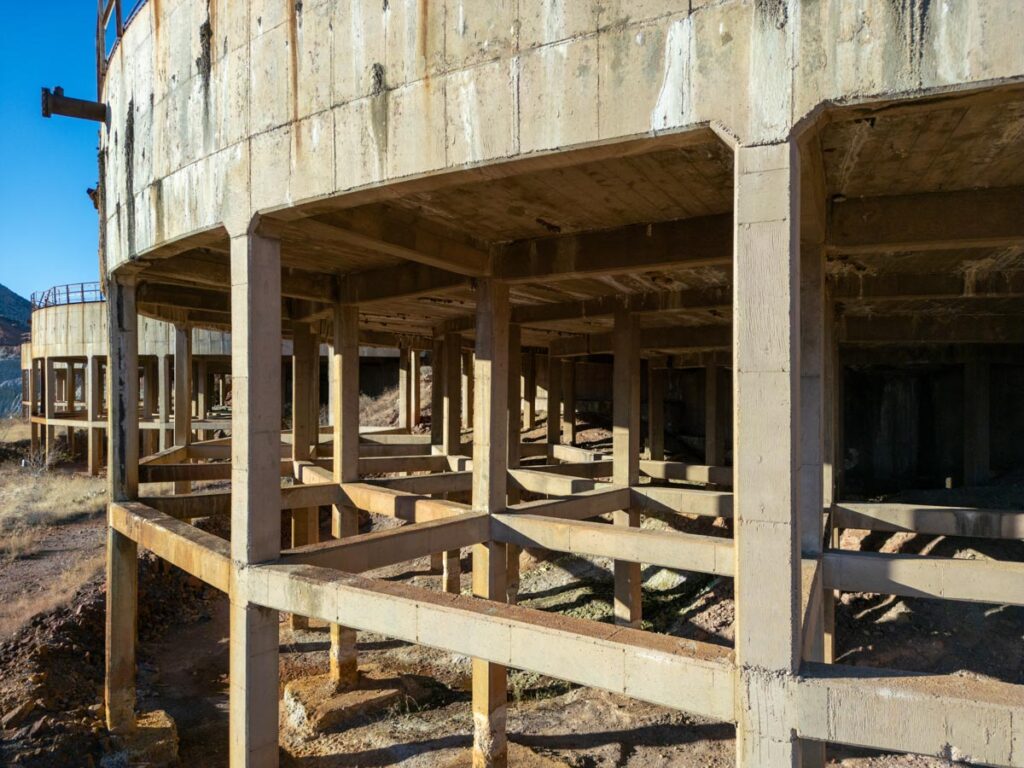
Just off Highway 80, the old concentrators (now removed) suggest a future that was planned with terminal precision, only to be abandoned when the copper veins were finally exhausted in 1975.
In Bisbee, the ruins are not just objects; they are the terminal points of a century-long obsession with the earth’s interior, a landscape where the past and the future have finally fused into a single, sun-bleached relic.
Significance of the Rust
These relics are more than aesthetic curiosities; they are “psychological anchors” for a community that refuses to sanitize its past. The heavy oxidation of the steel—a vibrant, chemical orange—serves as a visual counterpoint to the deep Bisbee Blue of the sky. It is a “chromatic dialogue” between man’s ambition and the desert’s patience.
The Aesthetic of Decay
The town itself functions as a curated debris field. Many stairs and door handles throughout the town are crafted from old pickaxes and reclaimed mining scrap, integrating the town’s industrial past into its modern bohemian aesthetic.

Protocols for the Industrial Interior
Before you attempt to navigate this necropolis of iron and stone, observe these essential directives:
- The Law of Gravity: Many of these ruins are perched on unstable, vertical terrain. The Queen Mine Tour remains the only “officially sanctioned” portal into the subterranean world. Attempting to enter unsealed shafts is a terminal error.
- The Corporate Threshold: Much of the surrounding industrial debris is the property of Freeport-McMoRan. Observe all “No Trespassing” signs as if they were the barriers to a high-voltage laboratory.
- The Photographic Imperative: The best light for capturing the “texture of the rust” occurs during the Golden Hour—the final sixty minutes before the sun drops behind the Mule Pass Tunnel.
- Tactical Footwear: To explore the perimeter of the Campbell or Junction shafts, wear boots that acknowledge the reality of jagged tailings and loose scree.