
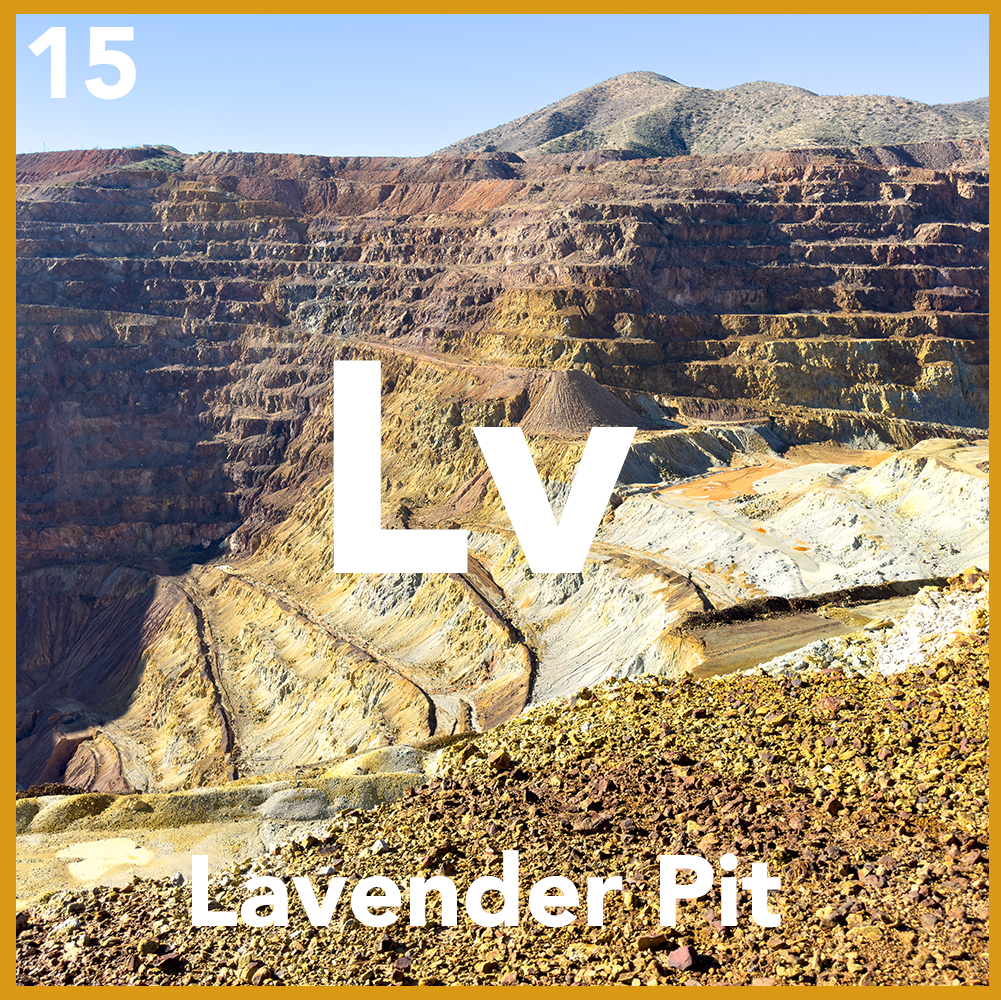
The Geometric Void: The Lavender Pit as Industrial Negative Space
If the Mule Mountains are a monument to geological duration, the Lavender Pit is their inverse monument—a colossal, spiraling absence carved into the earth’s crust.
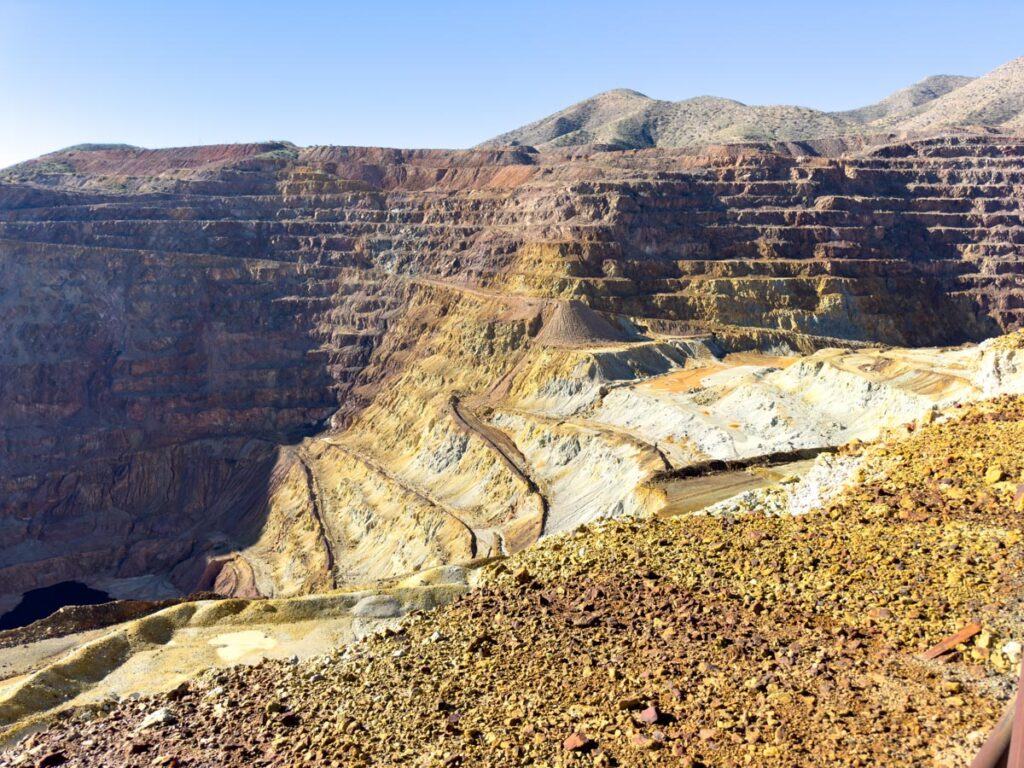
Situated as a jarring crater on the edge of Old Bisbee, this open-pit mine is a technological abyss, a site where the landscape has been hollowed out to feed the global appetite for electricity and wire. It is the town’s most profound psychological landmark: a terrestrial lung that has been surgically removed.
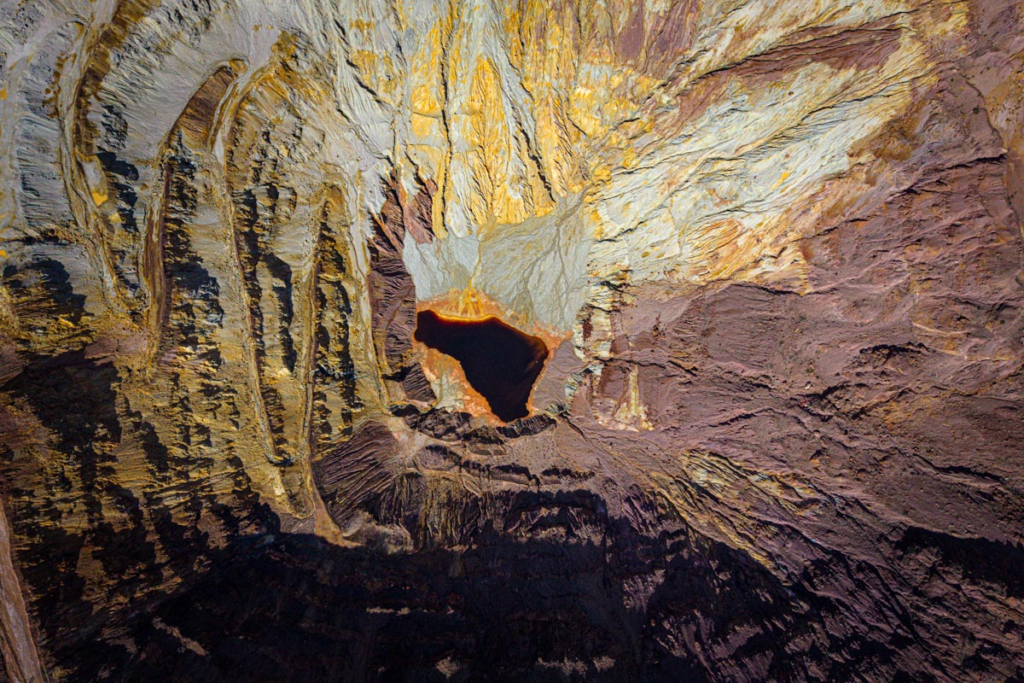
The Anatomy of the Excavation
Initiated in 1950 and named for Harrison M. Lavender, the vice president of Phelps Dodge, the pit was the corporate solution to the diminishing returns of subterranean mining. It represented a shift in the town’s metabolism—from the surgical extraction of deep-vein tunnels to the mass-scale erasure of the mountain itself. The pit covers some 300 acres and plunges to a depth of 900 feet. To create this void, over 380 million tons of material were displaced, including the total erasure of entire neighborhoods like Lowell and Johnson Addition, which were consumed by the advancing rim.
The pit’s walls are a series of concentric benches, a giant’s staircase that descend into a pool of turquoise-tinted chemical runoff. It is an architecture of pure utility, yet it possesses the haunting symmetry of a Mayan amphitheater dedicated to the gods of industry.
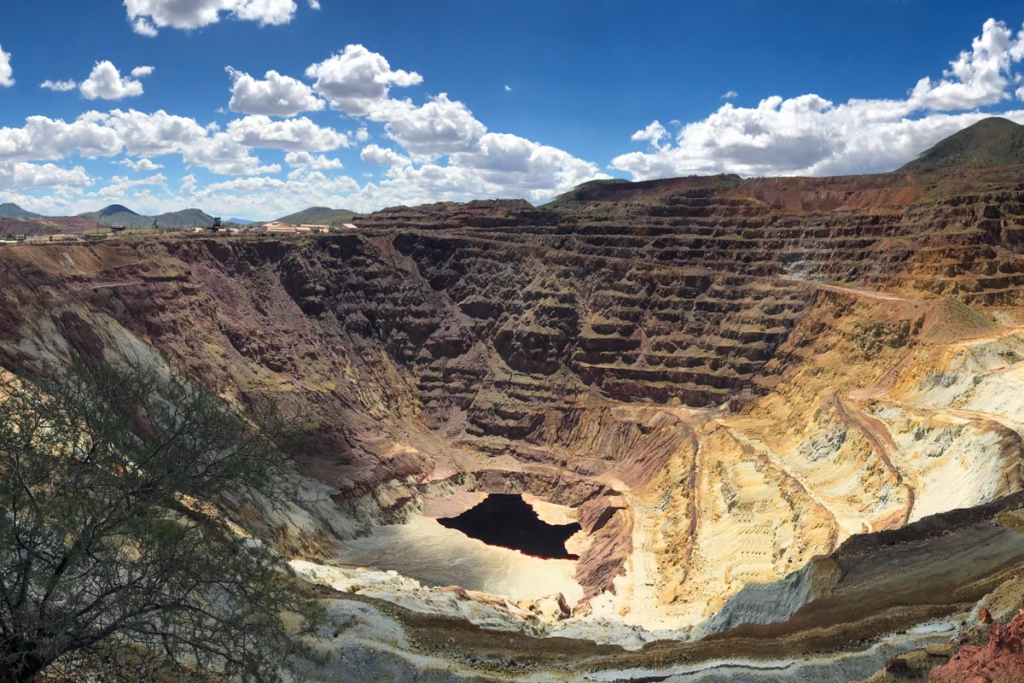
The Symbolism of the Wound
The Lavender Pit is a memento mori of the industrial age. It stands as a symbol of the Great Transformation, where the earth was no longer a place of habitation but a raw material to be processed and discarded.
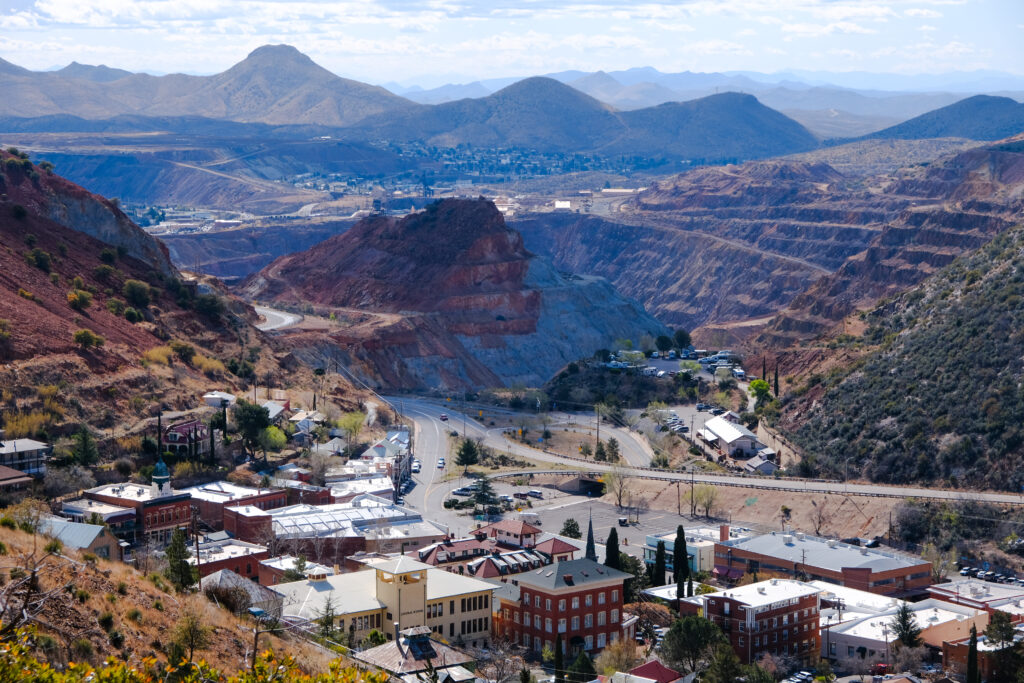
Today, the machinery is silent, and the pit remains a static scar. It serves as a reminder of the fragility of the “Company Town”—once the pit was exhausted in 1974, the town’s economic nervous system collapsed, leading to its eventual re-colonization by artists and retirees.
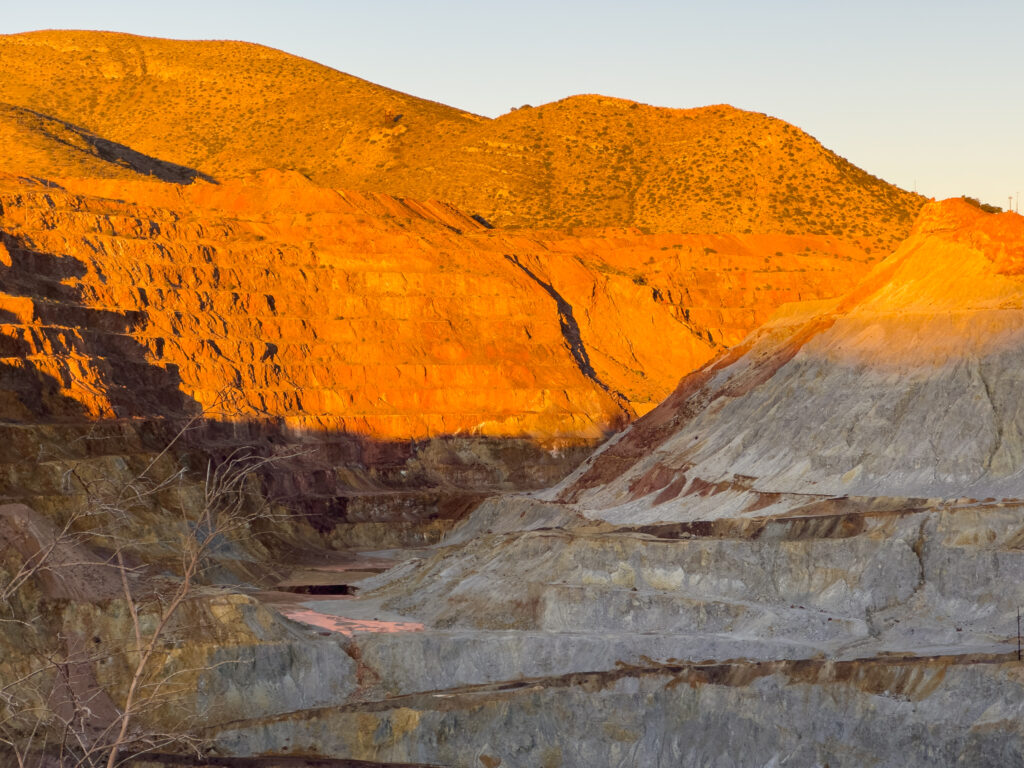
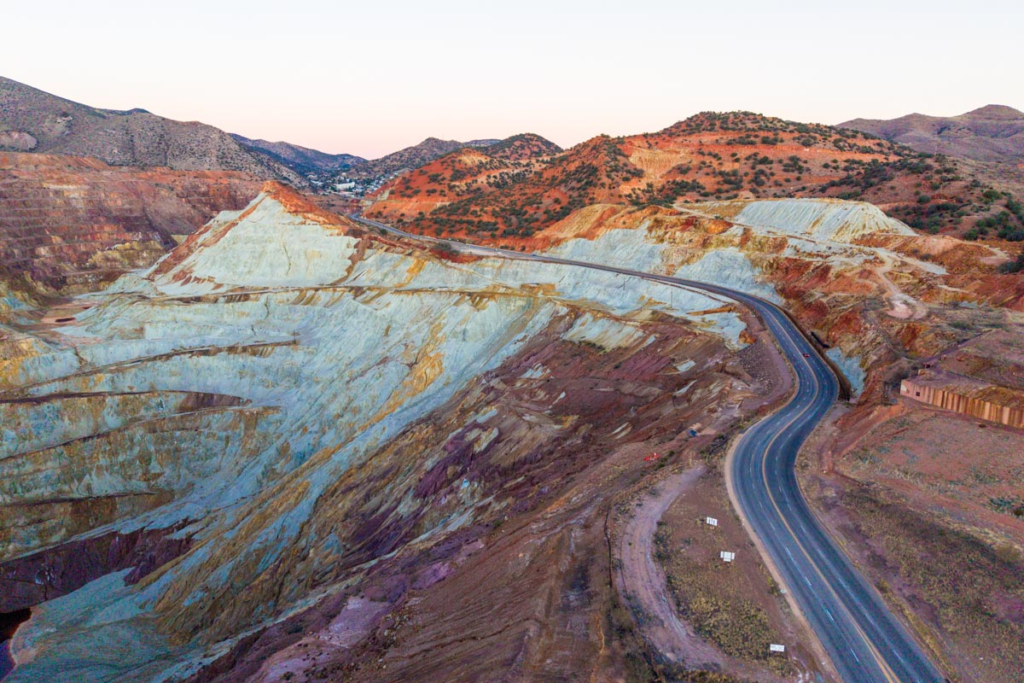
The oxidation of minerals has stained the walls in a palette of bruised purples, rust-reds, and toxic greens, creating a surreal landscape that feels more like a Martian seabed than an Arizona hillside.
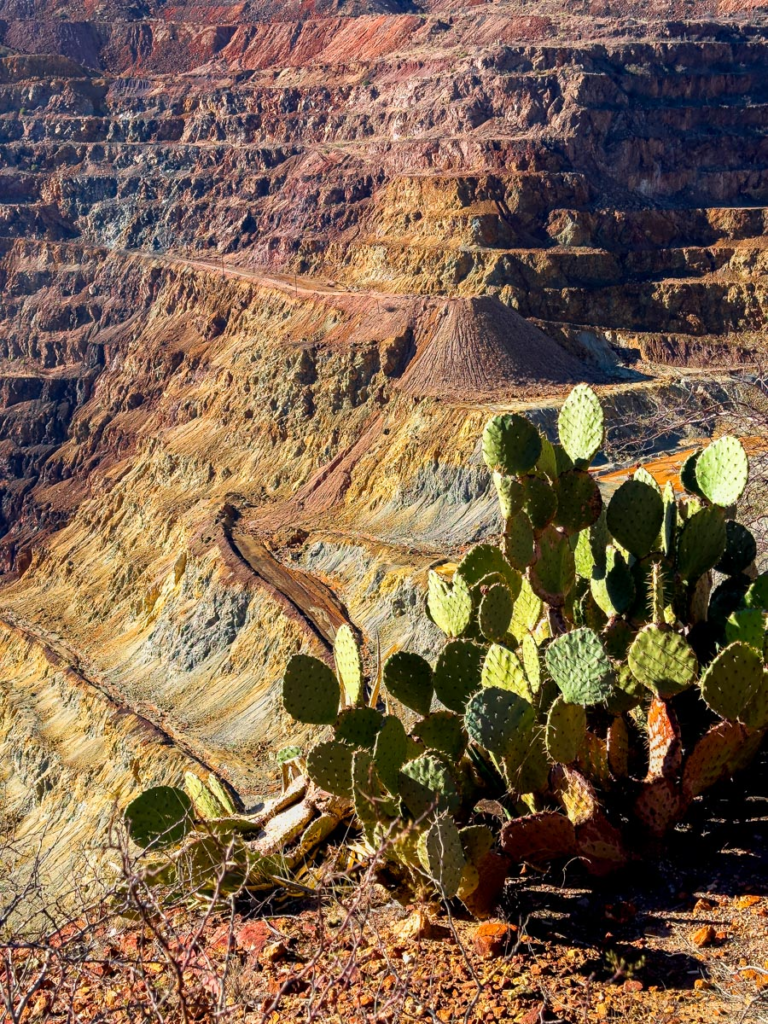
The Spectacle of the Rim
To view the Lavender Pit is to experience a profound sense of vertigo. It is the ultimate destination for the “disaster tourist,” a place to contemplate the sheer scale of human intervention. A designated pull-out on Highway 80 provides a panoramic vista of the crater. From here, the distant floor of the pit seems to vibrate with a residual energy, as if the ghosts of the massive dump trucks are still navigating the spiraling ramps.
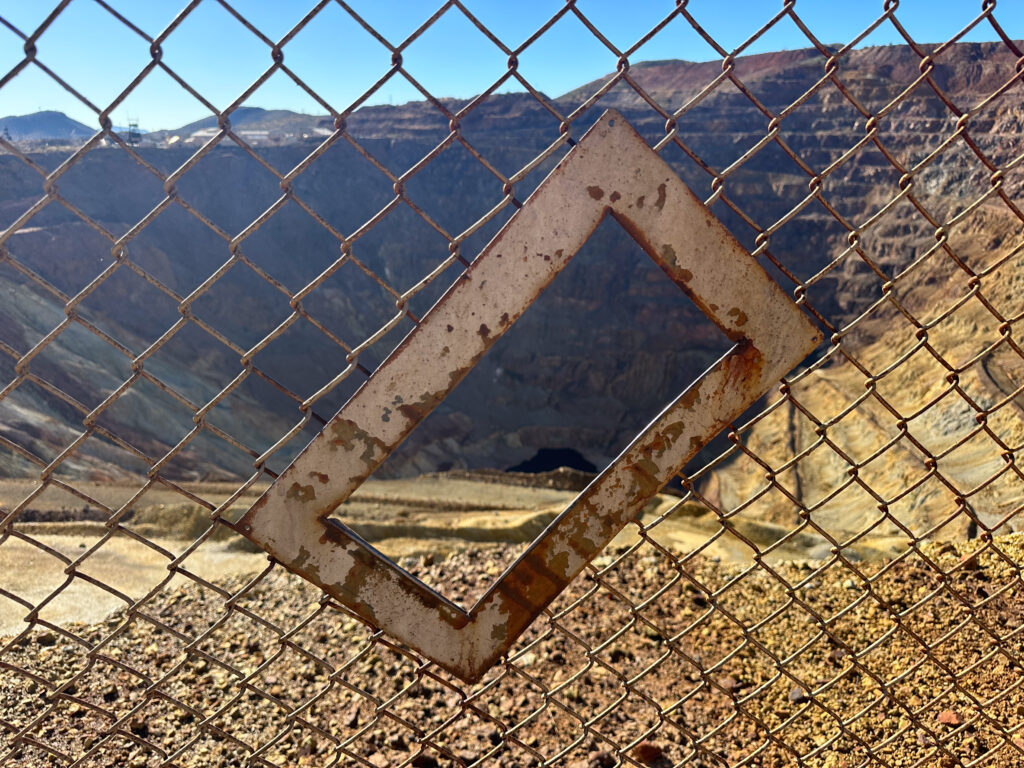
To get a sense of the pit’s impact on the town, one should visit the Lowell Historic District where the road ends abruptly at a chain-link fence, the asphalt falling away into the nothingness of the mine.
Visitor Navigation
Location: Directly adjacent to Highway 80, between Old Bisbee and the Lowell district.
Access: The Lavender Pit Overlook is open to the public and offers free parking.
Perspective: For the most dramatic light, visit during the “golden hour” before sunset, when the shadows stretch across the terraces, accentuating the pit’s inhuman scale.