
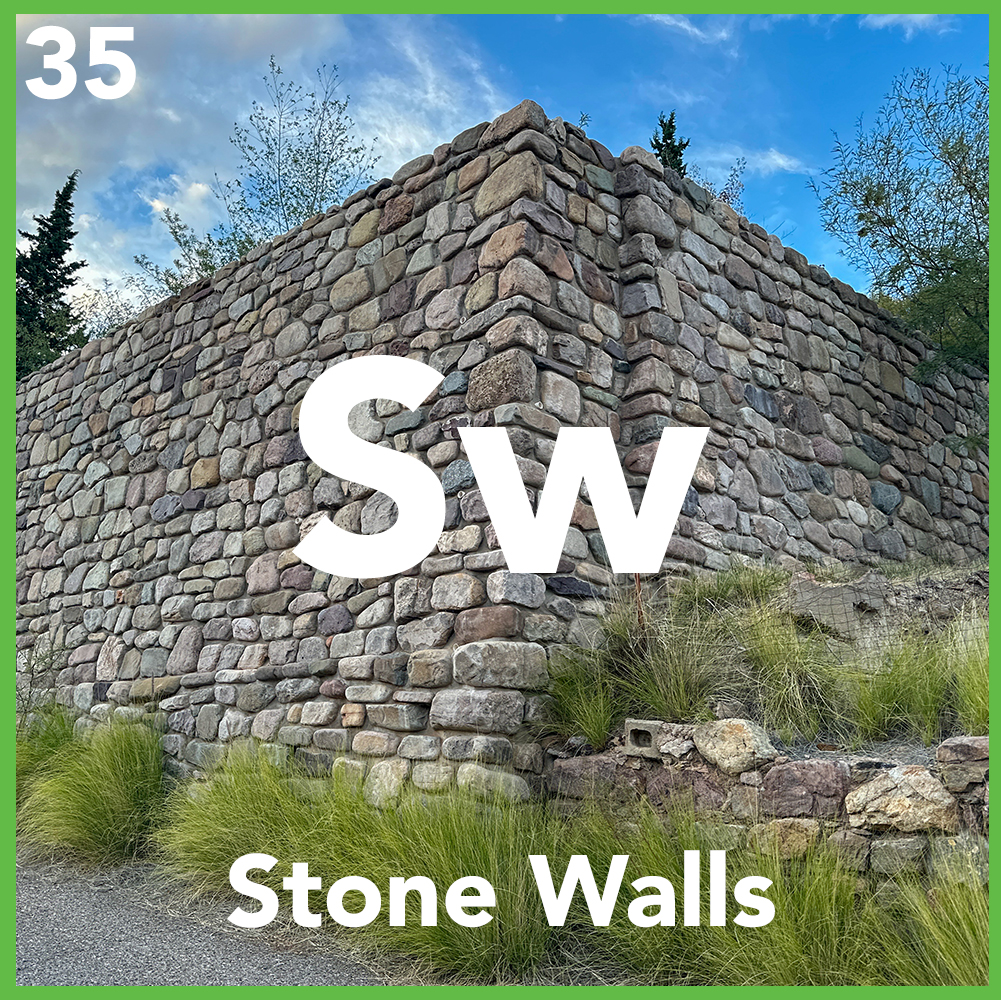
The Master Masons of the Mules: Bisbee’s Stone Walls as Tectonic Scaffolding
In the precipitous canyons of the Mule Mountains, the stone walls are the true architecture of the town.
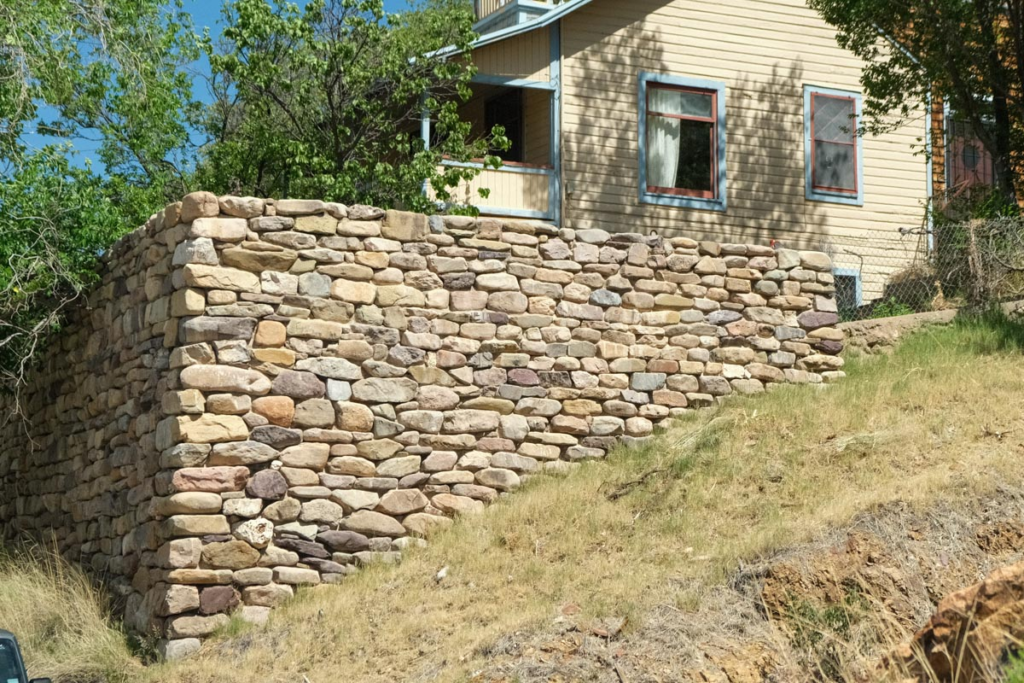
The winding streets and terraced hillsides of Old Bisbee are defined by extensive, hand-built stone and rock retaining walls, masterful feats of early 20th-century engineering that provide structural integrity to the steep landscape and add to the area’s enduring historic character.
These are not merely boundaries; they are gravity-defying stabilizers—a vast, horizontal skeleton that prevents the shimmering mirage of Bisbee from sliding into the industrial void of the Lavender Pit.
The Anatomy of the Vertical Retainer
The stone walls of Bisbee represent a vernacular of geological necessity. Built primarily by immigrant miners between the late 19th and early 20th centuries, they utilize a material palimpsest scavenged from the very earth being hollowed out beneath them.
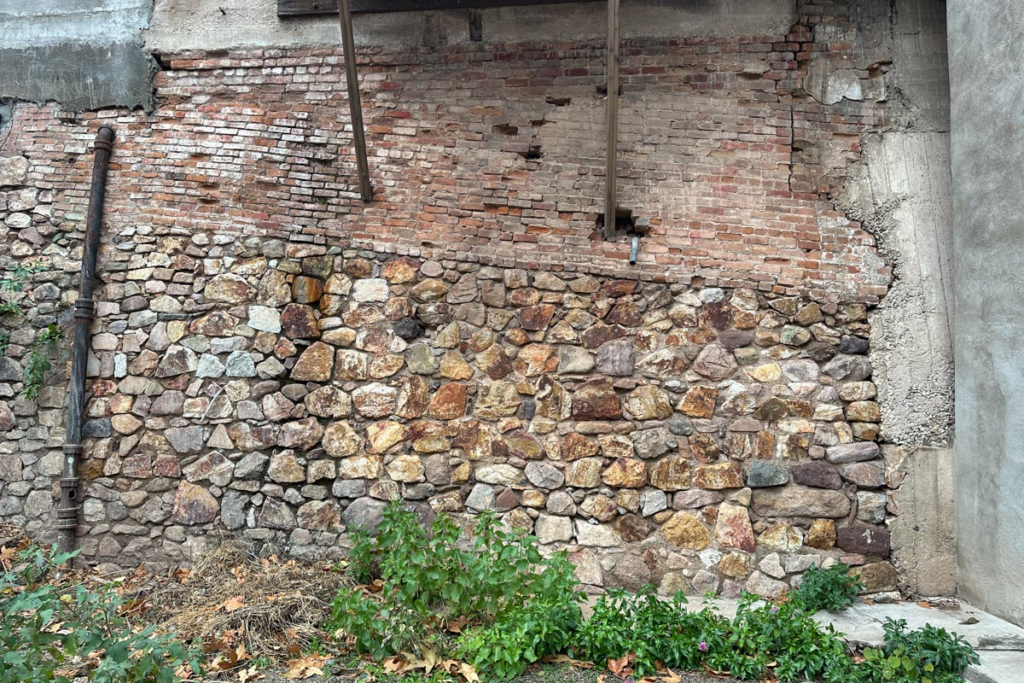
The Limestone Base
Most walls are composed of local Escabrosa limestone, a rugged, grey-white substrate that mirrors the mountain’s own tectonic face.
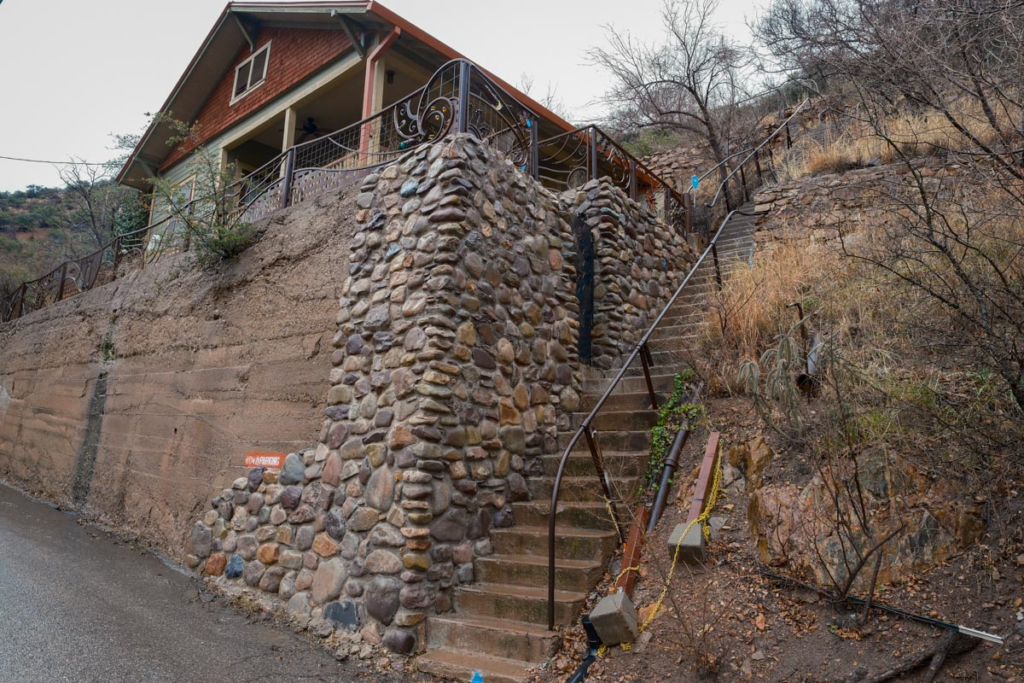
The Oxidized Infusion
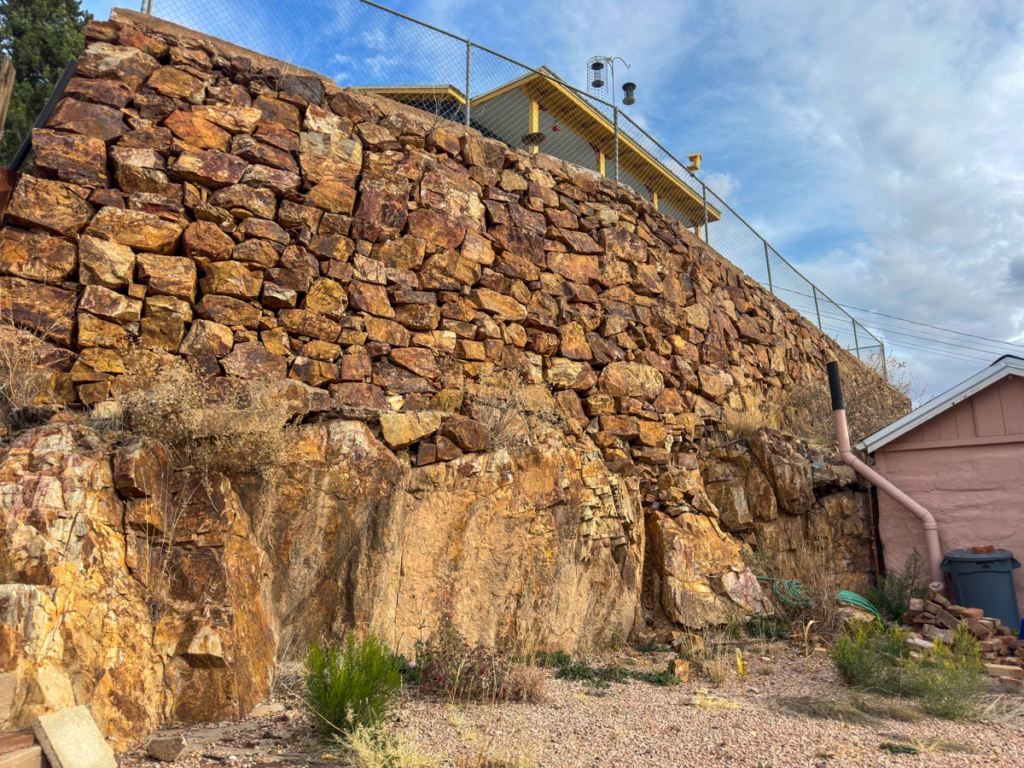
Many structures feature rust-colored slag and iron-stained rubble, waste material from the Copper Queen extraction process. These are industrial-geological hybrids, pinning the domestic space to the metallurgic pulse of the canyon.
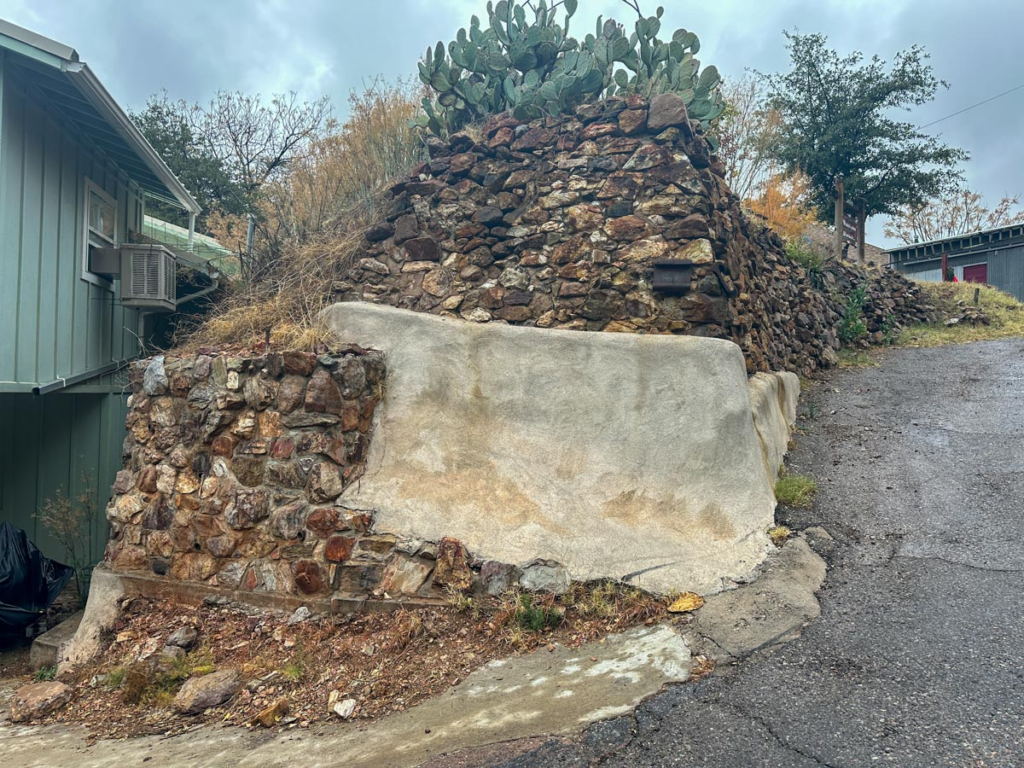
Dry-Stack Geometry
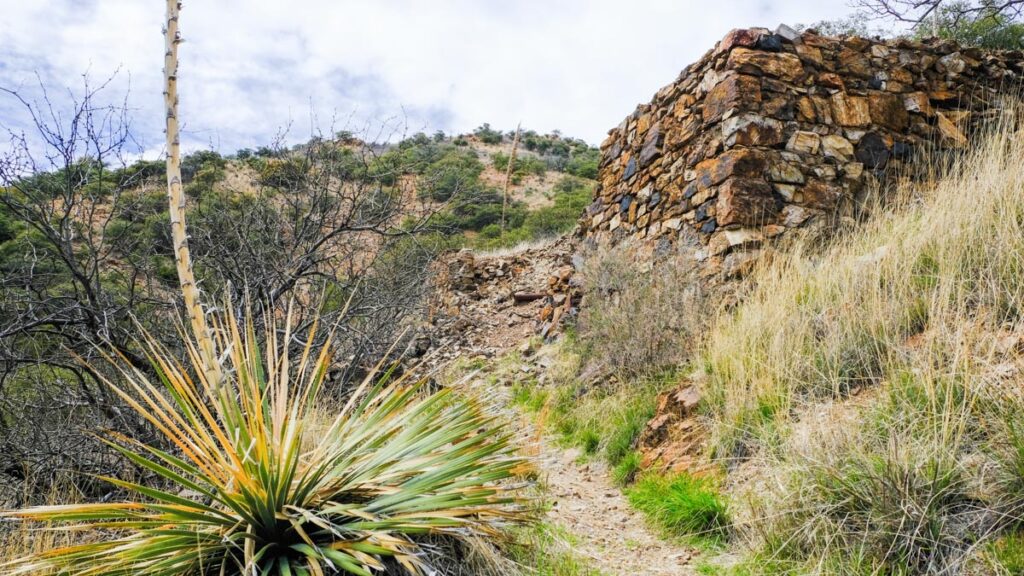
In the higher residential terraces, one encounters the ancient logic of dry-stacking. These walls rely on mathematical friction and mass rather than mortar, a low-velocity technology that has survived a century of monsoonal tremors.
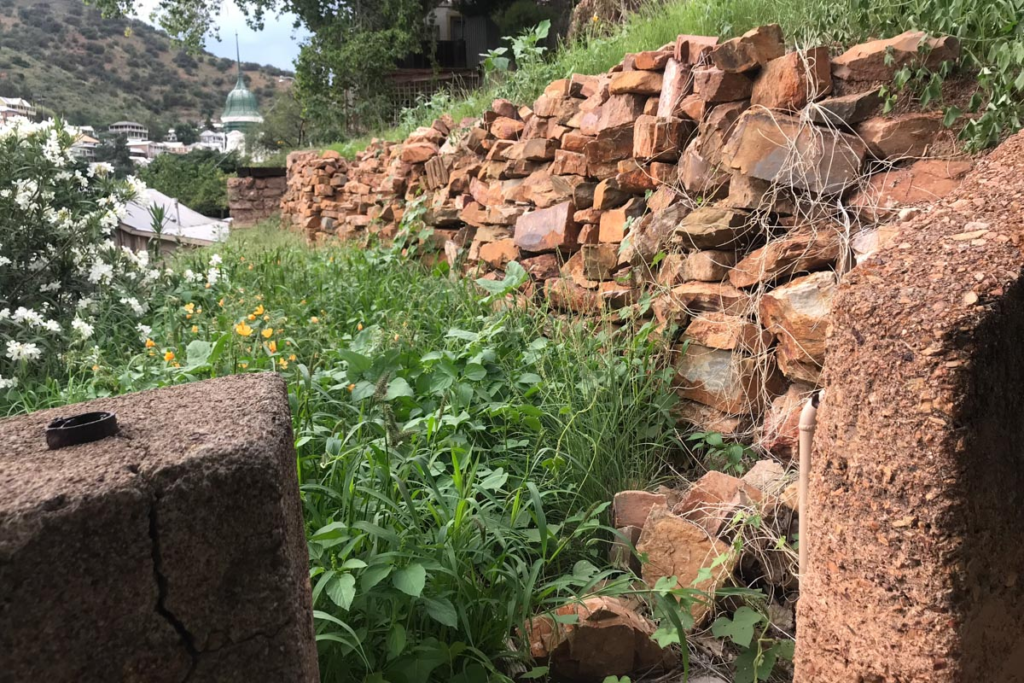
The Function of the Terraced Grid
The significance of these lithic barriers lies in their role as metabolic regulators. They turn a potentially hostile verticality into a habitable theater.
The Social Interface
The walls create the terraced platforms for the miners’ shacks, where the neighbor’s retaining wall is the sidewalk for the level above.
The Modern Overwrite
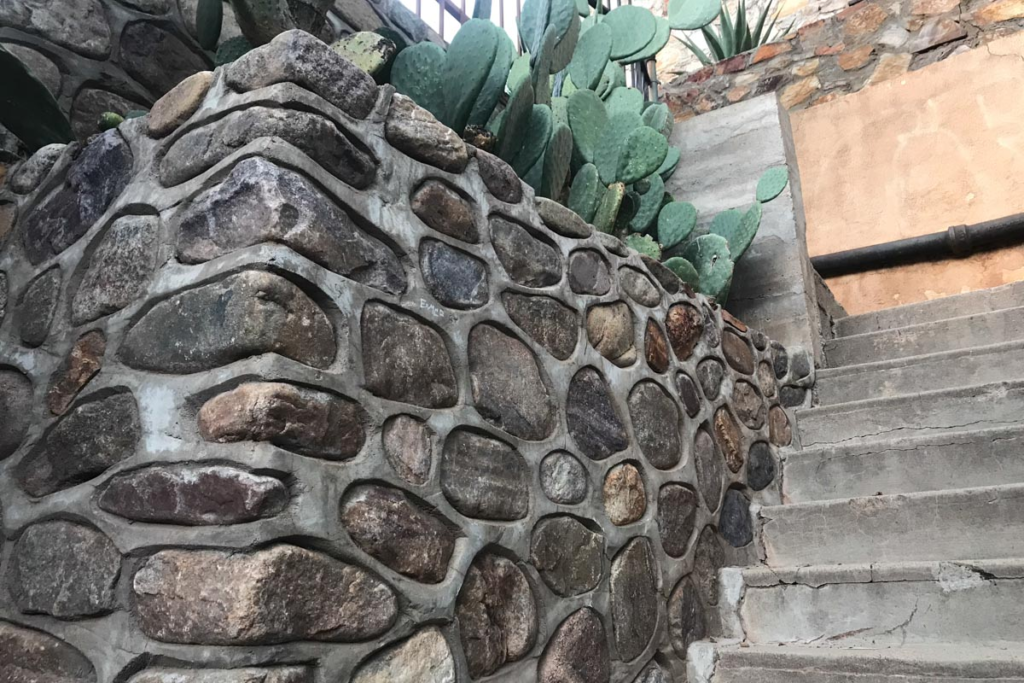
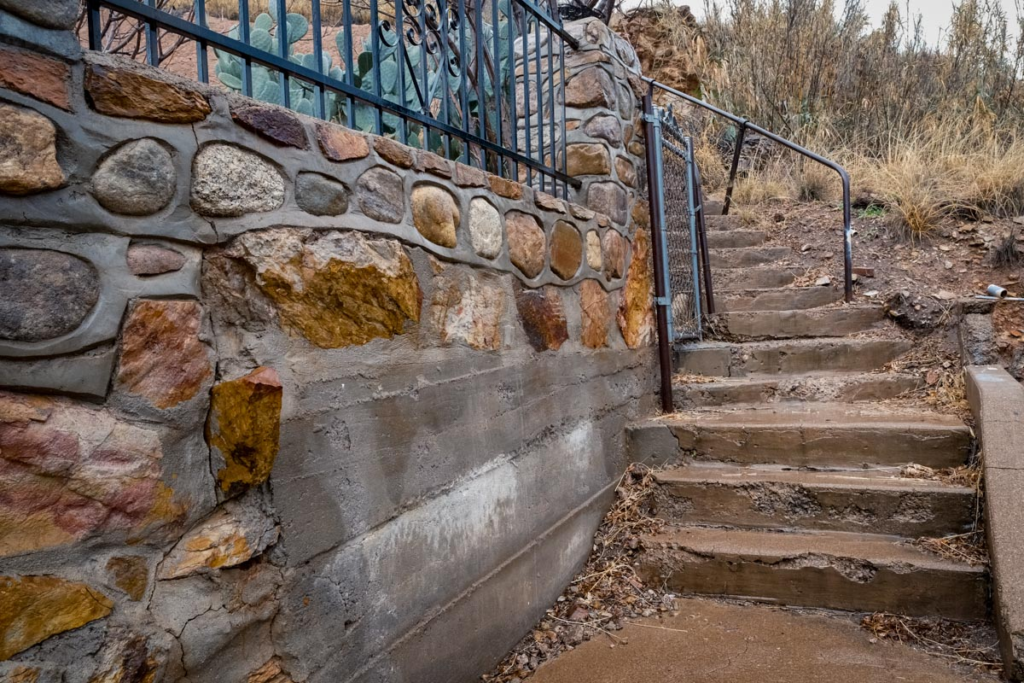
In the bohemian era, these stone surfaces have been reskinned as vertical galleries. They are now fused with mosaic shards, tile, and glass, transforming industrial functionalism into a psychedelic, tactile landscape.

To walk the 3,000 historic stairs of Bisbee is to navigate a hallucinatory workshop of stone. These walls prove that the most resilient artifact is the unyielding human desire to build a permanent, jagged future against the indifferent gravity of the mountains.
Lithic Navigation
- The Primary Transit: Ascend Tombstone Canyon to observe the most complex dry-stacking in the residential core.
- The Industrial Mix: Explore Brewery Gulch to see walls incorporating authentic mining debris.
- The Aesthetic View: Look for the mosaicked retaining walls near the historic Art Deco courthouse, where geology meets the avant-garde.