
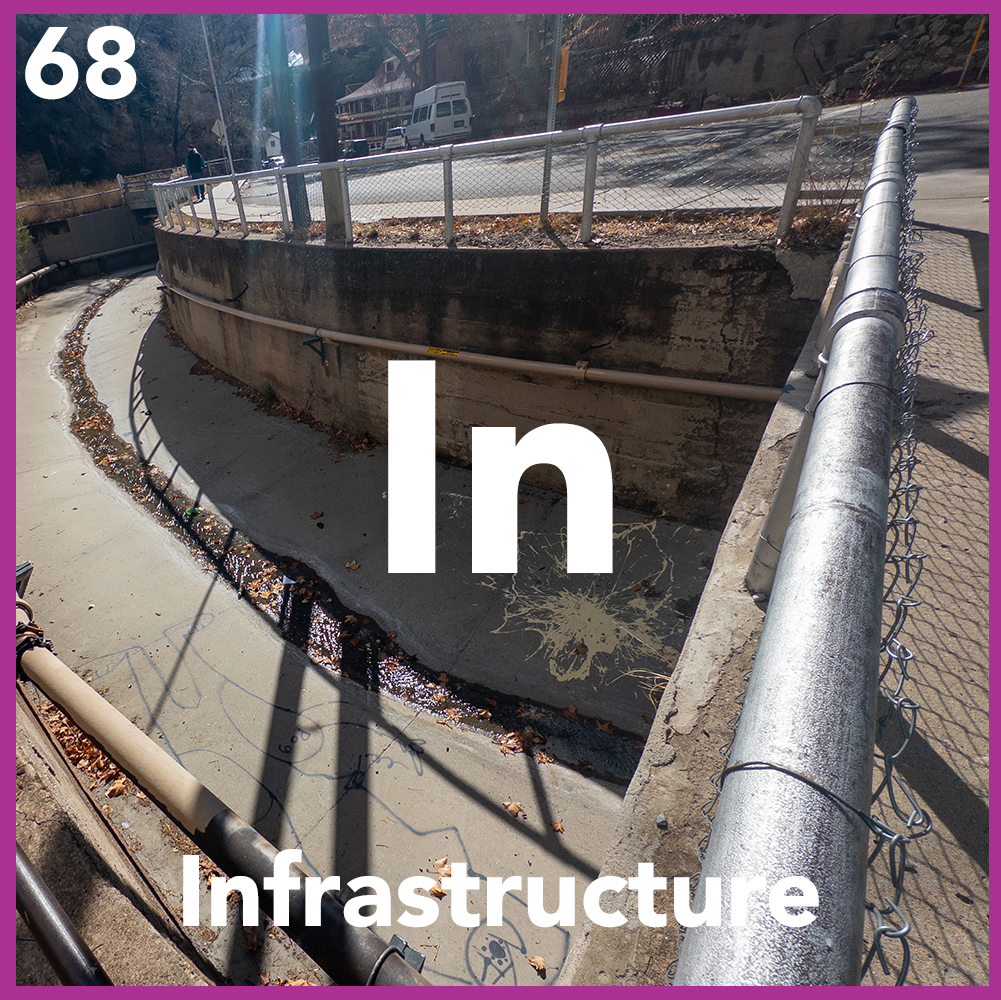
Infrastructure of the Weird
Bisbee’s infrastructure is profoundly unique due to its dramatic setting, with much of the town built vertically into a steep canyon, resulting in a fascinating blend of historic mining engineering and creative urban adaptation.
The Vertical Grid: Bisbee’s Impossible Infrastructure
Navigating Bisbee’s infrastructure is like looking at the town’s “circulatory system” on the outside of its body. Because the town was built rapidly into steep canyon walls before modern building codes existed, the utilities here are a fascinating—and often precarious—feat of engineering.
The Plumbing & Water Geometry
Gravity-Fed Logic
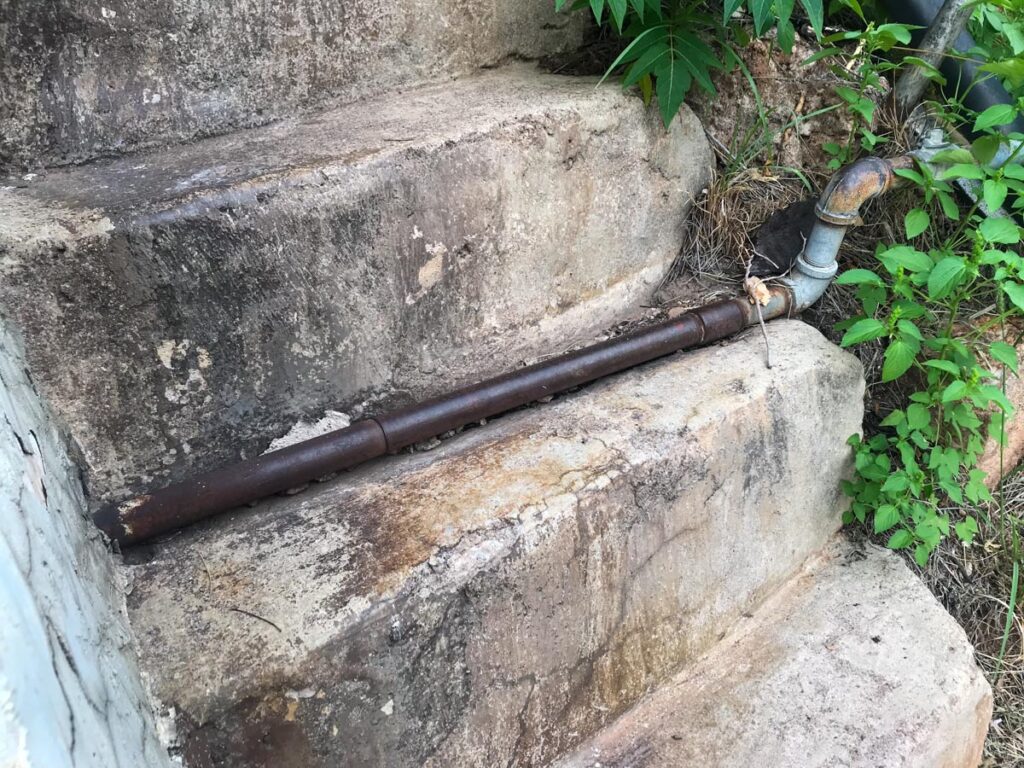
Most of Bisbee’s water is pumped up from the San Pedro Valley to high-altitude reservoirs. From there, gravity does the heavy lifting. You’ll notice water lines running above ground or across staircases because trenching into solid limestone was historically impossible.
The Sewer Challenge
In the 1900s, Brewery Gulch was essentially an open sewer.
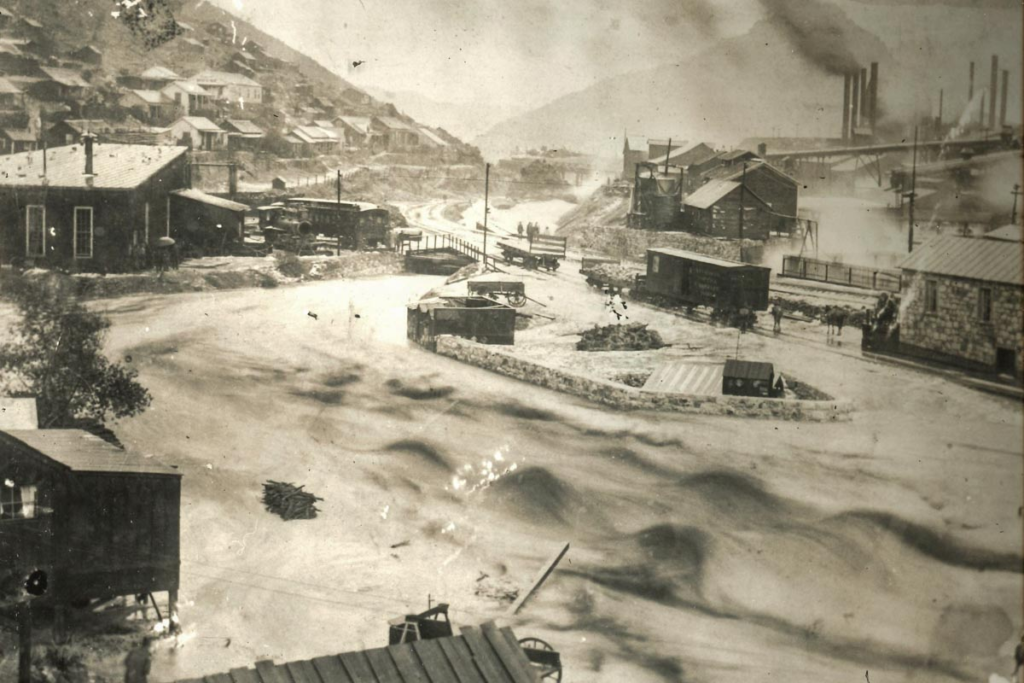
All rainwater from the surrounding Mule Mountains drains directly through downtown via a system of 100-year-old flumes, ditches, and underground box channels.
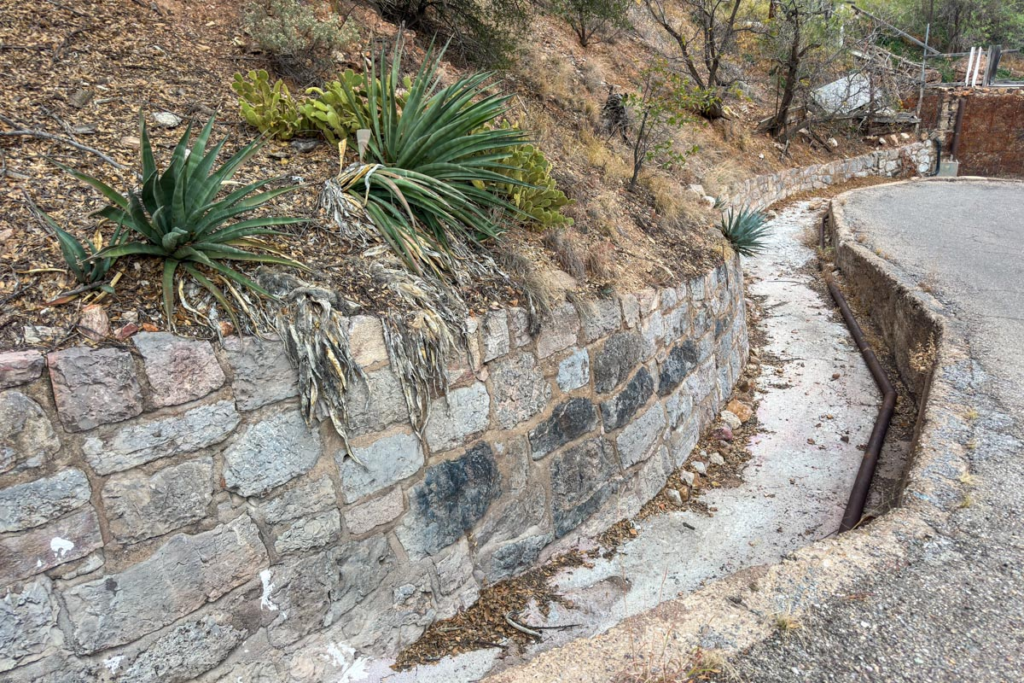
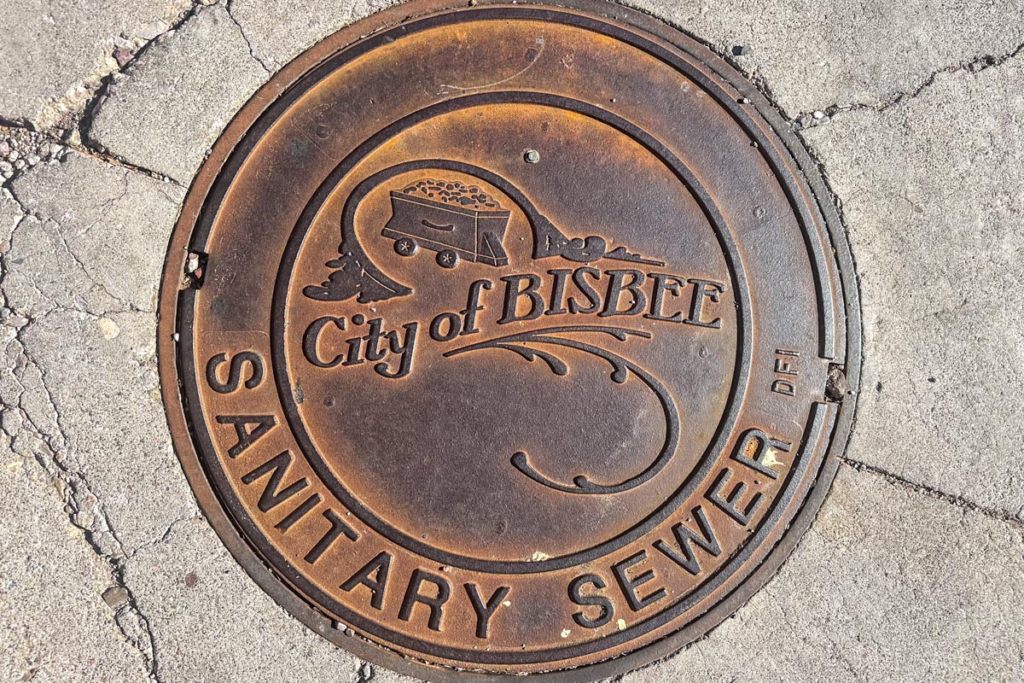
Today, a modern sewer system is tucked under the streets, but in the residential hills, many pipes are still visible, zig-zagging down the slopes to meet the main lines in the canyon floor. In the quiet of the morning, you can actually hear the “kinetic transit” of water through the pipes clinging to the canyon walls—a unique acoustic signature of the town.
Retaining Walls & Erosion Control
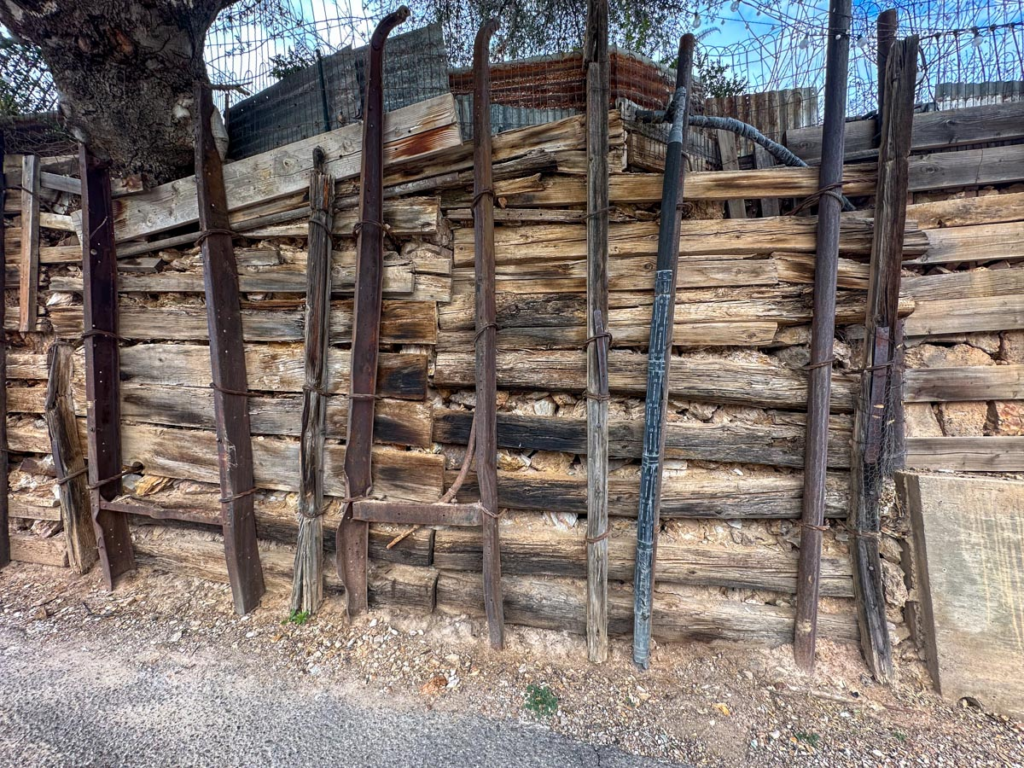
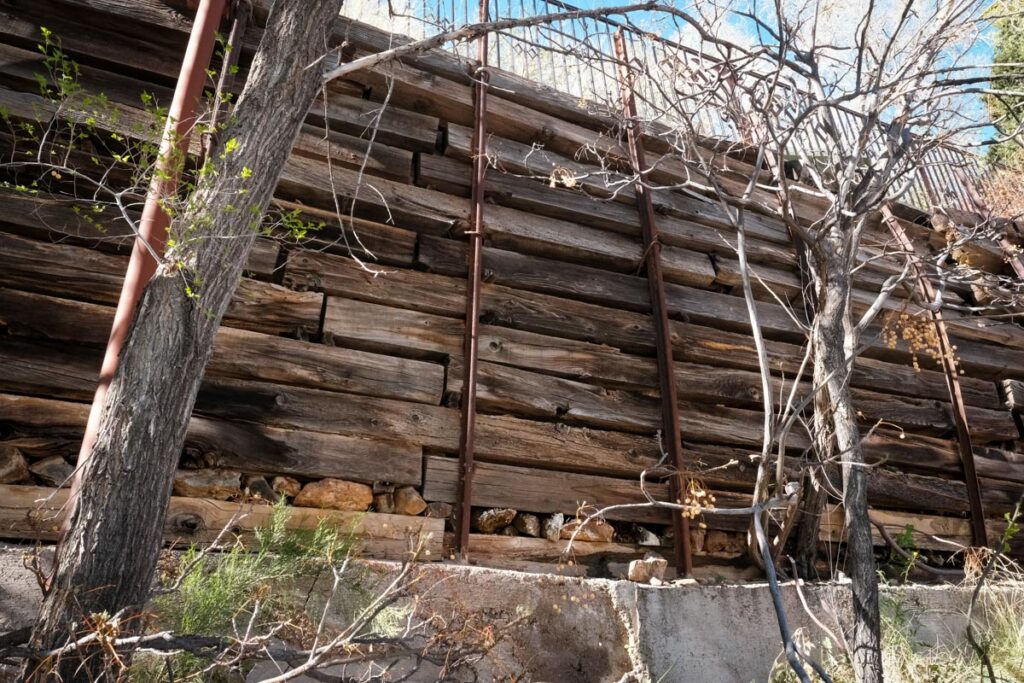
The Masonry Mosaic
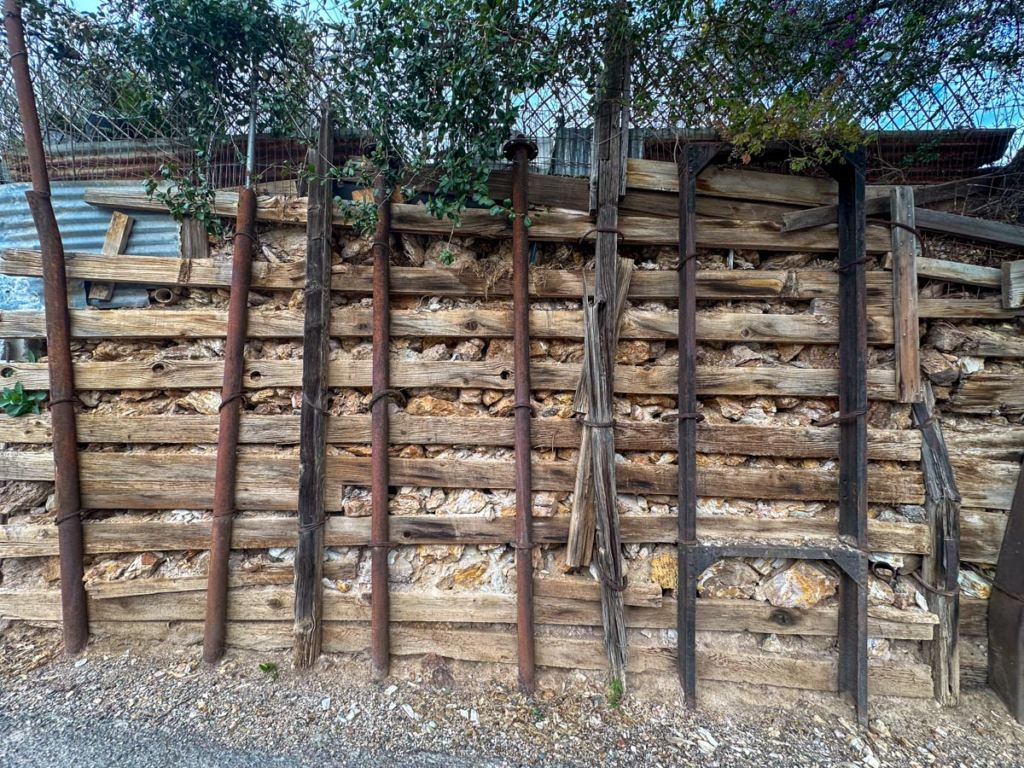
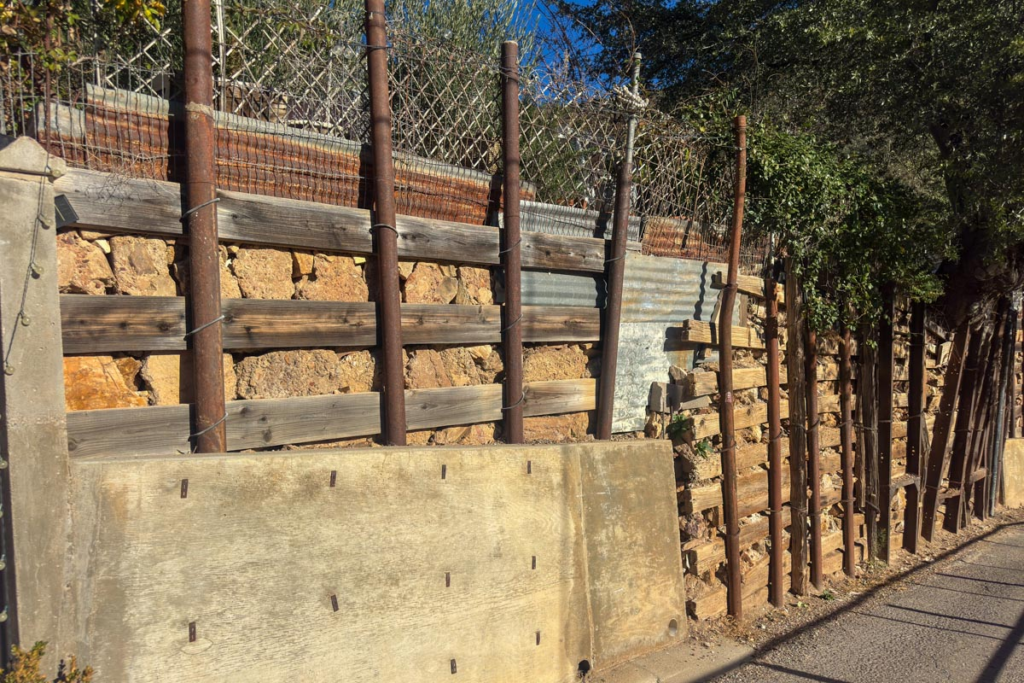
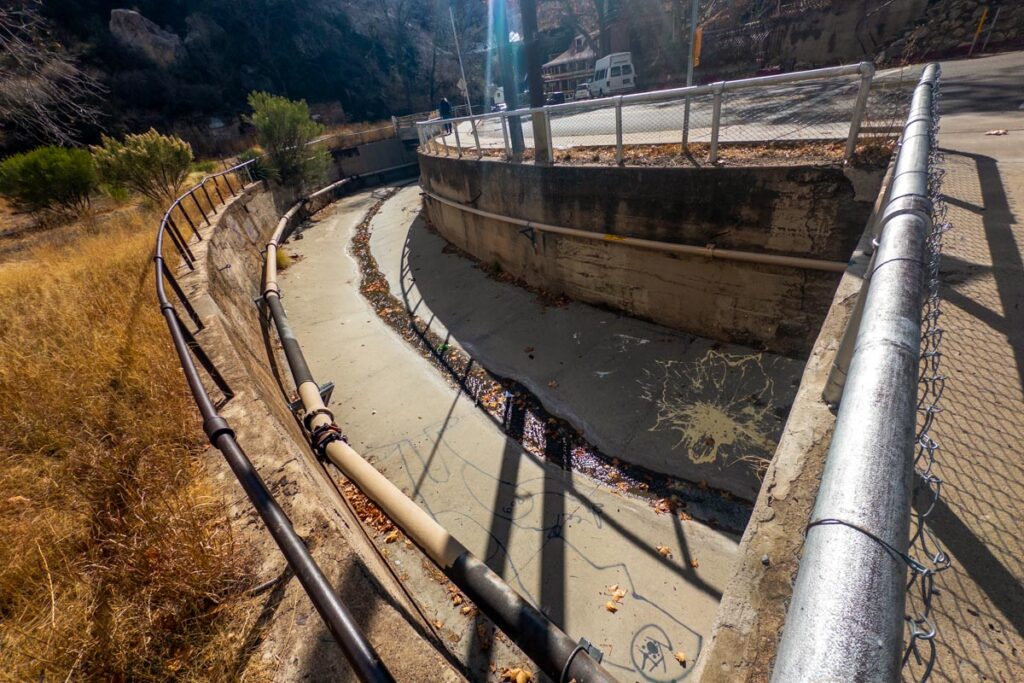
Without retaining walls, half of Old Bisbee would be at the bottom of the Gulch. You’ll see a timeline of tech here: 1900s hand-laid stone (no mortar), mid-century poured concrete, and modern gabion baskets (rock-filled wire cages).
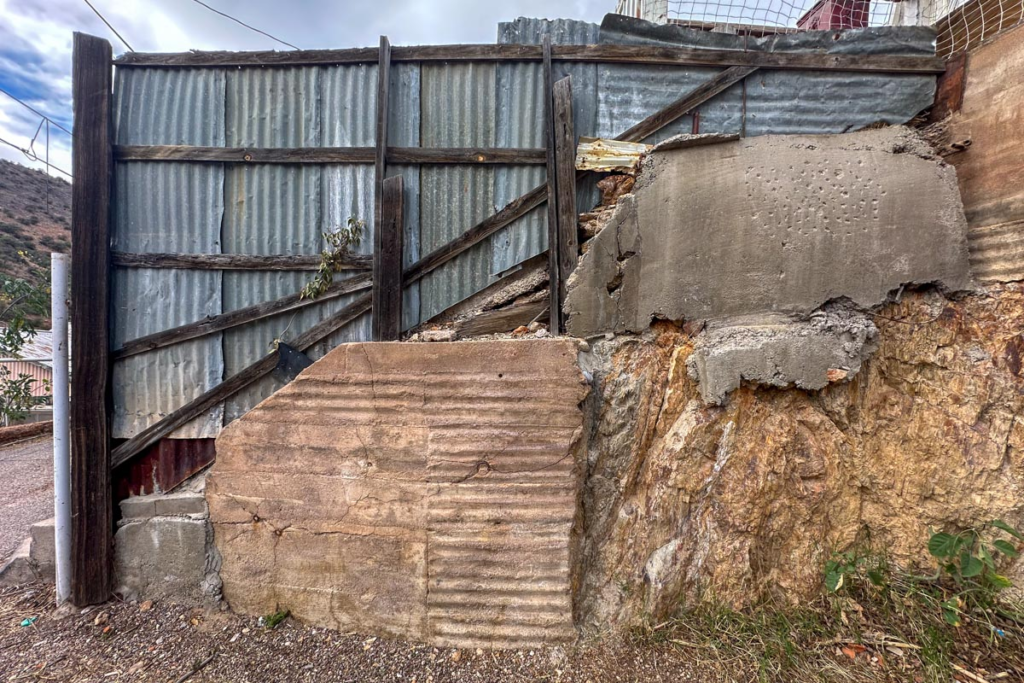
Terrace Engineering
Almost every yard in the hills is a “shelf.” These walls prevent the “Mule Mountain melt” during the summer monsoons, when massive amounts of water turn the town’s stairways into temporary waterfalls.
Electric & Gas: The Wire Web
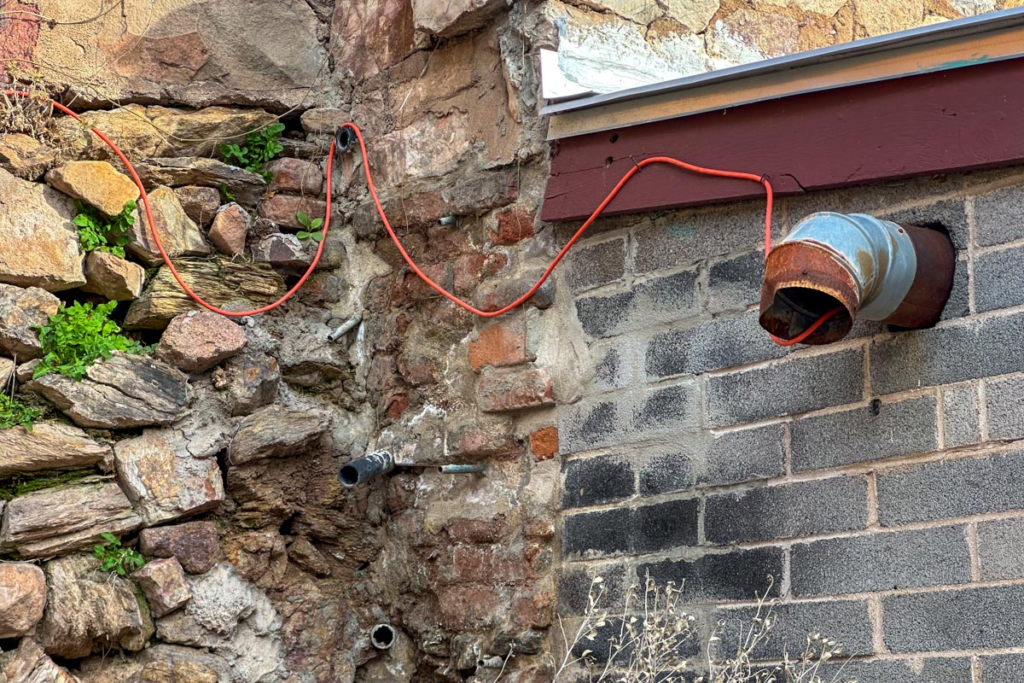
Utility distribution in Bisbee is complicated by the town’s verticality and narrow, winding streets.
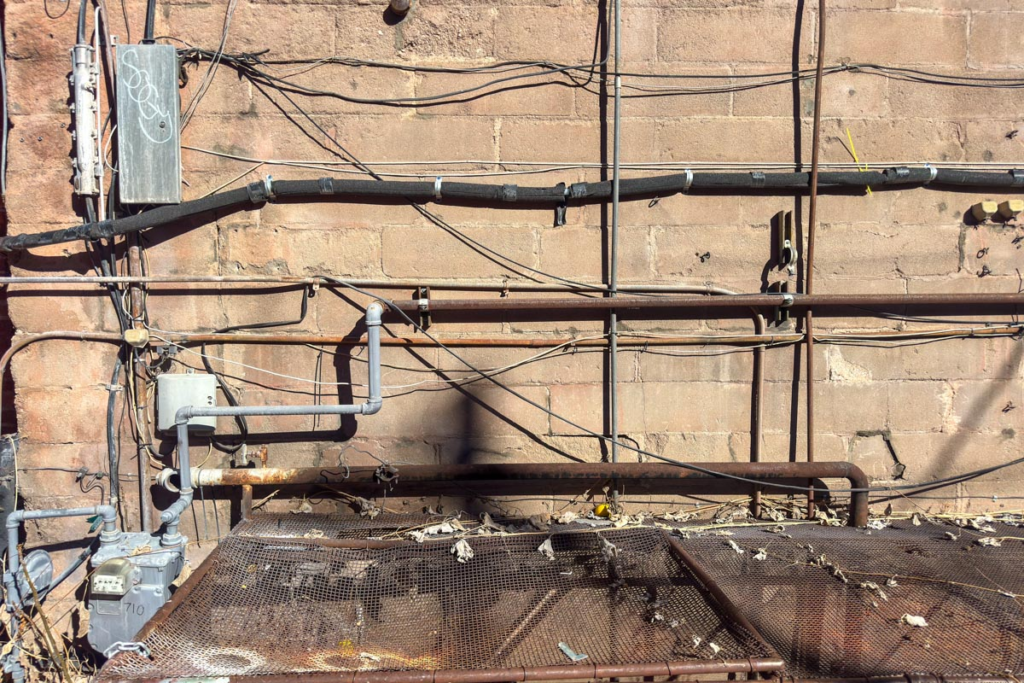
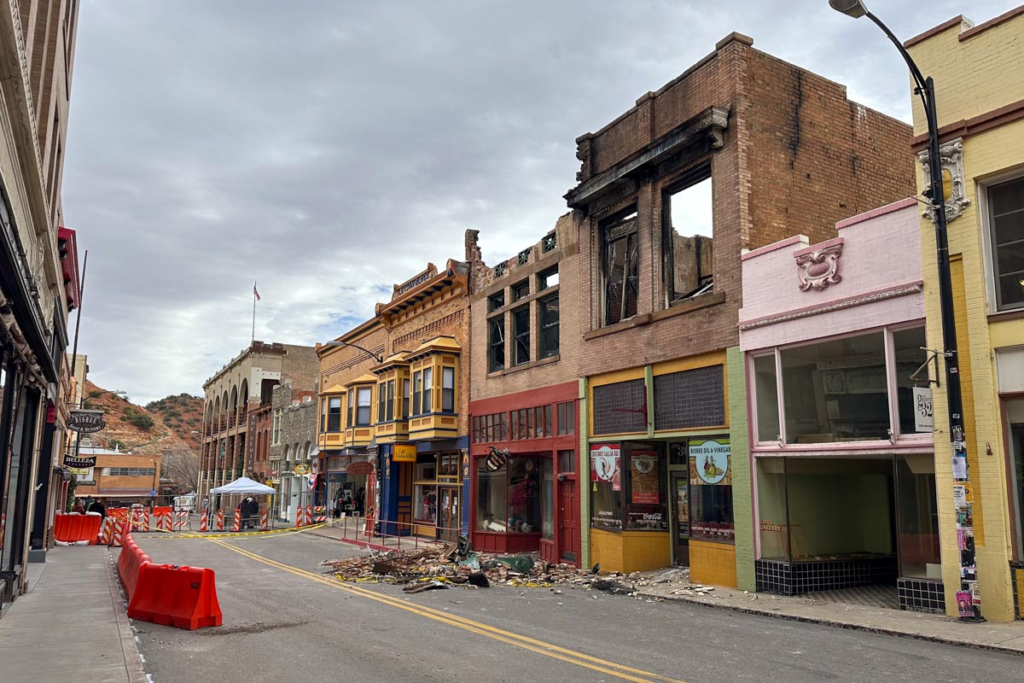
Historic downtown buildings are vulnerable to electrical failures due to outdated wiring. In 2024, a major fire in the historic district was attributed to difficult-to-track electrical lines located behind collapsed walls.
The Gas Relay
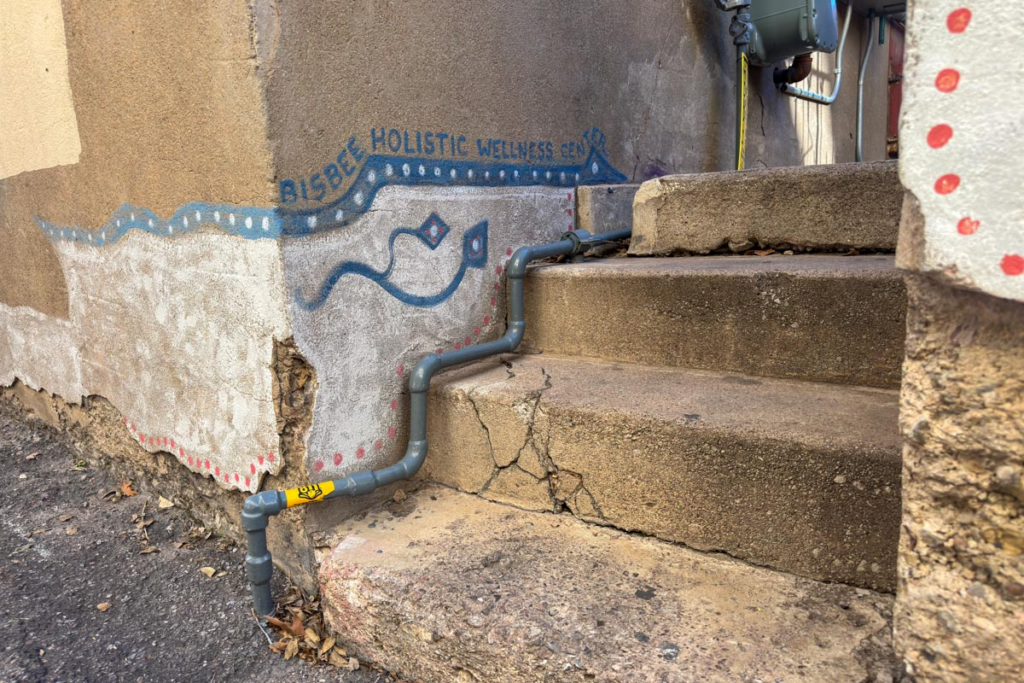
Natural gas lines often run along the exterior of buildings or follow the “Stairmaster” steps. It’s common to see a gas meter halfway up a public staircase, serving a house forty feet above it.
What to Look For (The “Infrastructure Safari”)
The “Staircase” Pipes
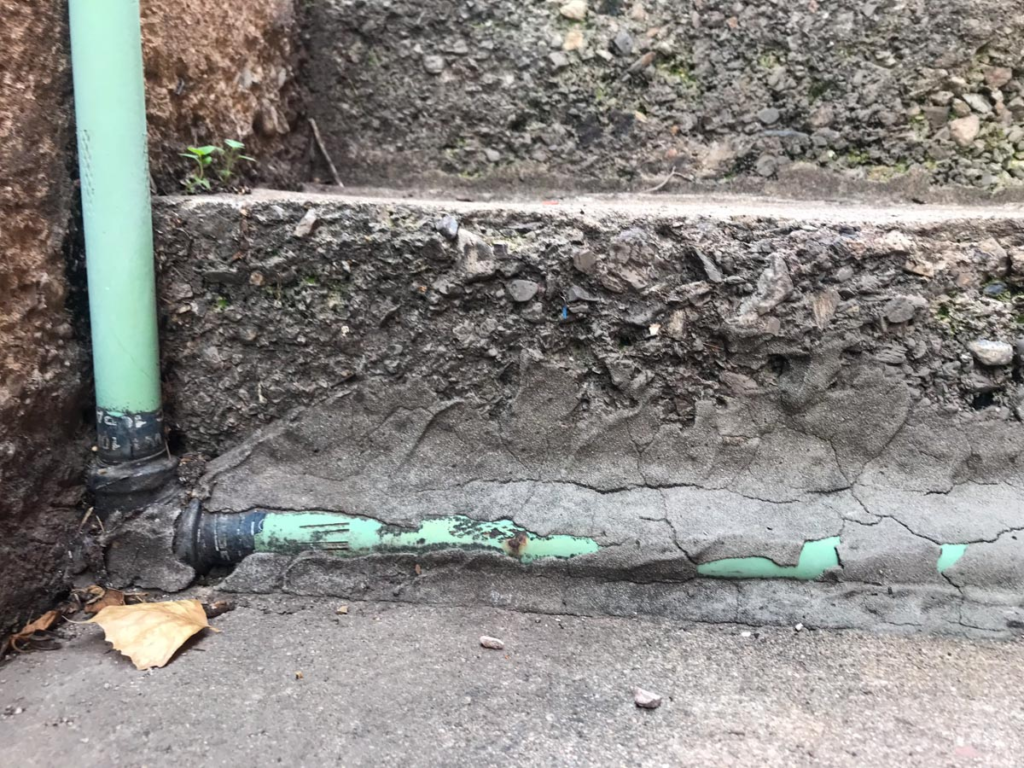
Look for thick black or silver pipes running parallel to the historic concrete stairs. These are often the lifeblood of the homes at the top. Much of the town still relies on pipes and reservoirs installed by the Works Progress Administration over 80 years ago, which city officials admit are increasingly difficult to maintain—”when you touch it, it gets worse”.
Wall Anchors
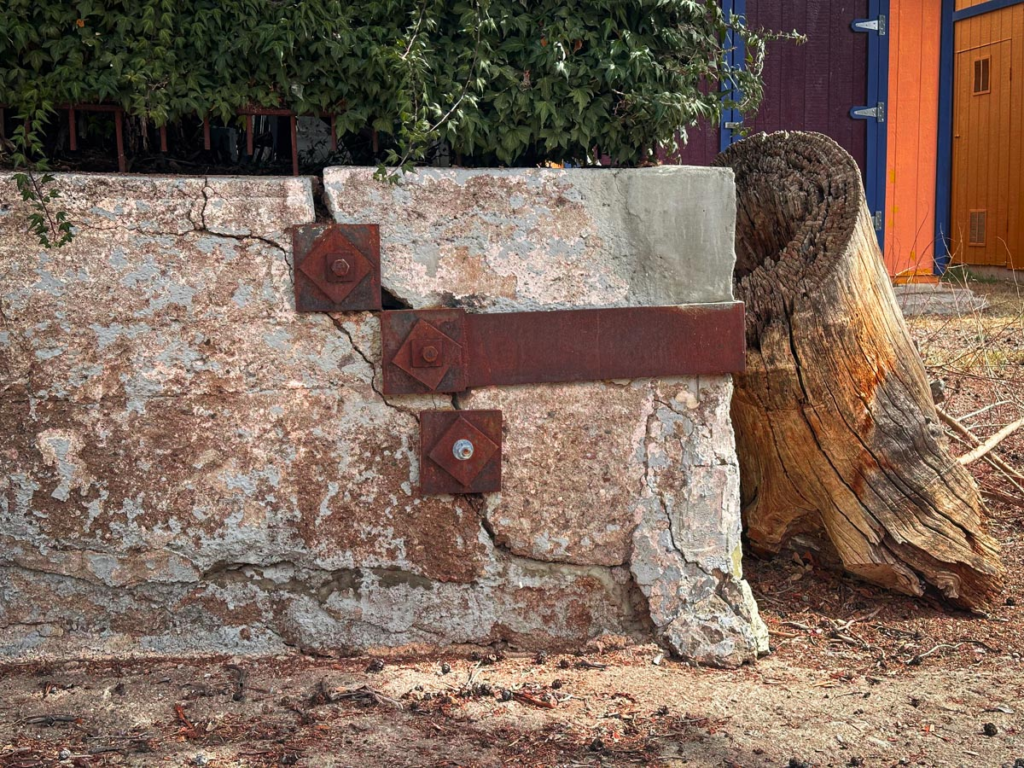
Look for large metal “stars” or plates bolted into the rock or old masonry—these are tie-backs used to keep the historic walls from bowing under the weight of the mountain.
Exposed Bedrock
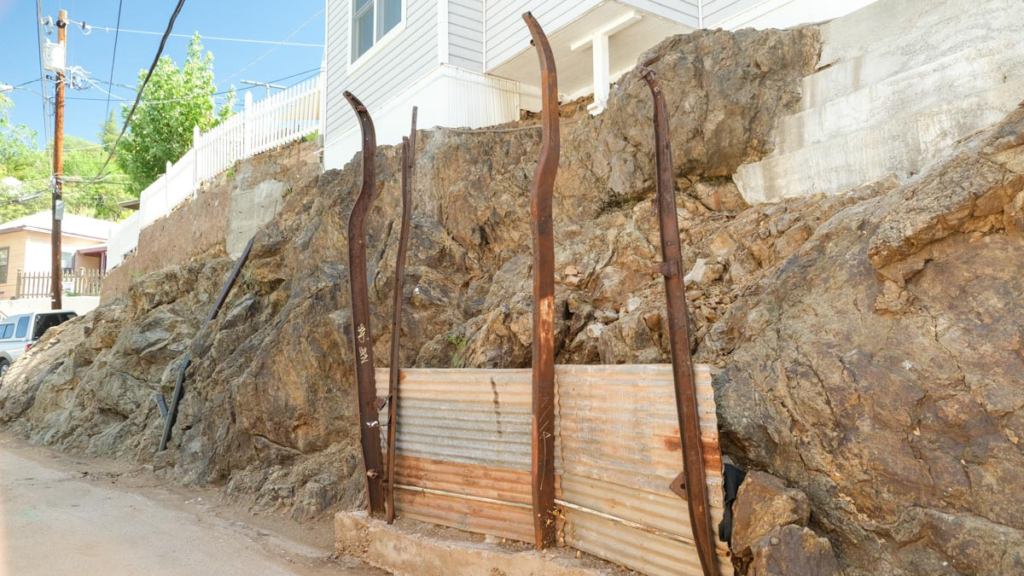
In many places, the “pavement” simply gives up and turns into raw limestone. The town infrastructure simply wraps around these outcrops rather than blasting through them.
Know Before You Go:
- Watch Your Step: Because infrastructure (pipes, meters, and low-hanging wires) often occupies the same narrow space as the footpaths, always keep an eye on your overhead and ground-level clearances.
- The Monsoon Variable: If you’re visiting in July or August, you’ll see the infrastructure in “combat mode.” The town’s drainage culverts are designed to handle flash floods that can move thousands of gallons a second.
- Respect the Bricks: Many of the retaining walls are over a century old. While they look like great photo backdrops, avoid climbing on them—they are structural “load-bearers” for the houses above.
Pro Tip: For the best view of the “infrastructure web,” walk to the top of Castle Rock. You can look down on the rooftops and see exactly how the pipes and wires jump from tier to tier to keep the town running.