

The Botanical Frontier: The Unique Flora of Bisbee
Because Bisbee sits at a biological crossroads—where the Chihuahuan Desert meets the Sky Islands—the plant life here is a fascinating mix of high-desert scrub and mountain forest. The town’s vertical geography creates “micro-climates” where you can find heat-loving cacti on one side of a canyon and shade-dwelling ferns on the other.
The Agave Americana (Century Plant)
These massive, blue-green rosettes are everywhere. Once every few decades, they send up a 20-foot flower stalk that looks like a giant asparagus, blooms, and then the entire plant dies—a dramatic “one-shot” reproductive strategy.
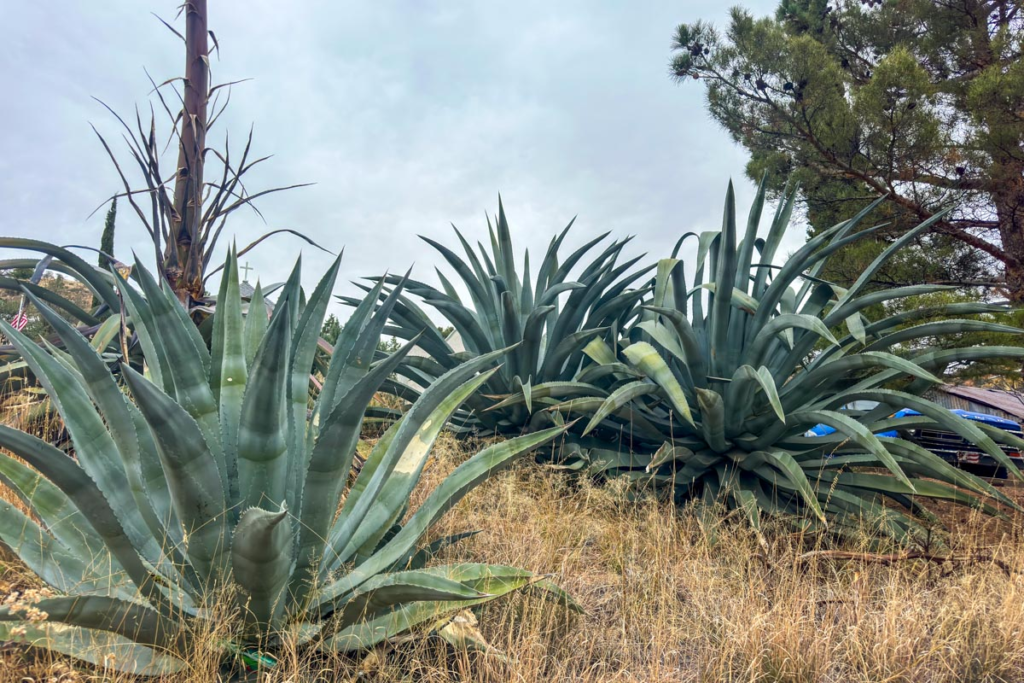
Ocotillo
Often mistaken for a cactus, this “living sculpture” looks like a cluster of thorny whip-like wands. After a monsoon rain, they miraculously sprout tiny green leaves and bright red-orange flowers within 48 hours.
Sotol (Desert Spoon)
Look for these near the ridgelines. They have sawtooth-edged leaves and were historically used by indigenous groups to make everything from floor mats to fermented spirits.
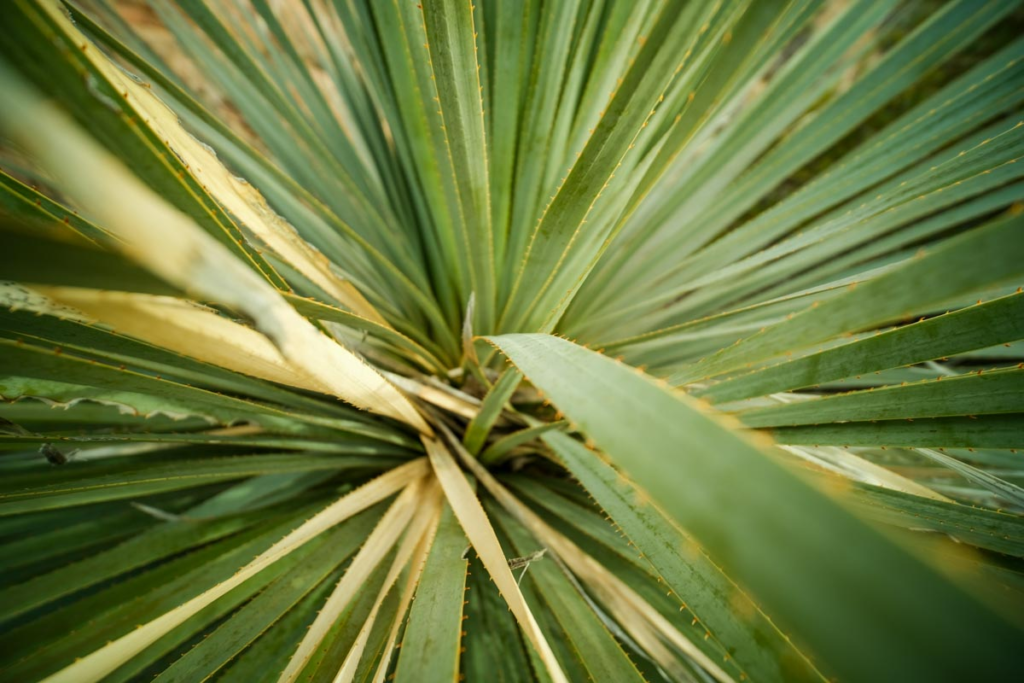
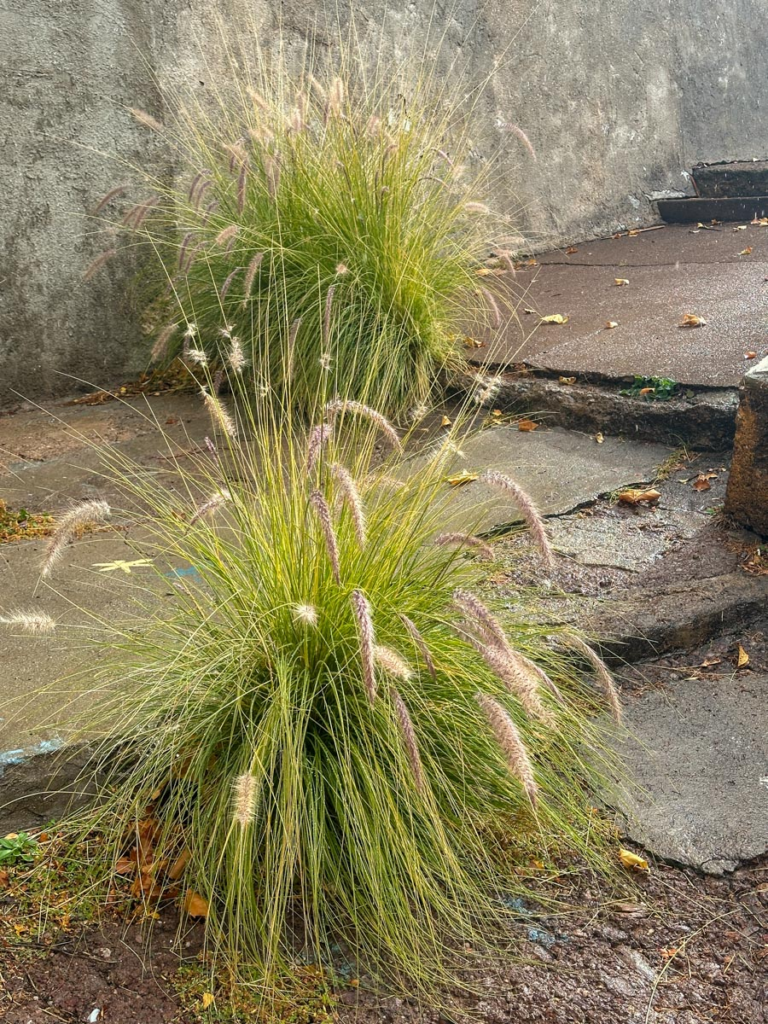
Purple Fountain Grass
This is a fast-growing, 3-5 foot tall perennial known for its burgundy foliage and feathery plumes. It thrives in full sun, requires little water once established, and is often used in landscapes or containers, but it is considered an invasive species that spreads rapidly.
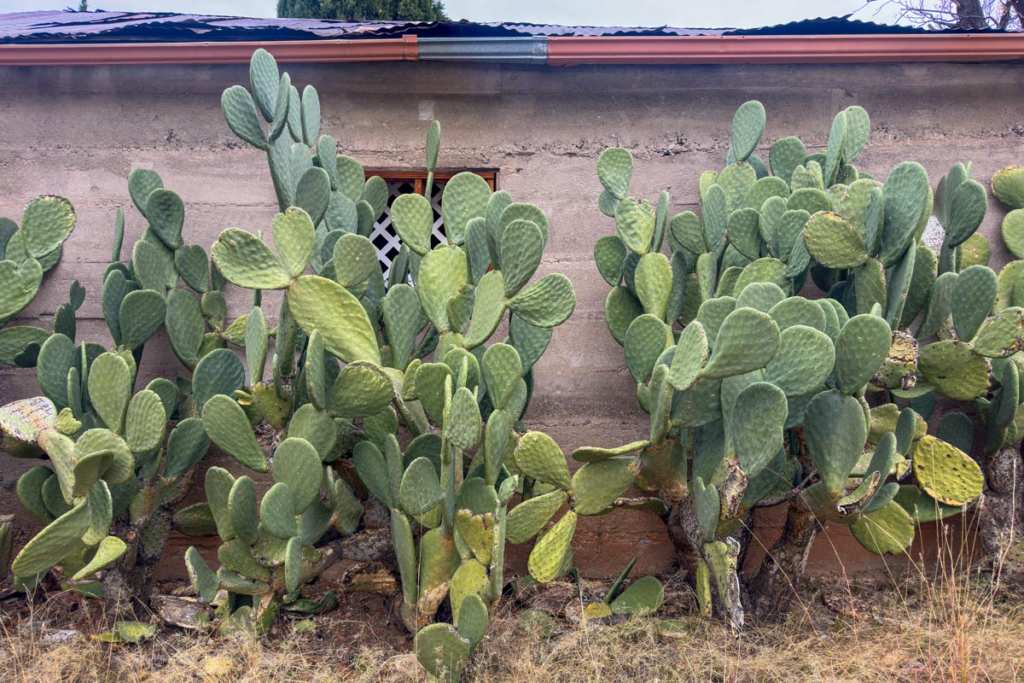
Prickly Pear Cactus
Prickly pear cacti are abundant in and around Bisbee, Arizona, featuring species like the purple Santa Rita and Beavertail, which bloom in shades of hot pink and yellow between March and June.
The “Mine Tailings” Survivors
You’ll notice certain hardy plants, like Saltbush and Brittlebush, that thrive in the mineral-rich, disturbed soil near the old mine workings, often turning bright silver or yellow in the spring.
The Creative Urban Garden
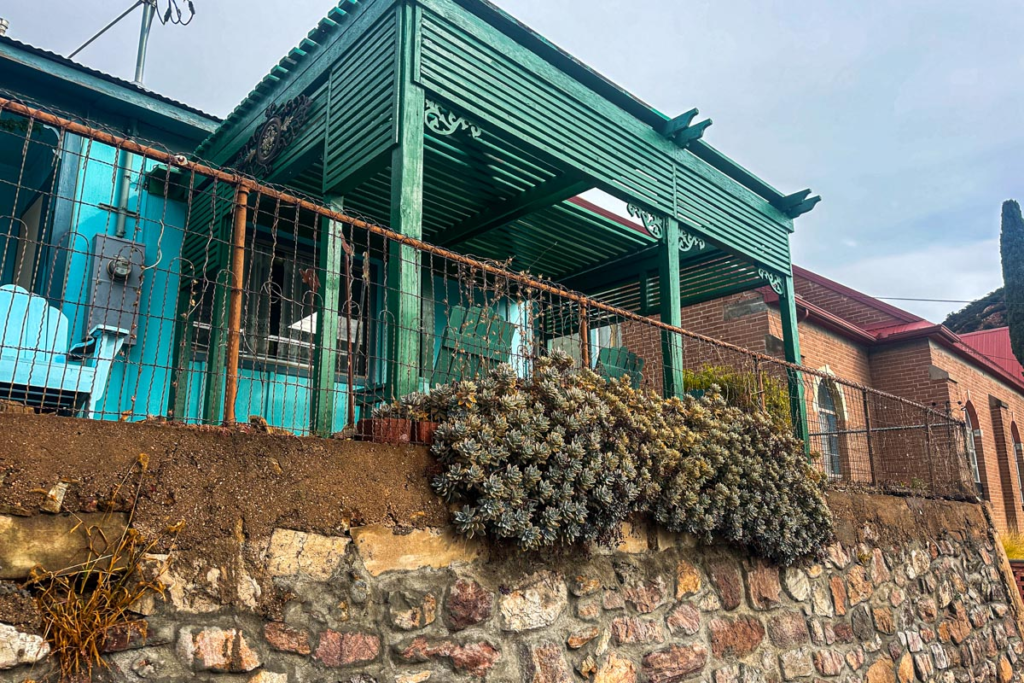
The “Step” Gardens
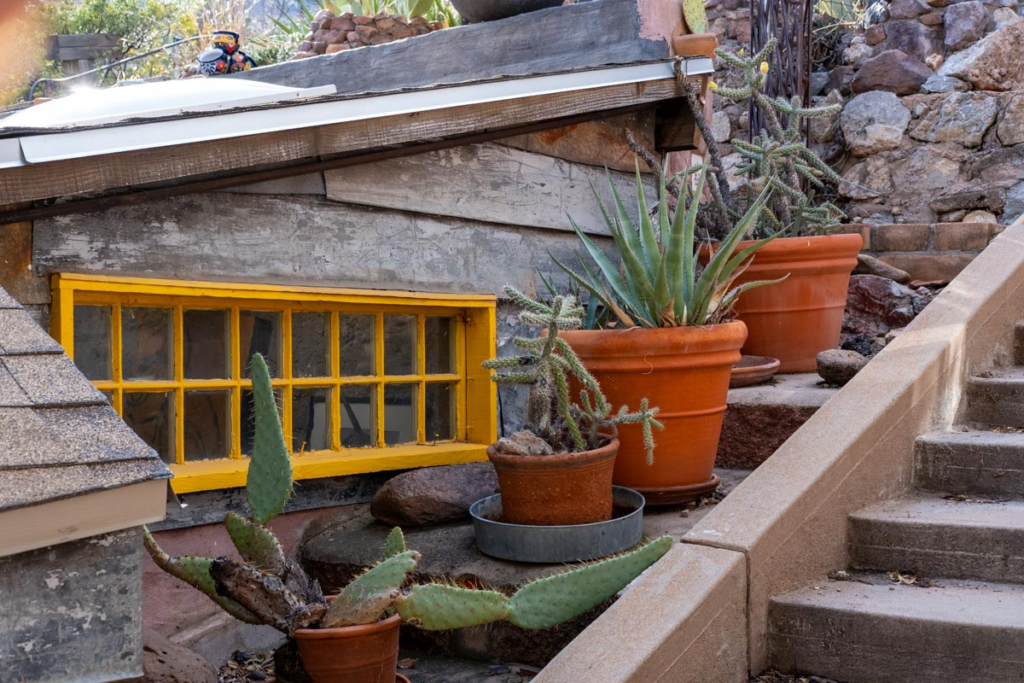
Because there is very little flat land, Bisbee locals are masters of potted gardening. Walking the “Stairmaster” steps, you’ll see thousands of terracotta pots filled with rare succulents, geraniums, and even Mediterranean herbs that love the high-altitude sun.
The Tree of Heaven
This invasive but beautiful species is a Bisbee staple. It grows out of cracks in the historic masonry and provides much of the town’s lush summer canopy, though its aggressive roots are a constant challenge for historic infrastructure.
Know Before You Go:
- The “Desert Stabby” Rule: Almost everything in the Mule Mountains has a defense mechanism. Agave tips are like needles, and the Catclaw Acacia (aptly named “Wait-a-Minute Bush”) will hook into your clothes. Stick to the worn paths.
- Monsoon Transformations: If you visit in July or August, the landscape turns an impossible shade of emerald green overnight. This is also when the Sacahuista (Bear Grass) and various desert wildflowers bloom in high-density patches.
- The Bird Connection: The flora supports an incredible array of birdlife. Look for hummingbirds hovering around the red ocotillo blooms or Mexican Jays hidden in the scrub oaks of Moon Canyon.
- Botanical Sourcing: If you want to take a piece of the desert home (legally), check the Bisbee Saturday Market. Local growers often sell native starts and drought-tolerant succulents that are “pre-calibrated” for desert living.
- Pro Tip: For the best botanical tour, hike the Bisbee City Trail. You’ll pass through three distinct “vegetation zones” in under two miles, moving from lowland desert scrub to upland juniper and oak.