
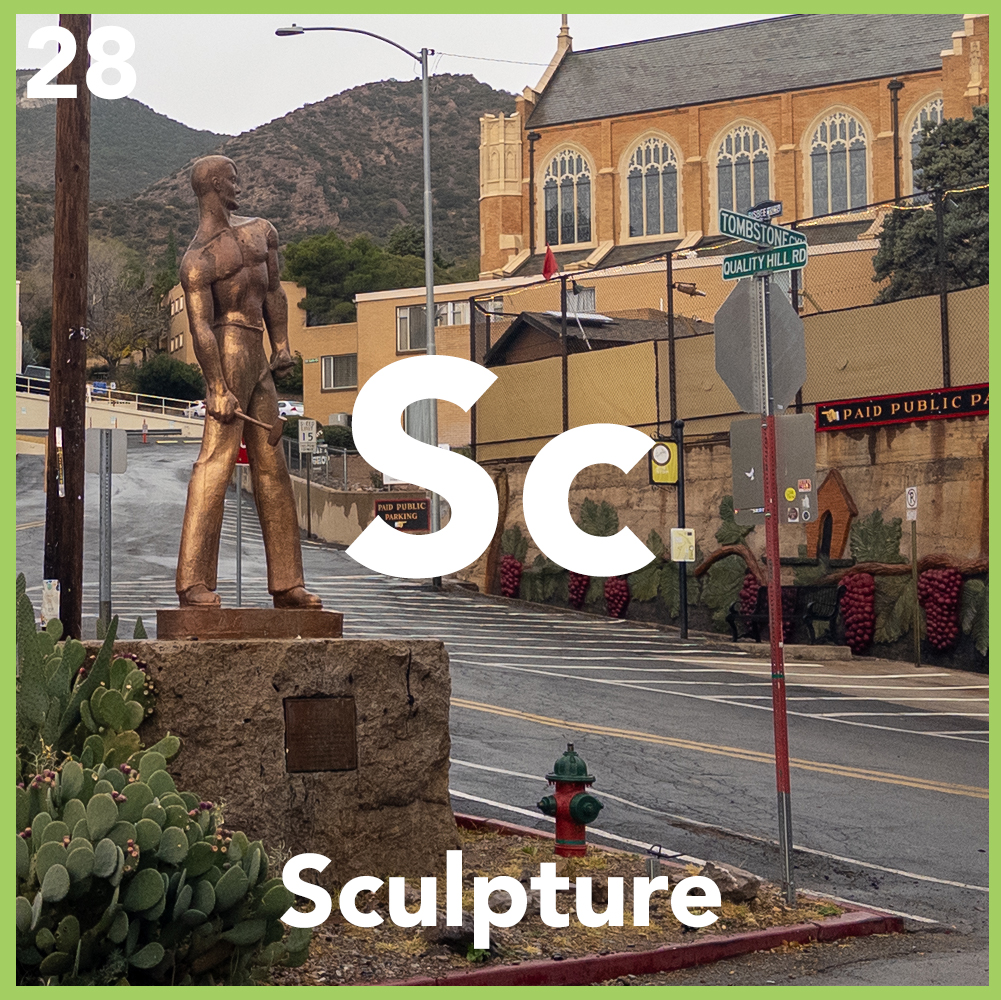
The Metallic Residue: Sculpture as Industrial Apparition
In the precipitous geometry of the Mule Mountains, sculpture exists not as mere decoration, but as a reanimation of matter. In Bisbee, the shattered bones of the mining era—the iron, the copper, and the oxidized steel—have been scavenged and reassembled into a permanent theater of form. These works function as tectonic fossils, pinning the town’s bohemian present to its heavy, metallic past.
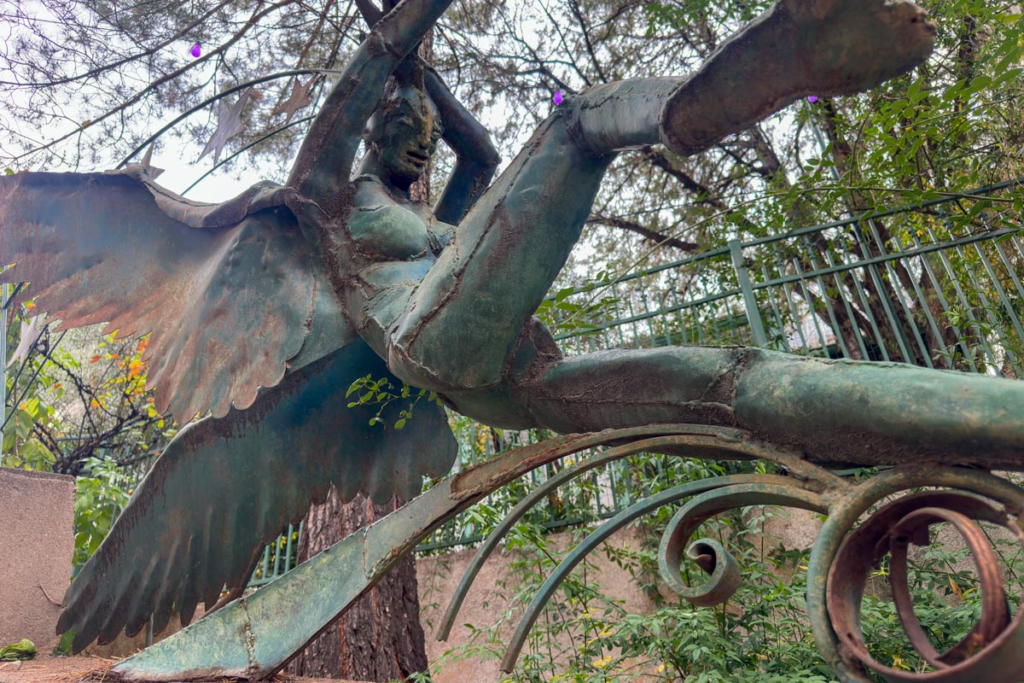
Bisbee’s sculptural landscape remains a powerful testament to its dual identity: a rugged mining town forged in iron and a contemporary art colony fueled by creative reuse.
The Sentinels of the Canyon
The sculptural landscape of Bisbee is anchored by monolithic figures that act as psychic regulators for the town’s inhabitants.
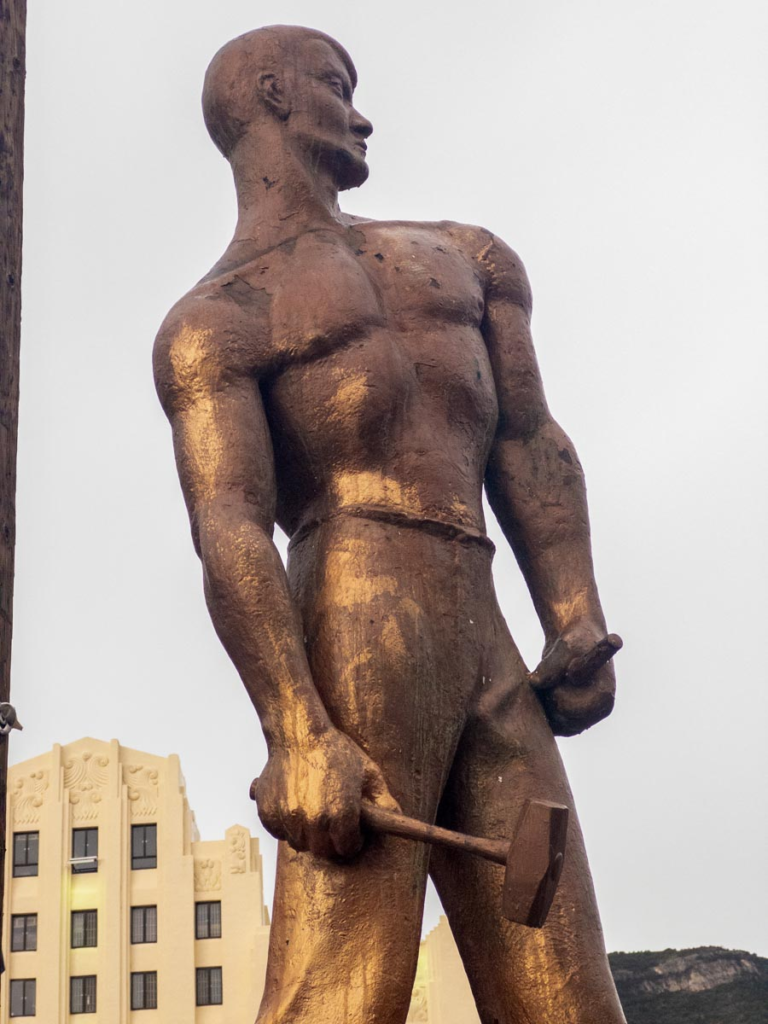
The Iron Man (The Miner)
Standing with a stoic, rust-colored gravity in front of the Cochise County Courthouse, this life-sized tribute by artist R. Phillips serves as the town’s ancestral ghost. It is a brutalist reminder of the subterranean labor that birthed the canyon’s wealth, its oxidized skin mirroring the very ore it once extracted.
The Kinetic Alchemies of Ben Dale
If the “Iron Man” represents Bisbee’s past, the work of Ben Dale represents its artistic rebirth. Dale is a cornerstone of the Bisbee art scene, known for transforming heavy industrial scrap into graceful, thought-provoking forms.
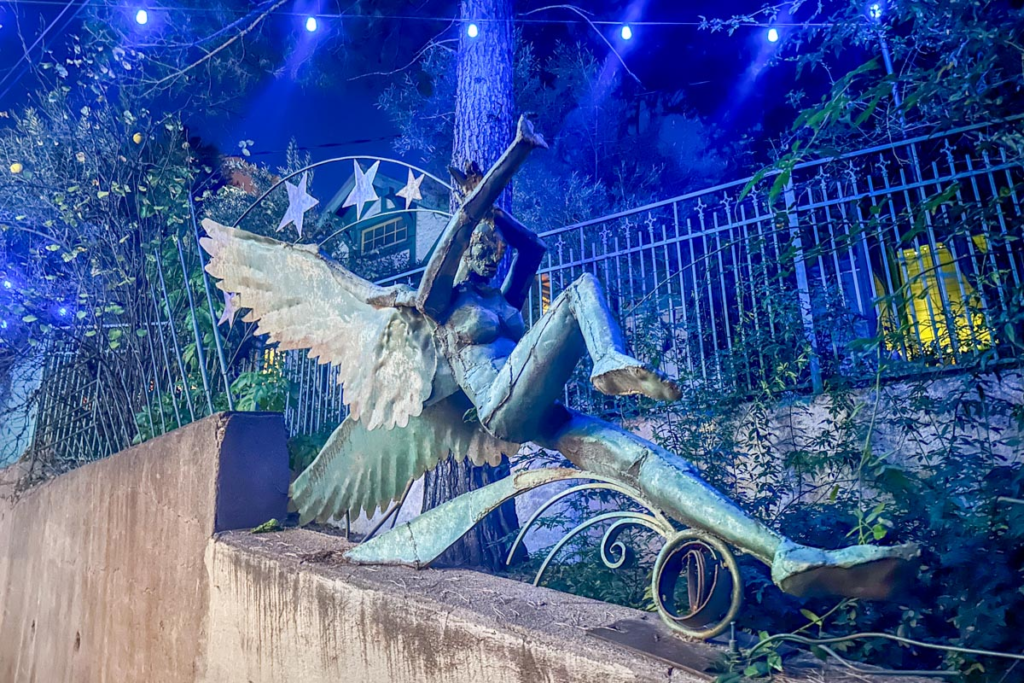
Deep within the labyrinth of Bisbee’s hidden alleyways, the work of Ben Dale operates as a high-velocity creative cell. His sculptures—often sprawling, intricate assemblages of salvaged machine parts and scrap metal—capture the entropy of the machine age. These are biological-mechanical hybrids, turning the wreckage of industry into rhythmic, visual poetry.
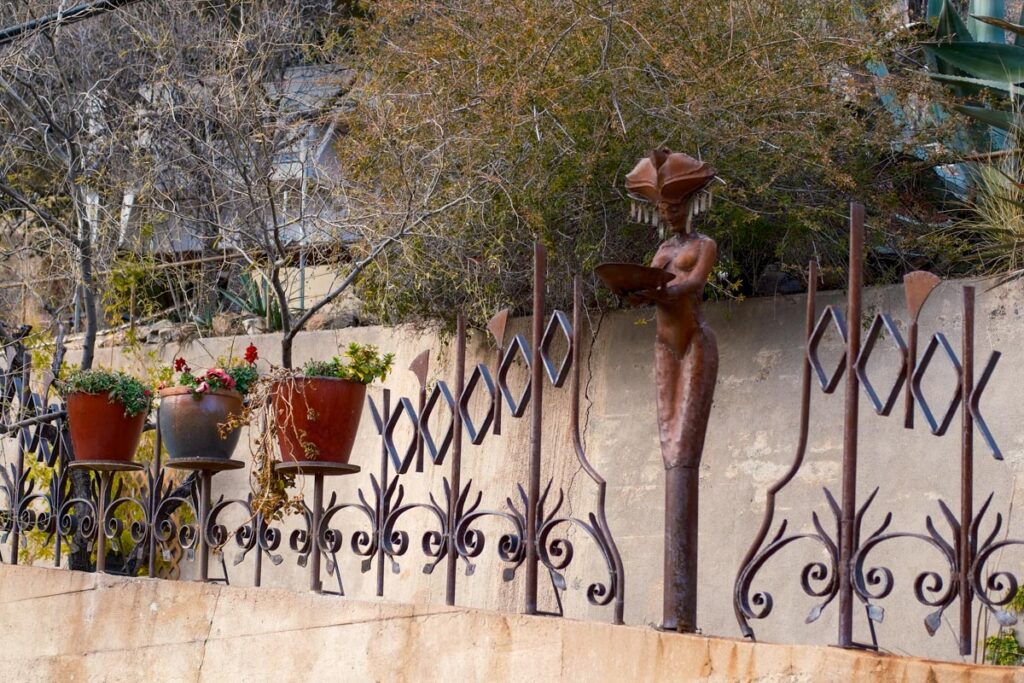
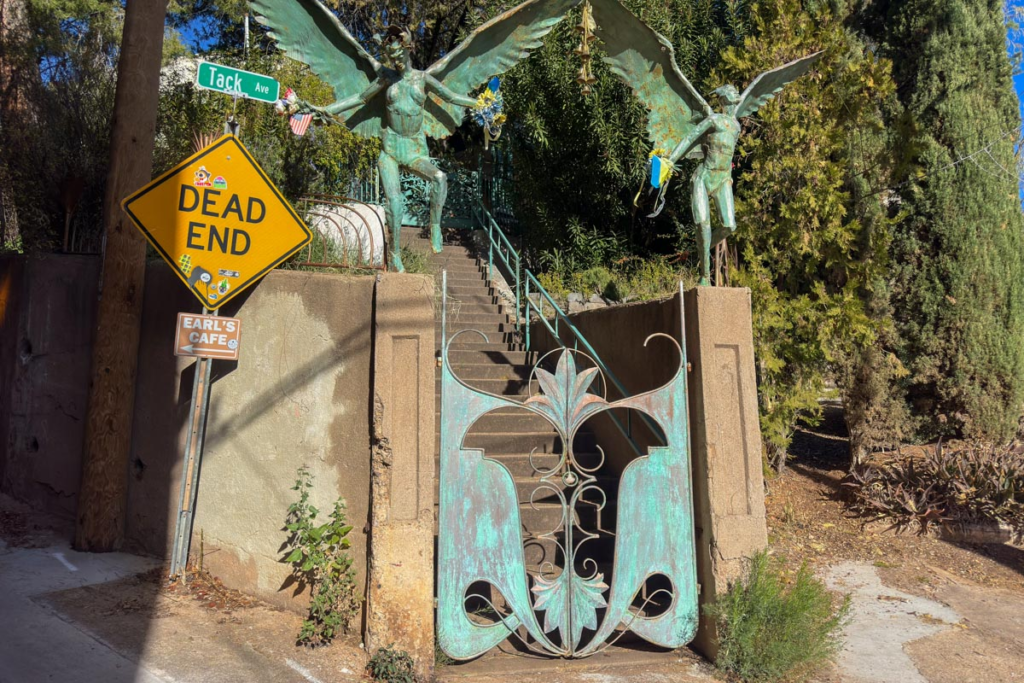
Many visitors seek out the “Bisbee Angel” gates and statues—sculptural garden gates made of wrought iron and repurposed metal that have become iconic symbols of the town’s “funky” spirit.
The Distributed Gallery
Beyond these central totems, sculpture in Bisbee is a distributed phenomenon, a visual noise that populates the liminal zones.
The Alleys of Assemblage
Exploring the back-streets of Old Bisbee reveals outsider-art totems and industrial-scrap figures guarding private stairways.
Yard Sculptures
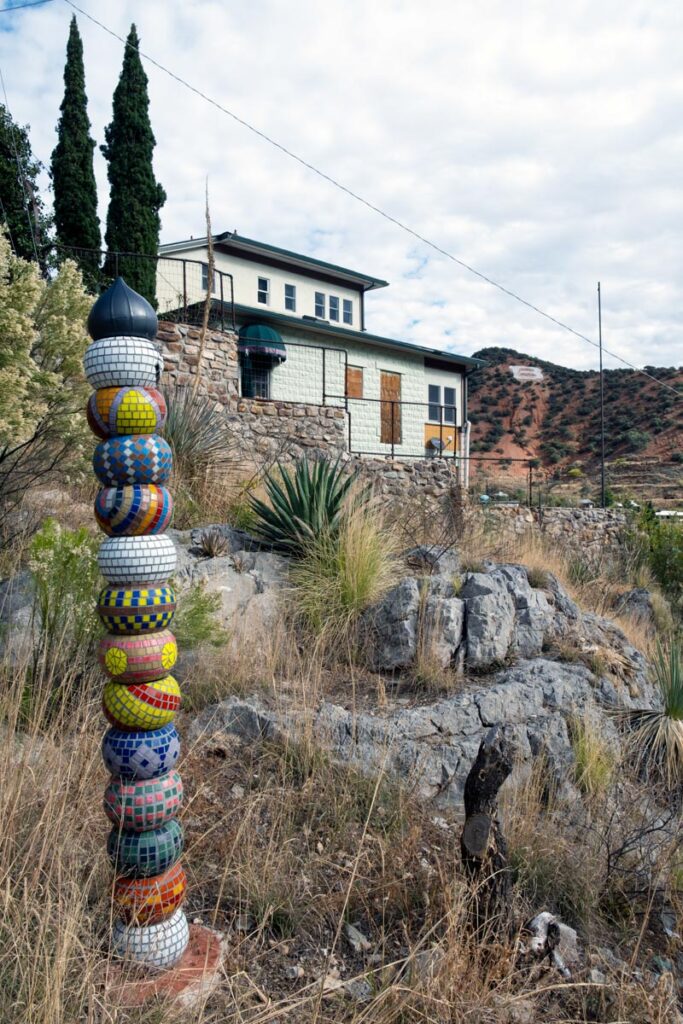
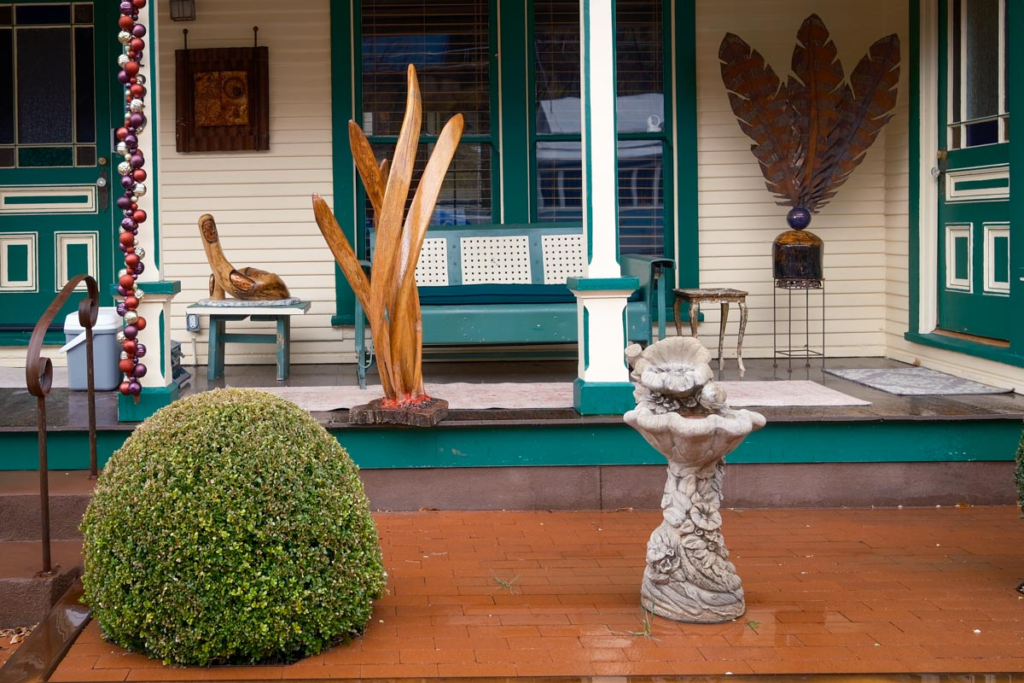
Bisbee porches and yards provide a controlled vacuum for organic wooden shapes and modernist metallic forms.
The Central School Project
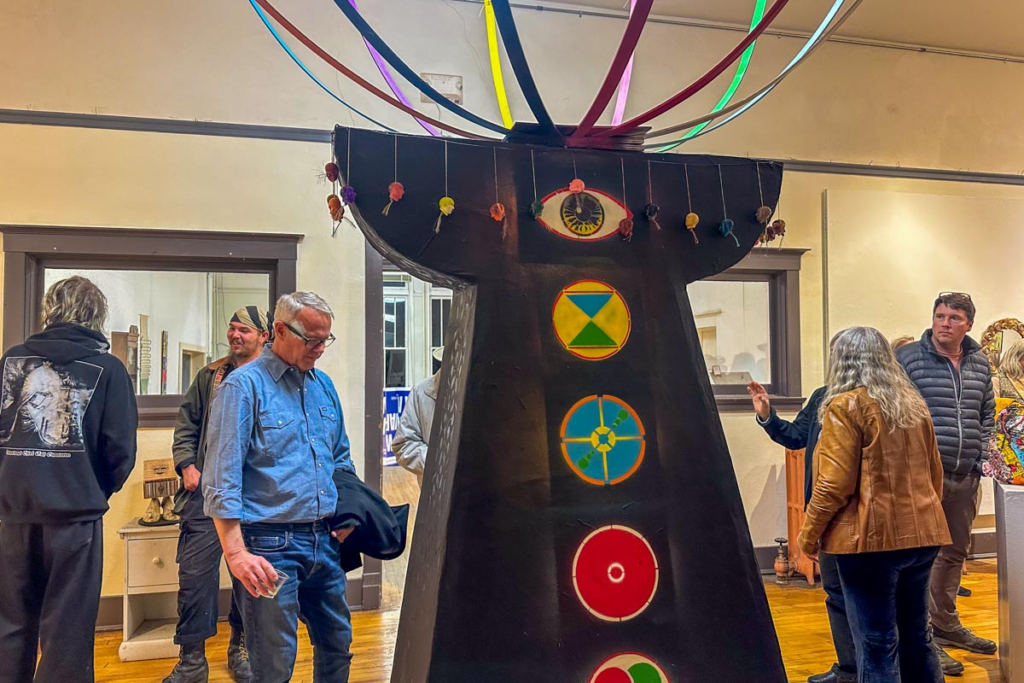
As a community incubator, this site frequently hosts large-scale installations that challenge the vertical logic of the town.
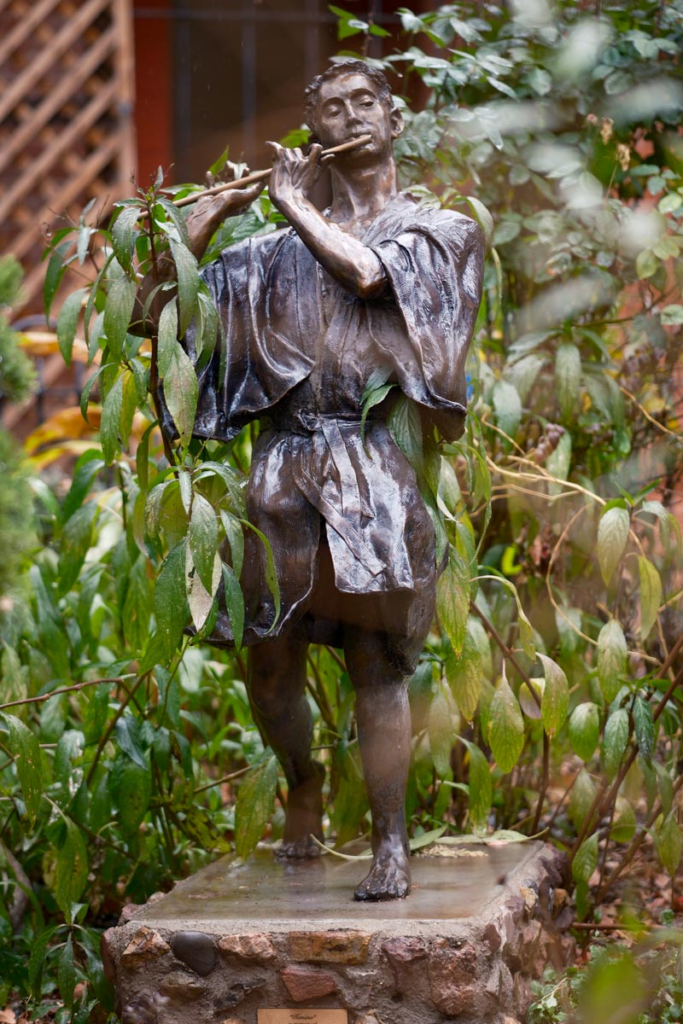
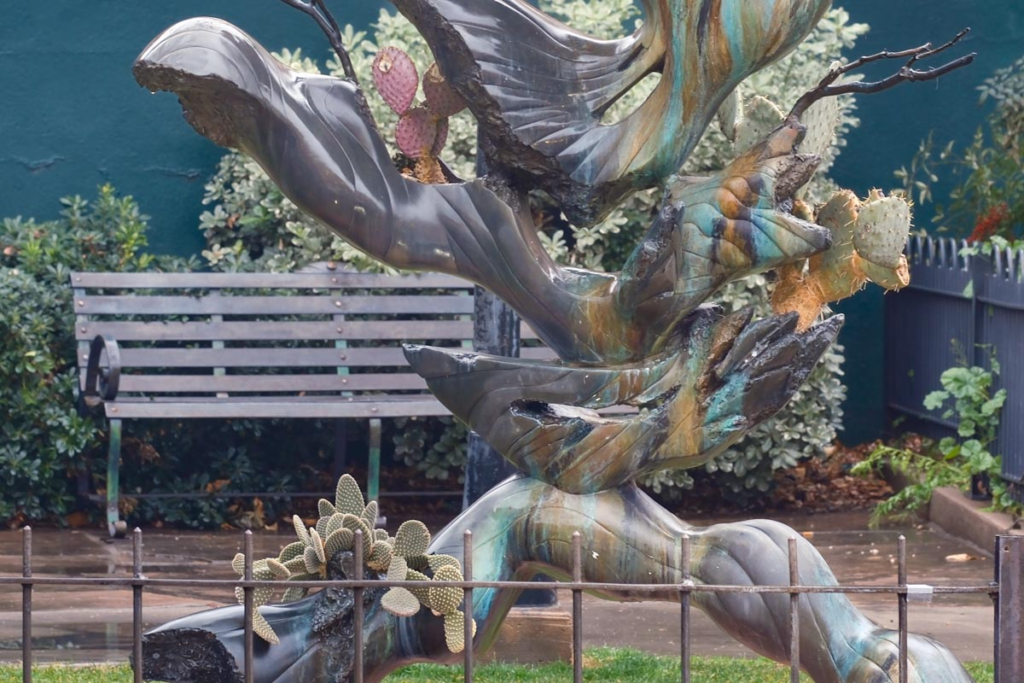
This Robert Wick sculpture in Grassy Park incorporates live plants and cactus into its design. Wick was a nationally recognized sculptor whose distinctive bronzes featured live flora meant to highlight the connection between mankind and nature.
To navigate Bisbee is to walk through a hallucinatory workshop where the mountains themselves are being slowly carved into art. The sculpture proves that in the desert, the most resilient artifact is the unyielding human desire to build a vibrant, jagged future out of the fragments of a shuttered empire.
Sculptural Navigation
- The Monument: Pay respects to the Iron Man in the historic plaza.
- The Workshop: Seek out the outdoor sculpture workshop in the former Bisbee Chocolàte building on Tombstone Canyon.
- The Event: Coordinate with the ReMakeArt Show in November for the pinnacle of Bisbee’s assemblage culture.