
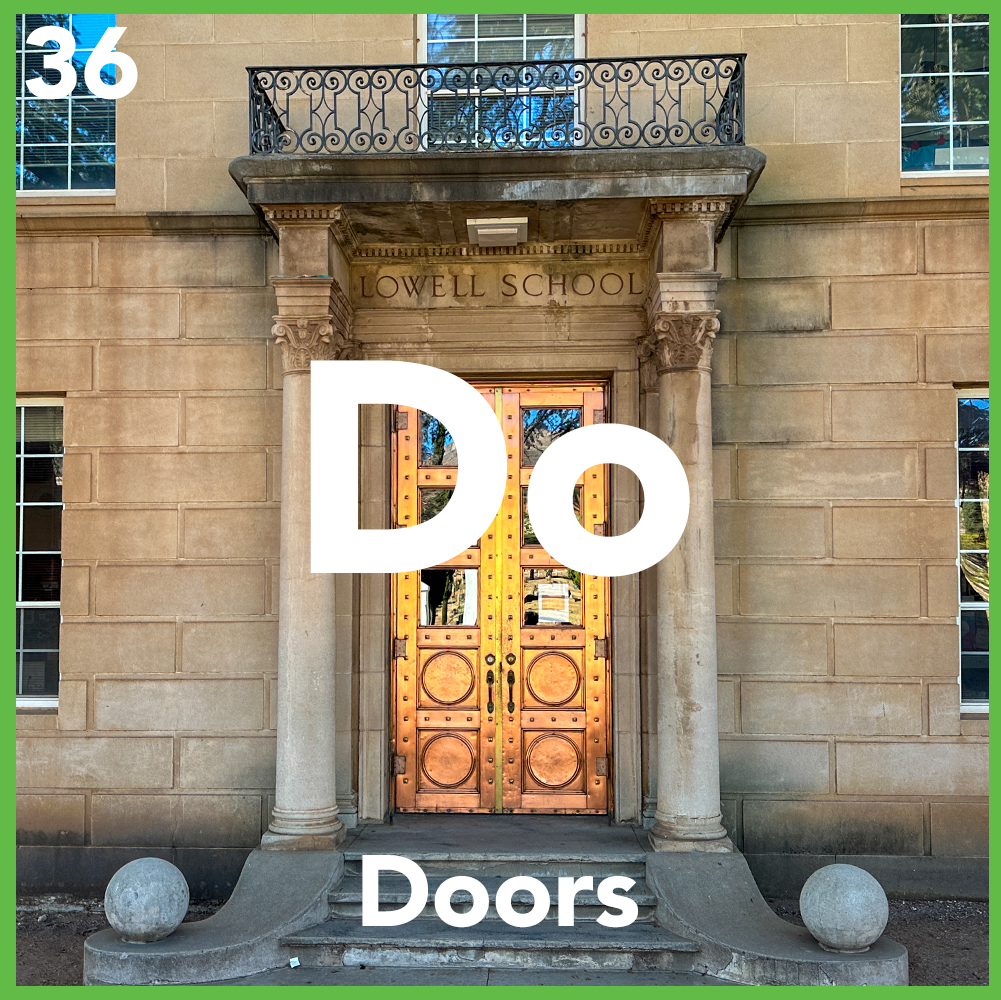
The Portal Protocols: Artistic Doors as Psychic Apertures
In the winding, vertical labyrinth of the Mule Mountains, the door has been liberated from its functional stasis. In Bisbee, the threshold is no longer a mere barricade between the industrial canyon and the private cell; it has become a chromatic airlock—a high-fidelity signal that the resident has successfully overwritten the corporate logic of the past.
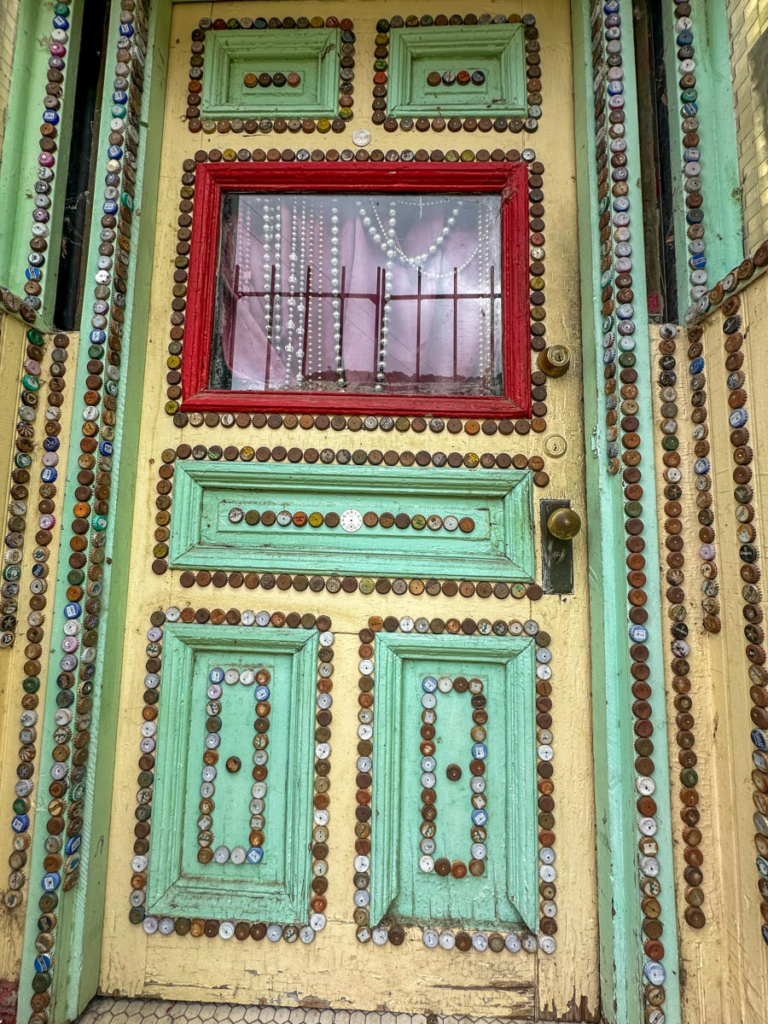
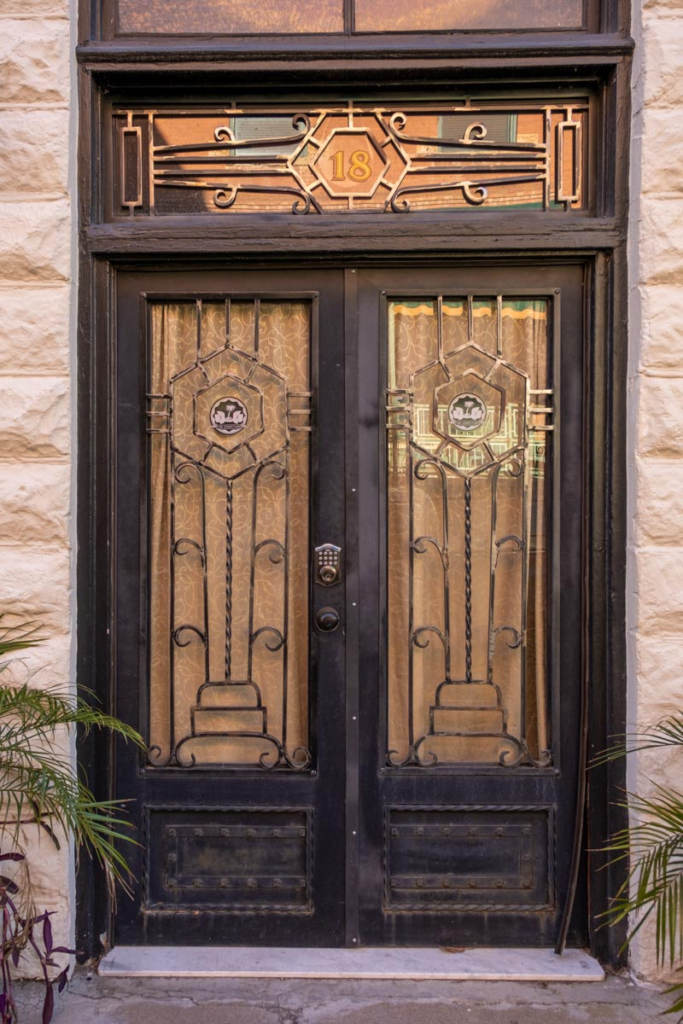
The doors of Bisbee have become a photographic phenomenon, often compared to the famous “Doors of Dublin” but with a gritty, bohemian, and high-desert twist.
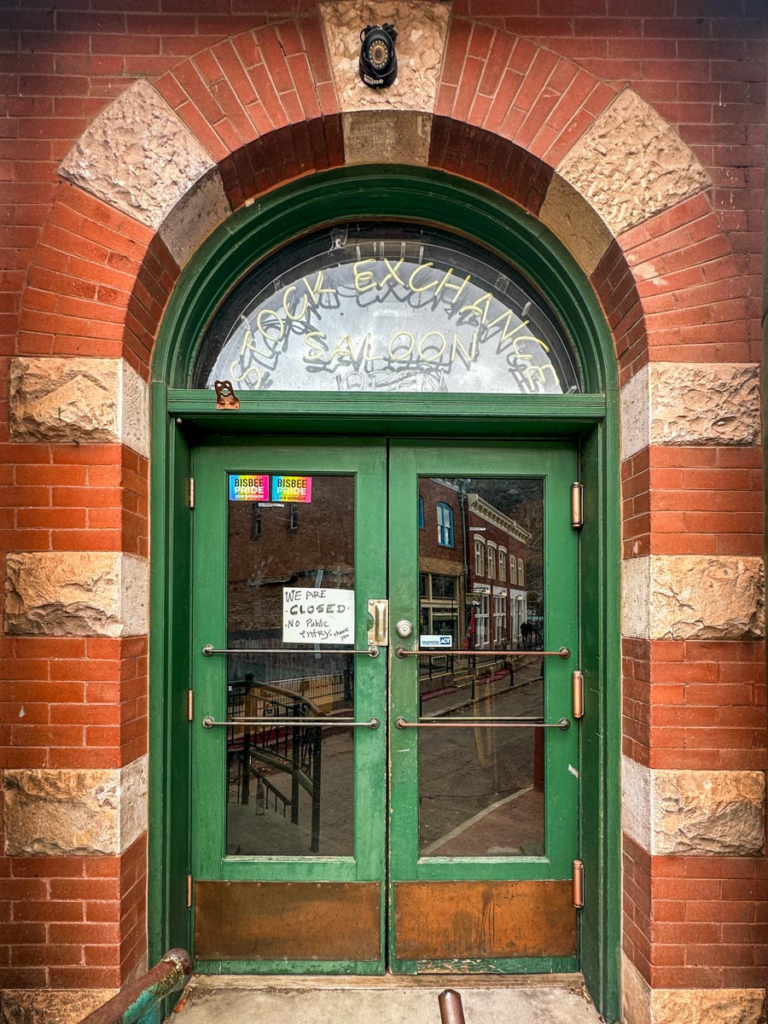
In a town where houses are stacked vertically and separated only by narrow footpaths and stairs, a front door is more than an entrance—it is a resident’s primary statement of identity.
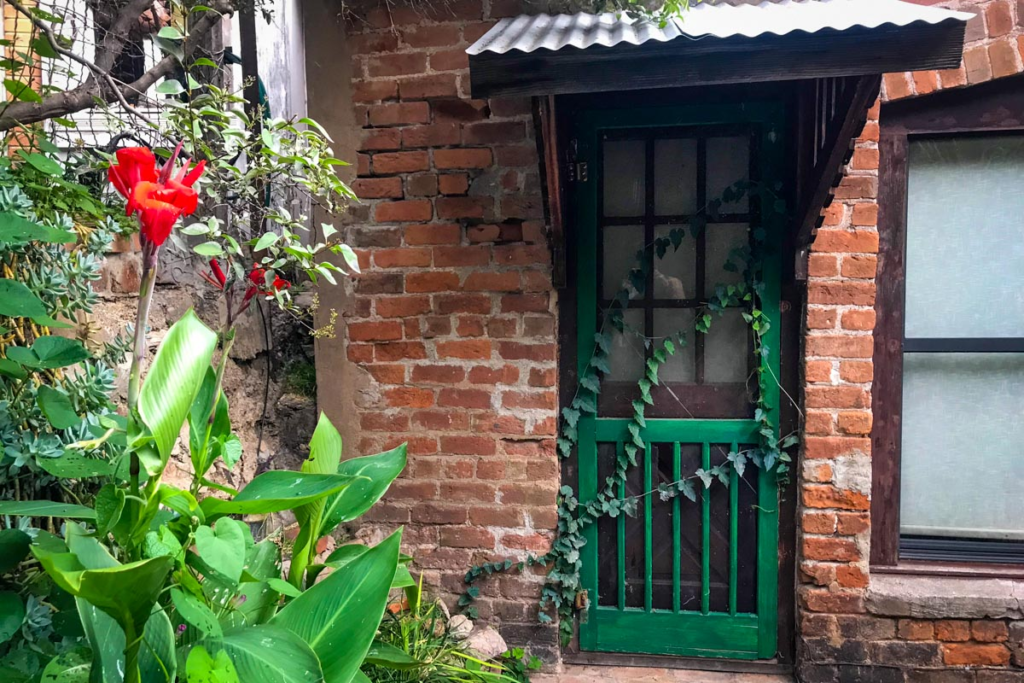
The Anatomy of the Decorative Breach
Bisbee’s doors represent a bohemian metabolism, acting as tectonic markers in a landscape of oxidized stone. These artistic portals are characterized by a violent rejection of the standardized.
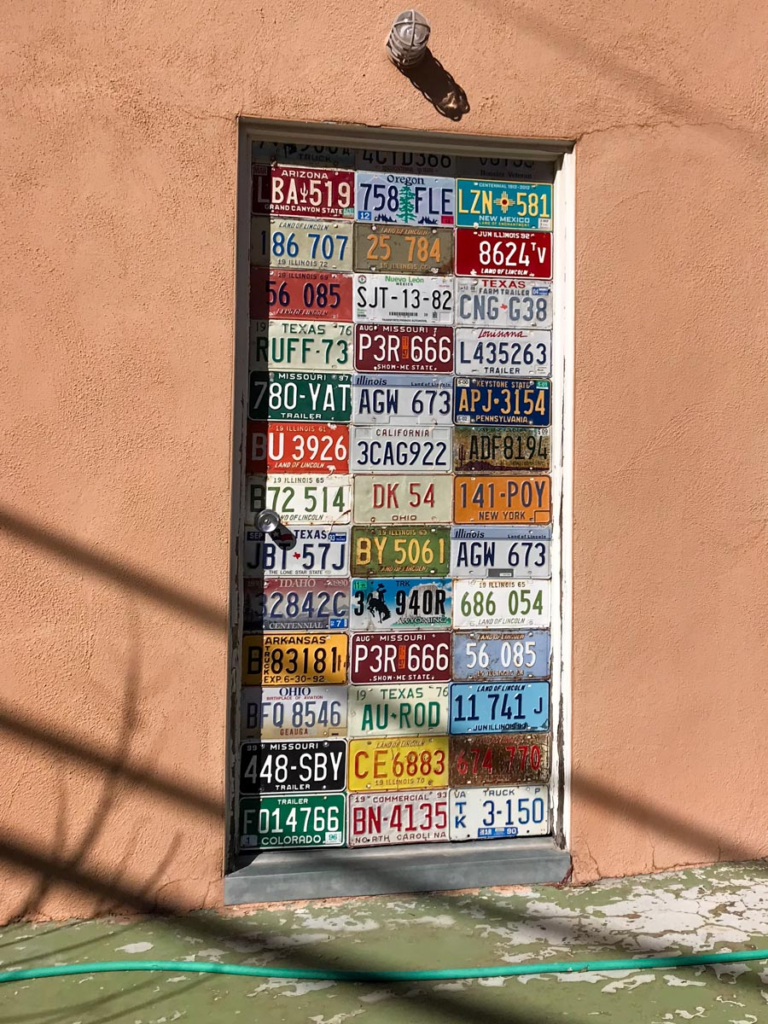
The Saturated Frequency
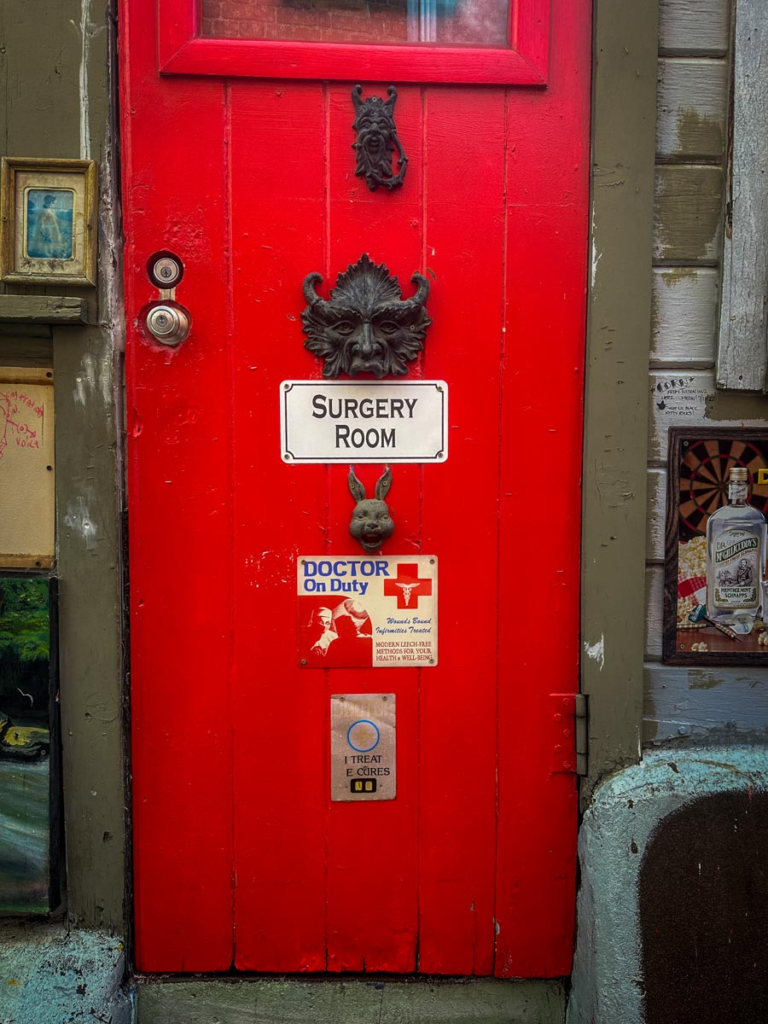
Many historic miners’ cabins feature doors painted in hyper-vivid ochres, teals, and crimsons. These are biological color-signals designed to distract the eye from the harsh, geological indifference of the mountain.
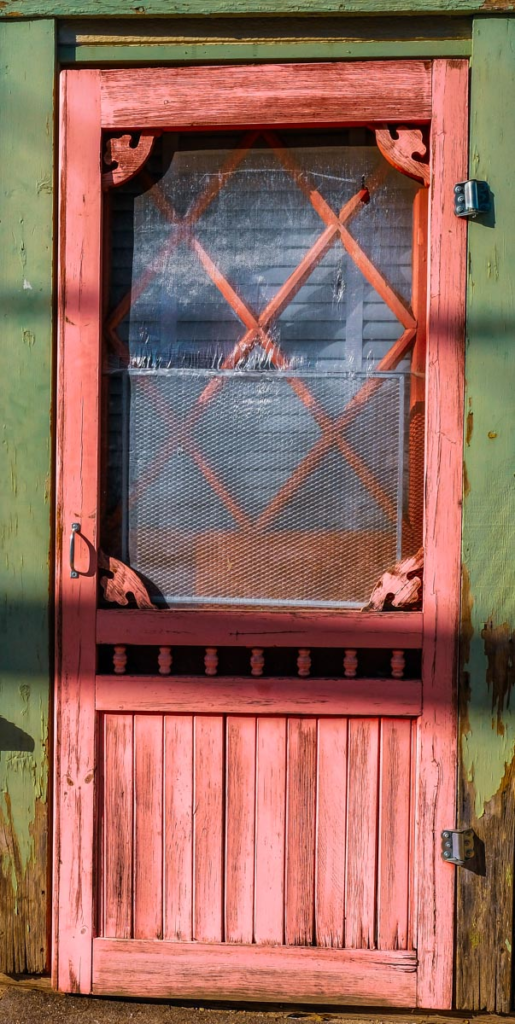
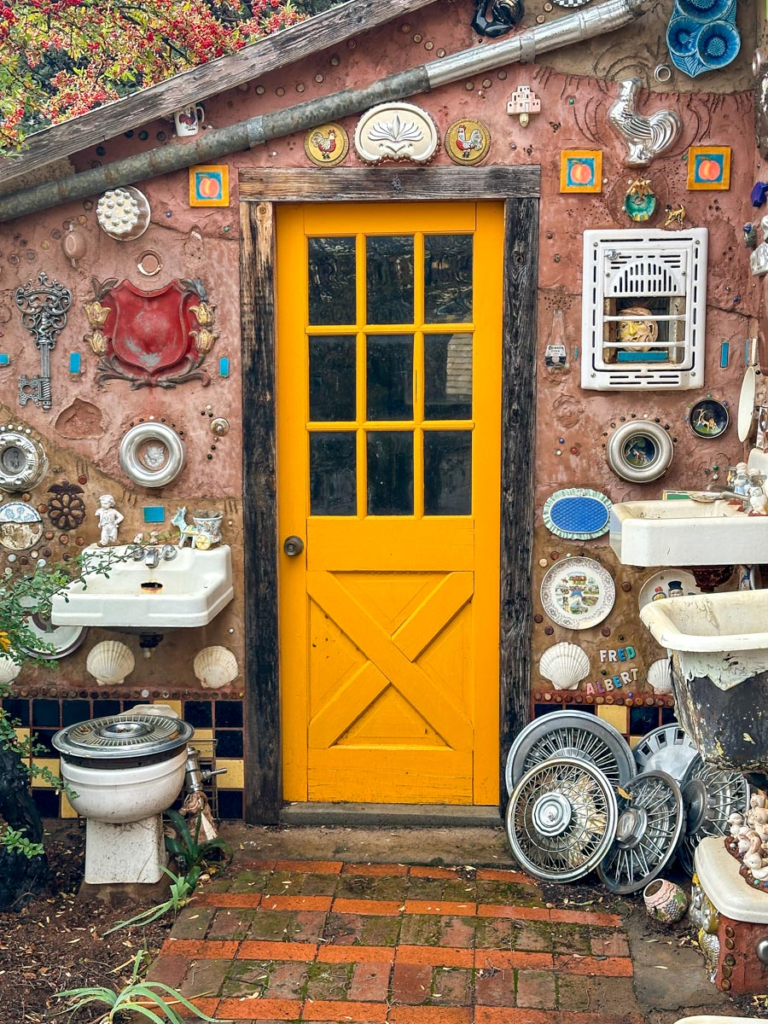
The Mosaic Threshold
In the higher residential terraces, one encounters doors reskinned with shards of mirror, ceramic, and stained glass. These three-dimensional collages convert the Arizona sun into a fractured, hallucinatory light, turning a simple entry into a participation in the avant-garde.
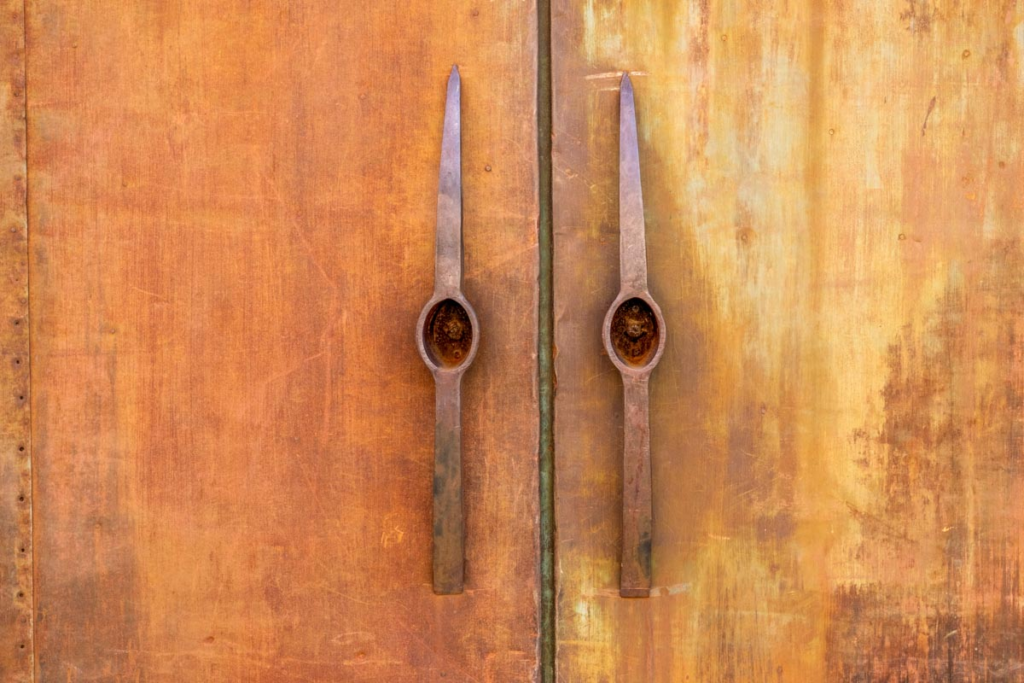
The Found-Object Guardian
Some thresholds are flanked by sculptural reliefs made of discarded mining gears and copper wire. These doors act as metallic ghosts, pinning the fleeting present to the heavy industrial gravity of the past.
The Anatomy of the Hermetic Threshold
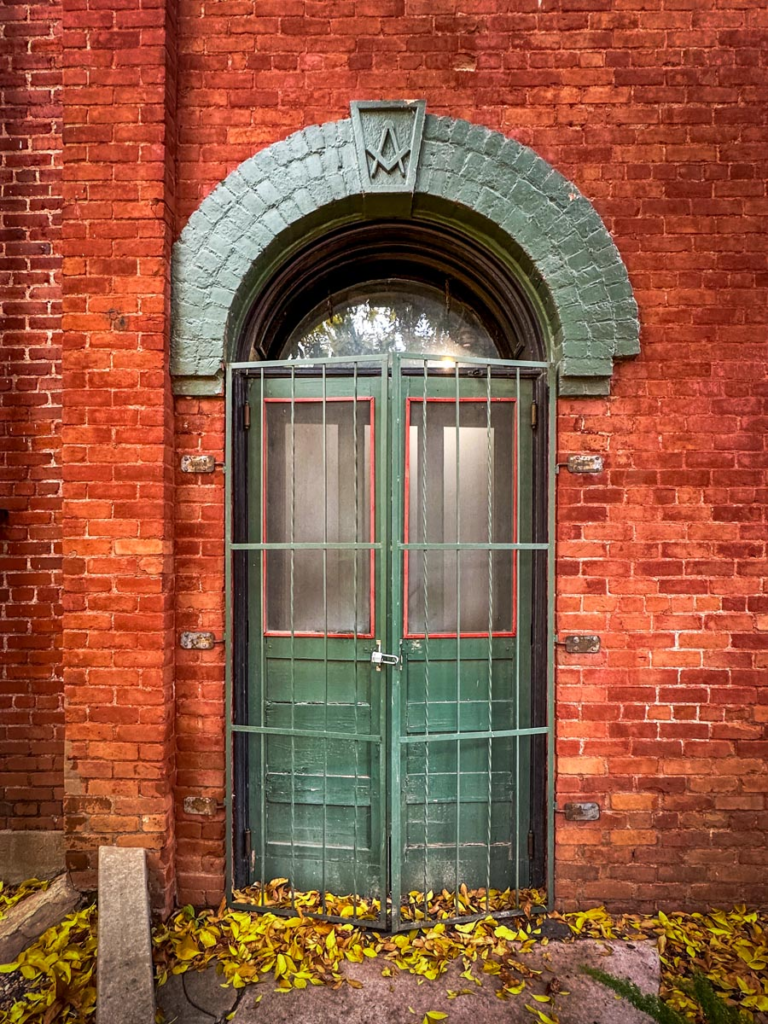
Unlike the bohemian apertures of the surrounding miners’ shacks, the Masonic doors are designed for exclusion and ritualized transit. They represent a stark departure from the town’s vivid, hand-painted aesthetic:
The Heavy Masonry Frame
The doors are recessed within massive, classical arches, a geometric lockdown that suggests the interior space is a controlled vacuum. The solid timber and brass hardware project a machine-age authority, a tactile reminder of the secreted power structures that once managed the Mule Mountains.
The Symbolic Aperture
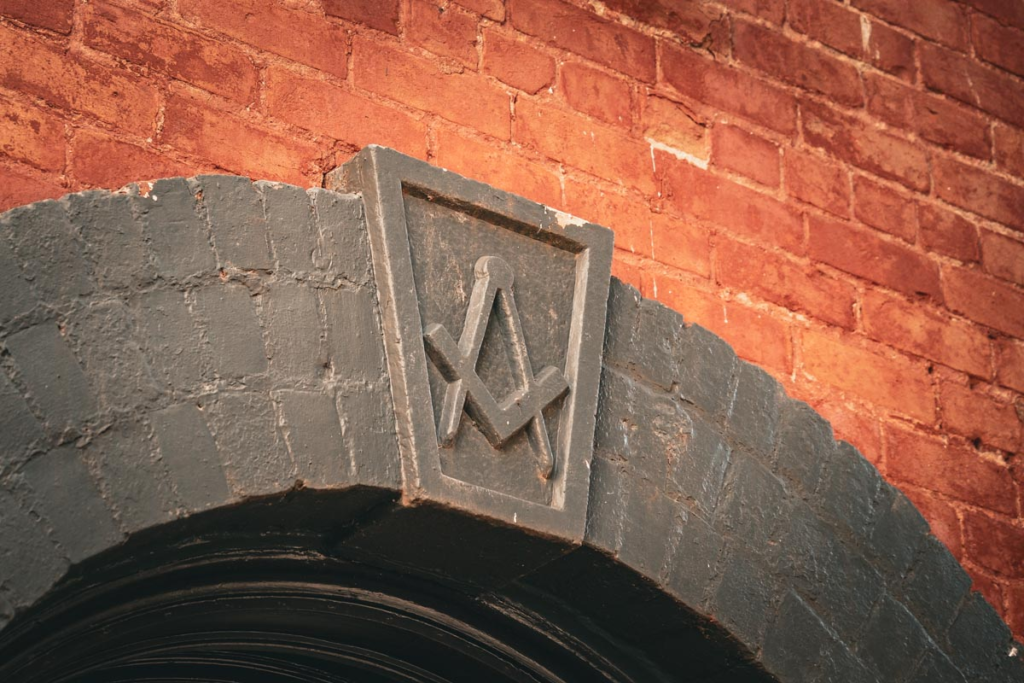
The presence of the Square and Compasses etched into the architecture functions as a cryptographic signal. It marks the door as a portal to an inner space governed by mathematical law and allegorical ritual, a deliberate contrast to the unpredictable entropy of the mining frontier.
The Copper Sentinal
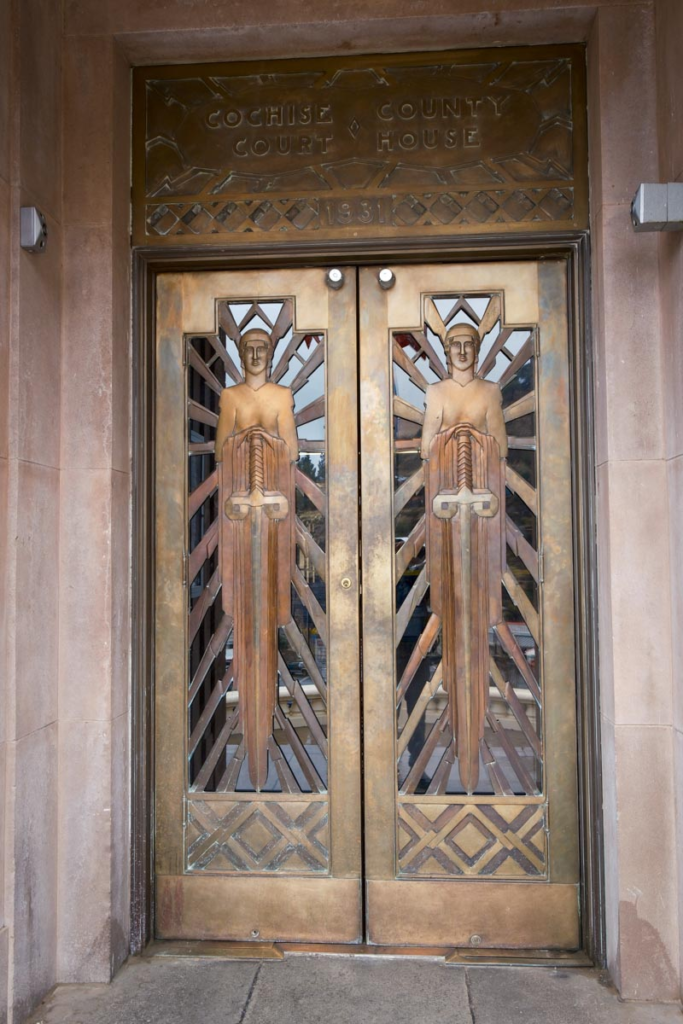
The doors of the 1931 Cochise County Courthouse in Bisbee, Arizona, are significant for being constructed of copper and featuring ornate Art Deco relief figures of Justice. Designed by architect Roy Place, these doors symbolize the region’s rich copper mining history, which drove the local economy.
The Individualist Script
The significance of the Bisbee door lies in its role as a psychic reset. In a town once defined by monolithic corporate control, the decorated door is an act of moral defiance. It signals that the interior space is a private laboratory for the unfettered imagination.
The Scavenger Hunt
For the pedestrian voyager, the doors provide a constant stream of visual data. To walk the 3,000 historic stairs is to engage in a slow-motion archaeological dig of the town’s creative will.
Portal Navigation
- The Hub: Explore Main Street and Brewery Gulch for the highest density of artistic storefront and gallery doors.
- The Ascent: Navigate the residential loops above Tombstone Canyon to find private, folk-art portals accessible only by staircase.
- The Detail: Observe the original brass hardware often left intact, a tactile link to the original mining metabolism.