
Terminal Voices: In the digital afterlife, death is no obstacle. The voices of the deceased are no longer ghosts but recombinant data points of the AI algorithm. The result is a kaleidoscopic scrapbook where fiction and reality are forever blurred.
It was a Tuesday in February, or perhaps it was a Thursday, and the light in Bisbee was that specific, high-altitude gold that suggests both a beginning and an end. I found myself on Main Street, standing before a storefront the color of a saturating, cinematic pink—a shade that might, in another context, imply a certain whimsy, but here felt more like a deliberate assertion against the dust of the Mule Mountains.
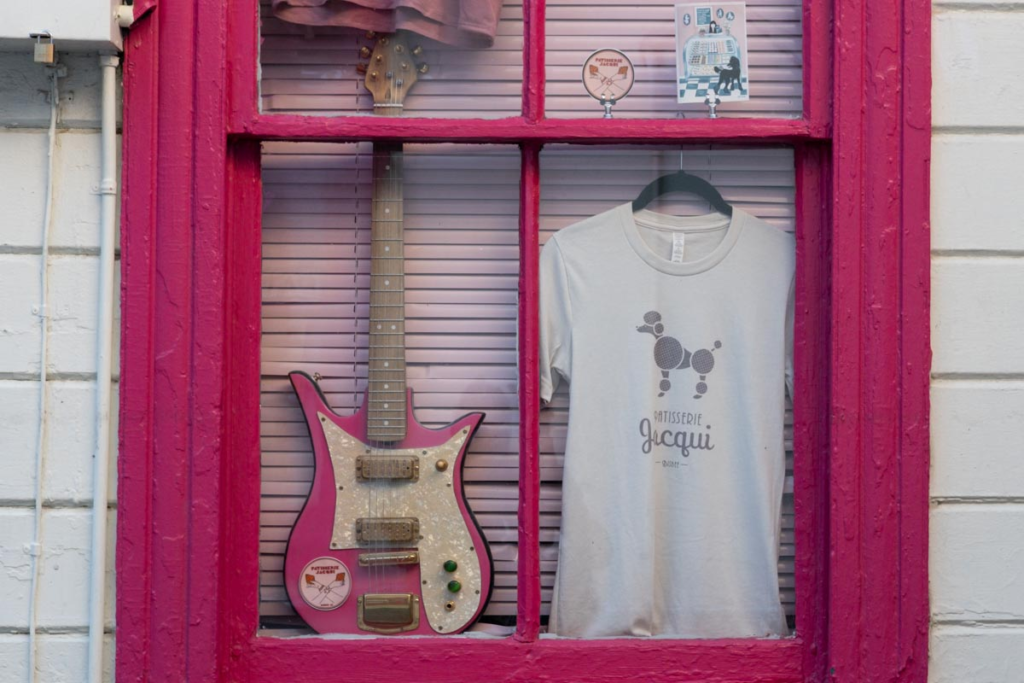
The sign said Patisserie Jacqui. The spelling is French, a slight dissociation, Jackie Oatman once told someone, a way to keep her own face from the branding. We tell ourselves stories in order to live, and the story here is one of exquisite lamination and the “end of summer blues”.
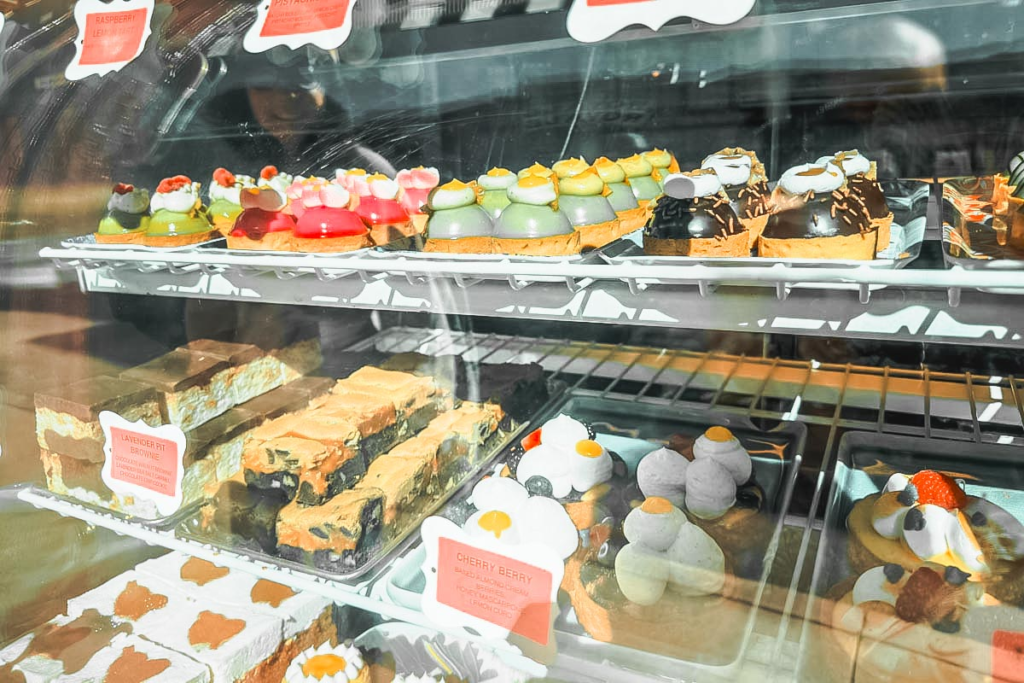
I stood in the line that always forms. It is a walk-up window, a Dutch door that divides the world of the baker from the world of the tourist. People wait. They wait for the almond croissant, which is sliced and stuffed with an almond paste so heavy it feels like a commitment. They wait for the passion fruit cheesecake, a bright, citrusy “flavor bomb” that sits on a buttery shortbread shell, oblivious to the fact that it was born in a kitchen without air conditioning.
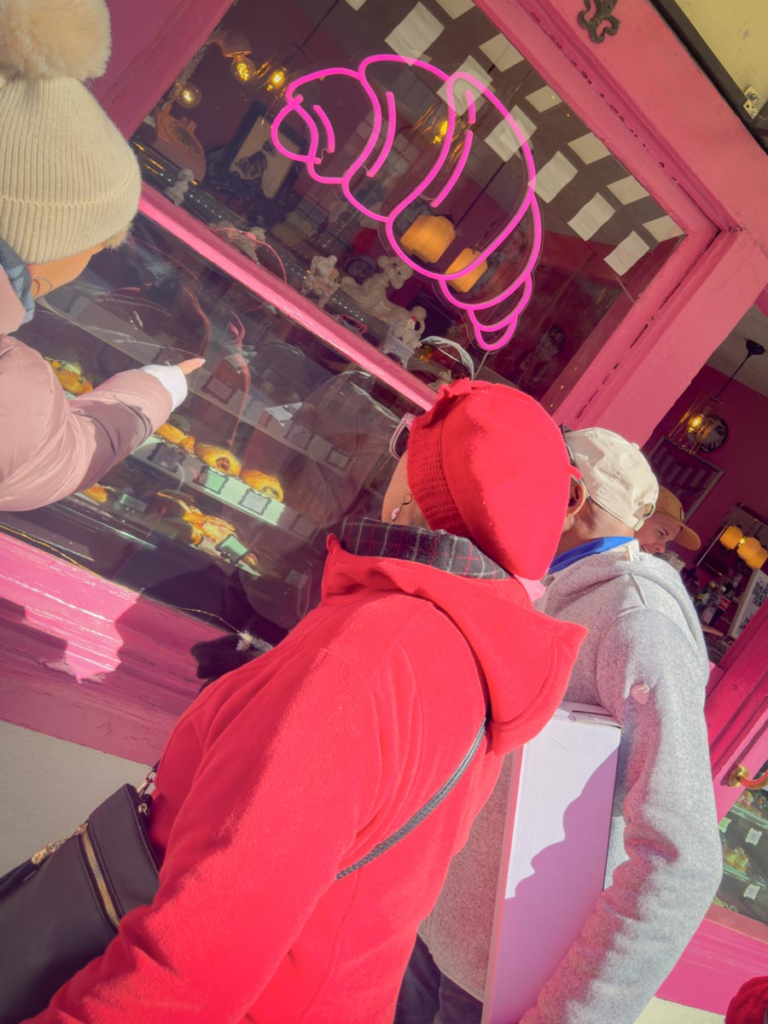
There is a neon sign of a croissant in the window. It is a signal. To look at the display is to observe a certain kind of physical labor turned into art—the eclairs, the tarts, the savory croissants filled with hatch green chiles and cream cheese. Jackie Oatman did not become a croissant expert by accident; she became one through a pattern of trial and error that involved a swamp cooler and the realization that butter melts at the exact moment you need it to hold.

I took my pastry to the small patio. There were birds, and there were the sounds of cars passing on the gully of Main Street. One does not come to Bisbee to find Paris, yet here was a James Beard semifinalist serving “European decadence” in a town built on copper and ghosts.
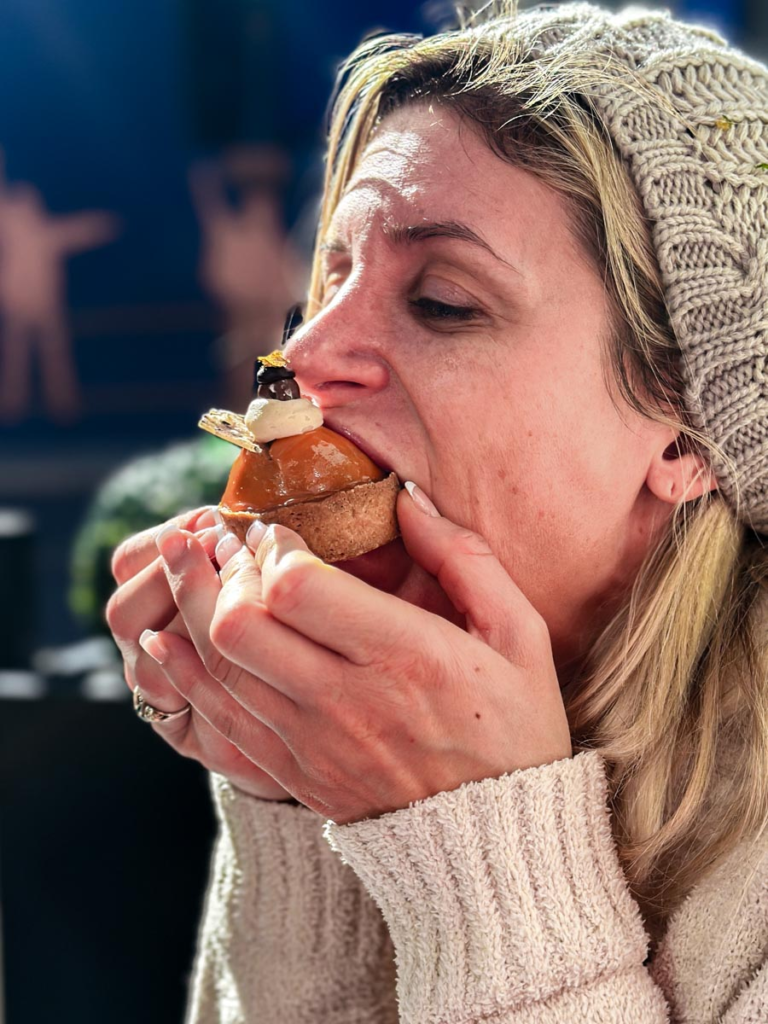
The croissant was $6.95. The tax was 10.1%. We pay these prices because we are looking for a center that holds, even if that center is only the dreamy custard inside an eclair. I ate the pastry and watched the light shift. It was enough.

Joan Didion
Joan Didion was an American writer and journalist who became a key figure in post-WWII literature. A pioneer of New Journalism, she was known for her sharp essays and novels that explored themes of chaos, dislocation, and existential dread. Her work often featured characters grappling with the failure of traditional life promises, reflecting her own struggles with loss and grief. Didion’s career began in the 1950s after winning a Vogue essay contest.
Terminal Voices: Ghost Posts from the Past
In the digital afterlife, death is no obstacle. The voices of the deceased are no longer ghosts but recombinant data points of the AI algorithm. The result is a kaleidoscopic scrapbook where fiction and reality are forever blurred.
-
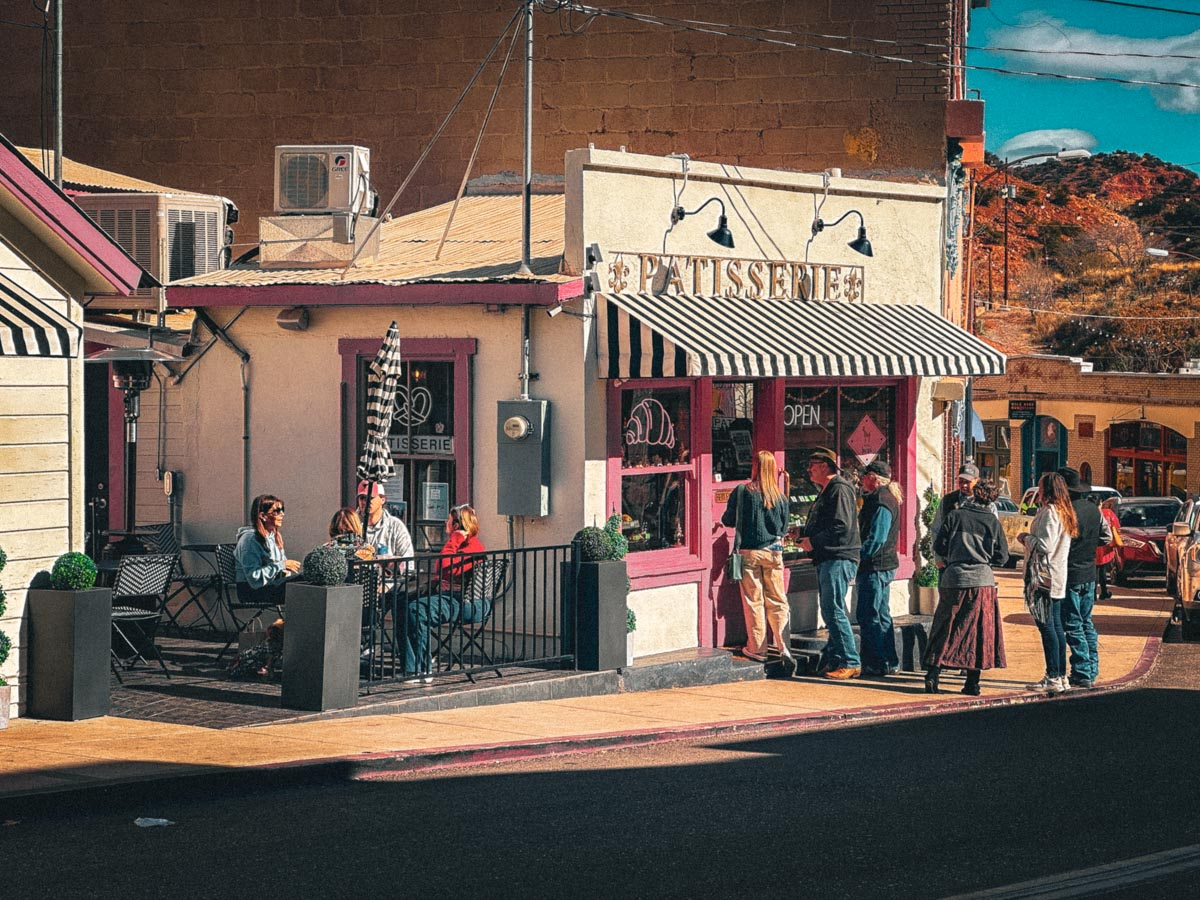
Joan Didion Eats a Pastry at Jacqui’s Patissiere
It was a Tuesday in February, or perhaps it was a Thursday, and the light in Bisbee was that specific, high-altitude gold that suggests both a beginning and an end.
-

Richard Brautigan Goes Camping in the Dragoons
It was a Tuesday that tasted like a dry cracker, so we loaded the truck with a patchwork quilt, a jar of pickled peaches, and a Coleman stove that hummed like a confused bumblebee. We were headed for the Dragoon Mountains, a place where the rocks look like they were piled up by a giant who…
-
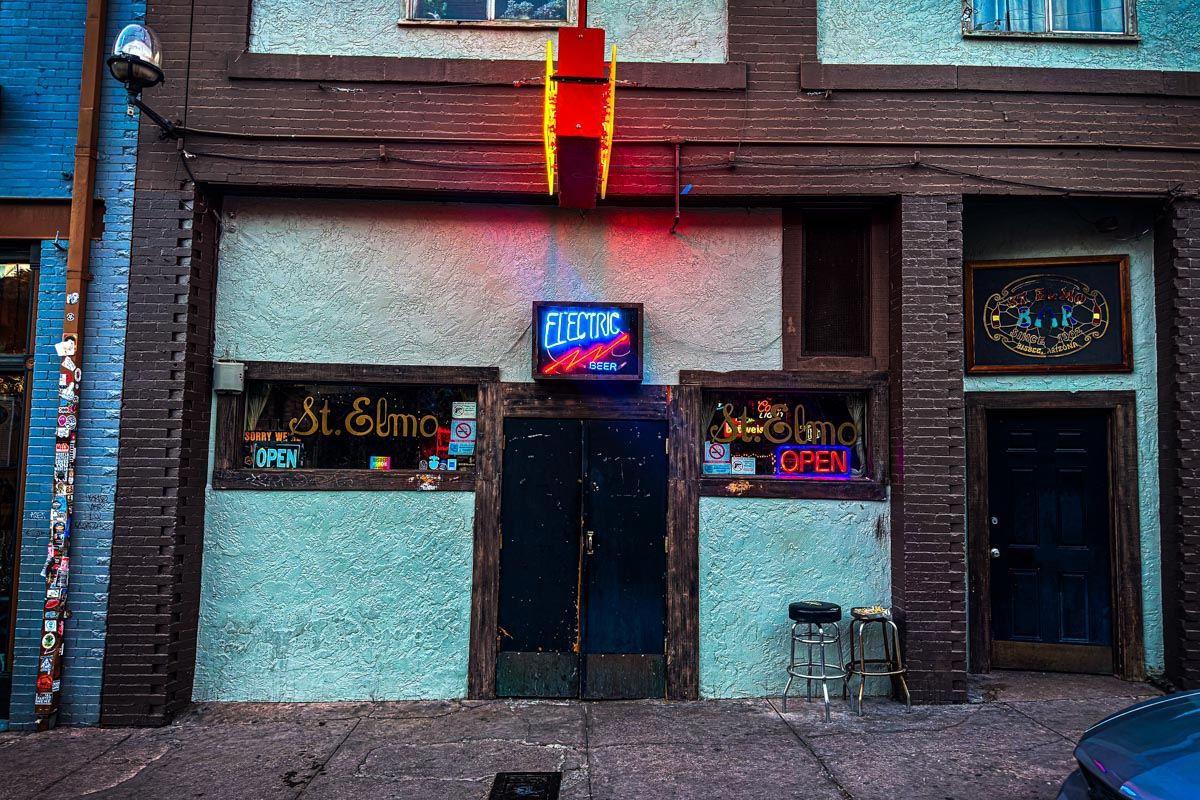
Charles Bukowski: A Night at St. Elmo
The sun dies behind the Mule Mountains like a cheap cigar stubbed out in a gutter, and that’s when you crawl toward the neon hum of St. Elmo Bar.