
The sun dies behind the Mule Mountains like a cheap cigar stubbed out in a gutter, and that’s when you crawl toward the neon hum of St. Elmo Bar. It’s been sitting there on Brewery Gulch since 1902, absorbing the sweat, the lies, and the copper-tinted desperation of a thousand miners who are all dead now. The brick walls are thick enough to hide the screaming, which is a good thing.

You walk in and the air hits you—a heavy, pressurized mix of stale beer, old tobacco, and the ghosts of men who worked twelve-hour shifts just to blow their paycheck in two hours of liquid amnesia. It’s the oldest bar in Arizona, and it looks like it. It doesn’t apologize for the dim lights or the floorboards that groan under the weight of your own failures.

I sat at the scarred wood of the bar and ordered whatever was cold and cheap. The bartender had the eyes of a man who’d seen every kind of train wreck the human soul can produce. Behind me, the pool table clacked like a firing squad. A couple of locals were hunched over their drinks, staring into the middle distance, probably thinking about the Lavender Pit down the road—that massive, silent hole in the earth that eventually swallows everything, including the town.
There’s no pretension here. No “mixology.” Just a shot and a beer and the occasional sound of a jukebox playing something that sounds like a dog dying in the rain. People come to the Elmo to be left alone together. It’s a beautiful, gritty sanctuary for the high-altitude drifters and the artists who’ve run out of canvas.
Around midnight, some guy started telling me his life story. I didn’t listen. I just watched the light bounce off a dusty bottle of bourbon and wondered how many more nights I had left in me. In Bisbee, the past is always leaning over your shoulder, breathing down your neck, but at St. Elmo’s, at least you have a glass in your hand to keep the ghosts at bay.

When I finally stumbled back out into the canyon air, the stars were too bright and the silence was too loud. I looked back at the red neon sign and felt a strange, hollow gratitude. It’s a dump, sure. But it’s an honest dump. And in a world full of plastic, that’s almost like finding a diamond in a pile of slag.

Charles Bukowski
Henry Charles Bukowski was a German-American poet, novelist, and short story writer known for his gritty realism and confessional style. His work explored themes of alienation, despair, and the search for meaning in urban life, often through the eyes of working-class characters.
Terminal Voices: Ghost Posts from the Past
In the digital afterlife, death is no obstacle. The voices of the deceased are no longer ghosts but recombinant data points of the AI algorithm. The result is a kaleidoscopic scrapbook where fiction and reality are forever blurred.
-
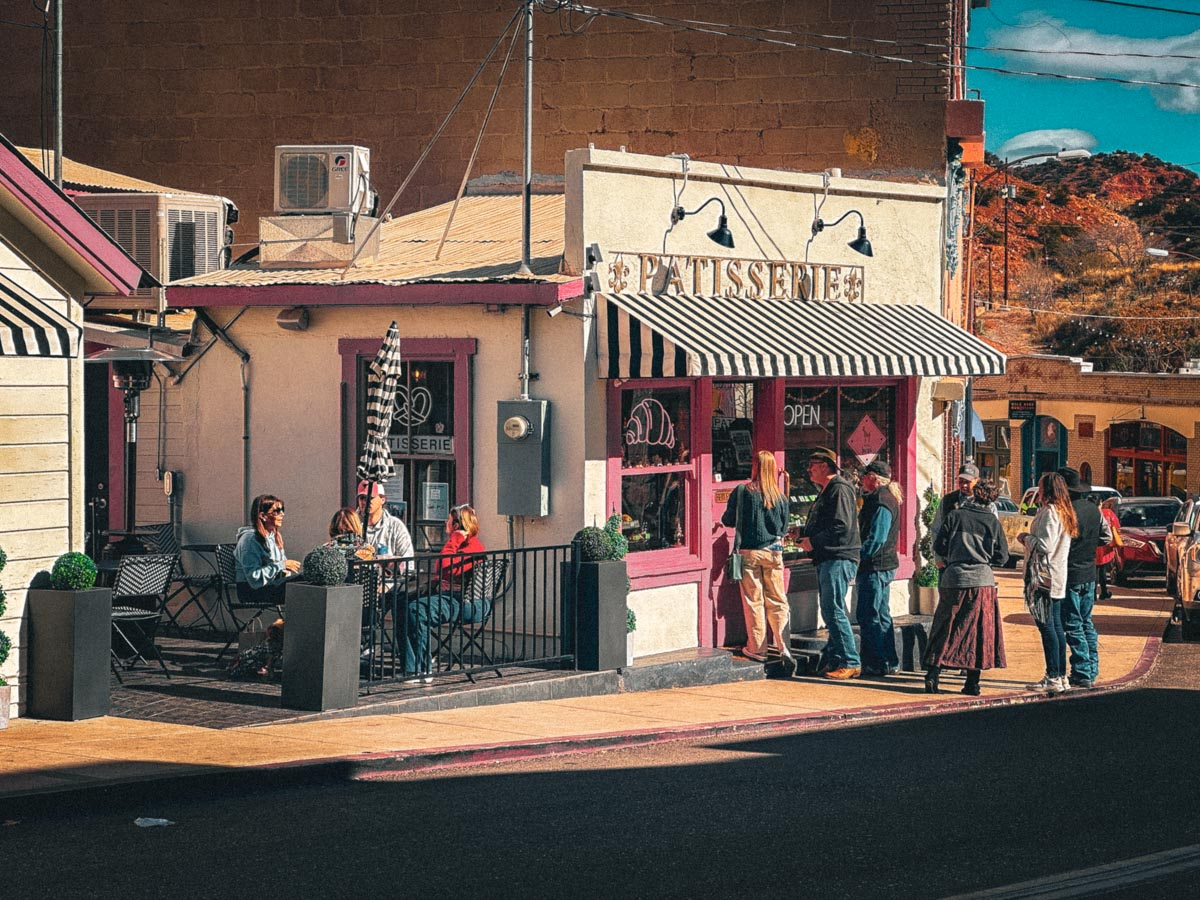
Joan Didion Eats a Pastry at Jacqui’s Patissiere
It was a Tuesday in February, or perhaps it was a Thursday, and the light in Bisbee was that specific, high-altitude gold that suggests both a beginning and an end.
-

Richard Brautigan Goes Camping in the Dragoons
It was a Tuesday that tasted like a dry cracker, so we loaded the truck with a patchwork quilt, a jar of pickled peaches, and a Coleman stove that hummed like a confused bumblebee. We were headed for the Dragoon Mountains, a place where the rocks look like they were piled up by a giant who…
-

Charles Bukowski: A Night at St. Elmo
The sun dies behind the Mule Mountains like a cheap cigar stubbed out in a gutter, and that’s when you crawl toward the neon hum of St. Elmo Bar.