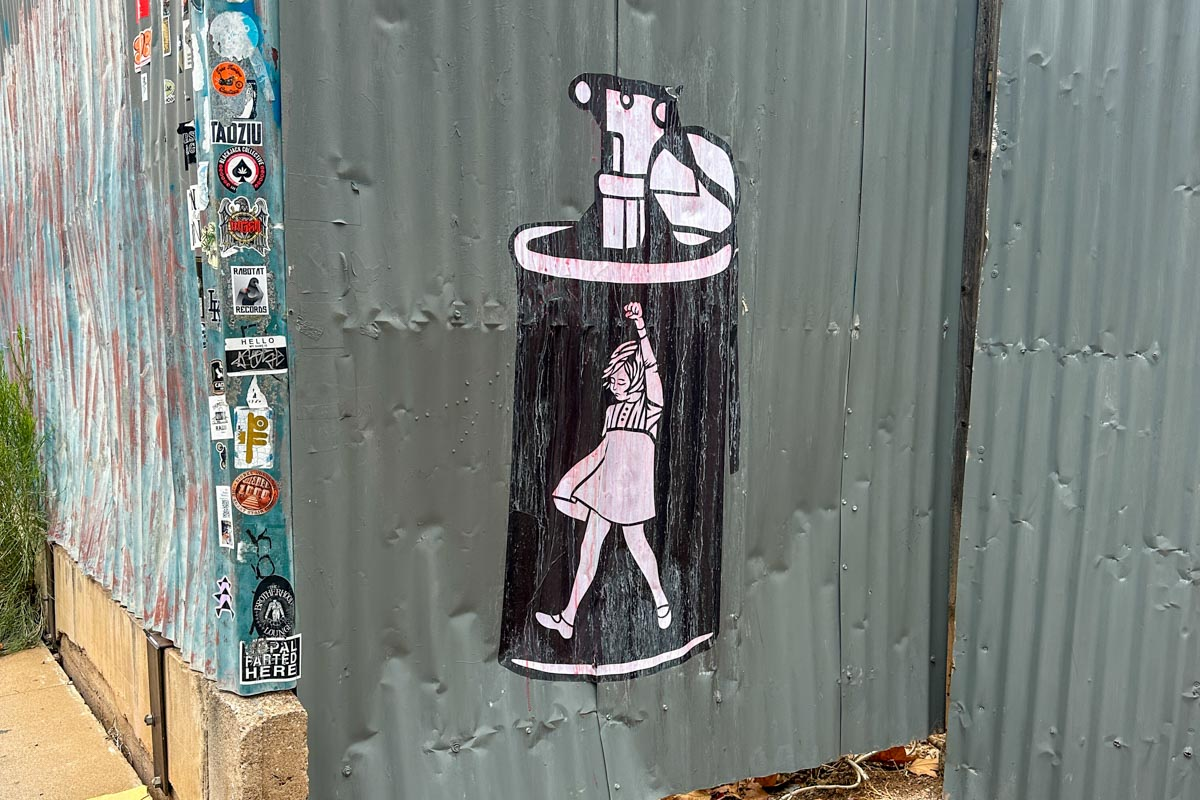
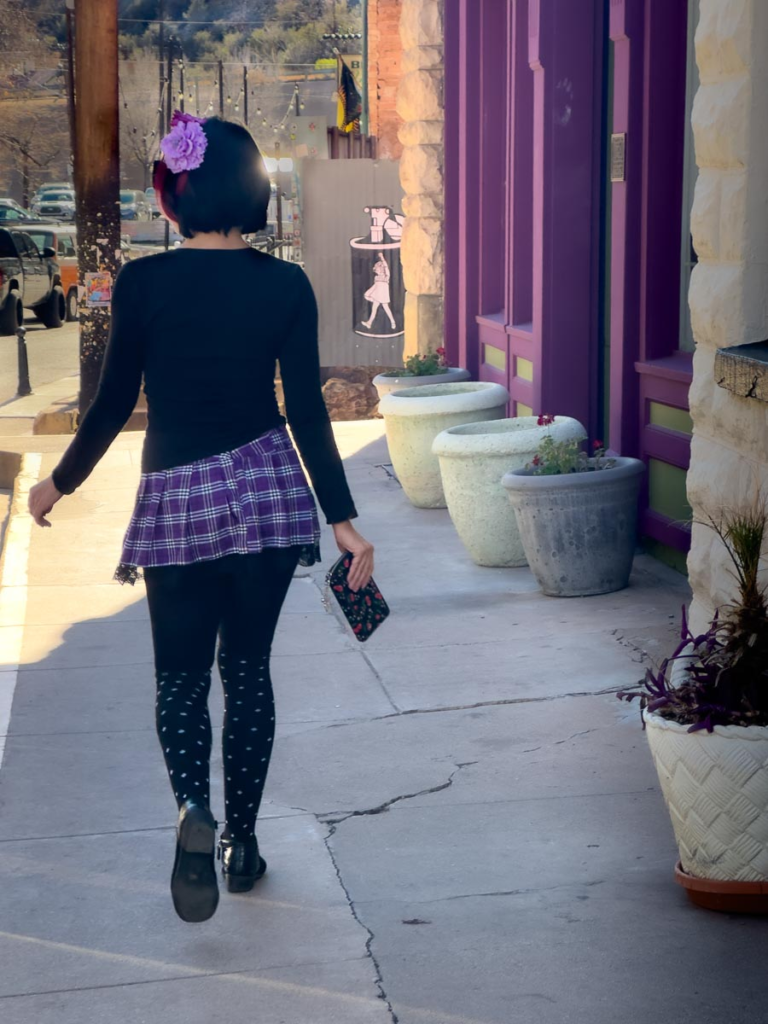
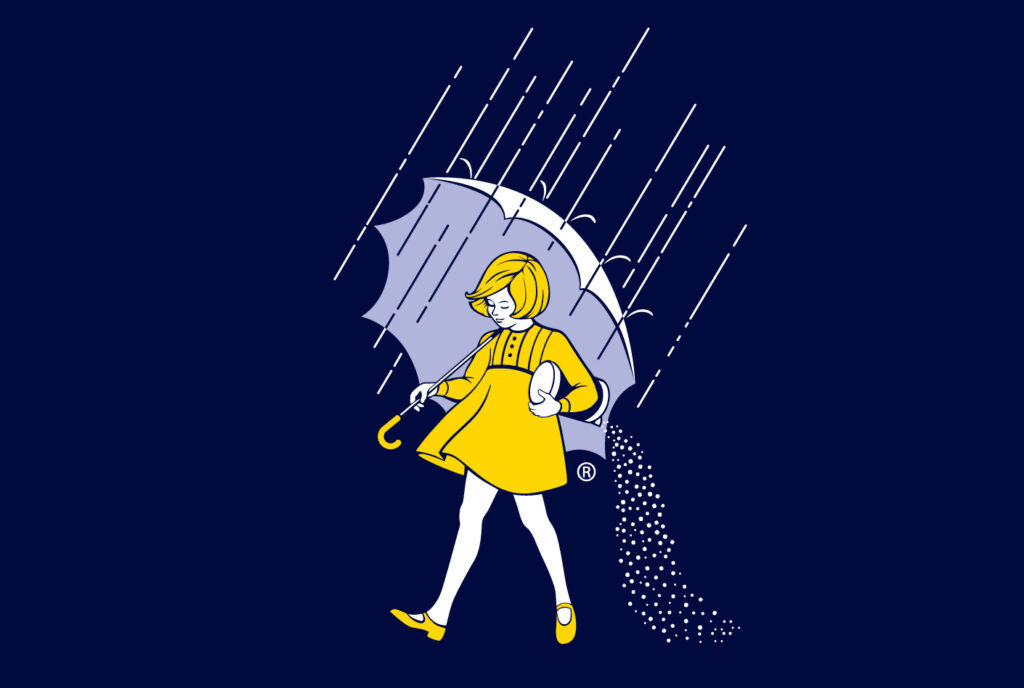
In the quiet architecture of Bisbee’s Brewery Gulch, where the air tastes of oxidized copper and historical fatigue, the street art functions as a series of psychological glyphs. For years, one specific icon dominated the visual field: a wheat-paste apparition of the Morton Salt Girl, In this iteration by an unknown street artist, however, the umbrella of domestic safety has been discarded and the salt container replaced by a grenade. Her fist is raised in a gesture of systemic protest, a miniature revolutionary born from a 20th-century consumerist dream.
History of the Morton Salt Girl
The Morton Salt Girl emerged in 1914 not merely as a mascot, but as a clinical triumph of mid-century corporate psychology. The aesthetic brilliance of the logo lies in its high-contrast geometry. As Tealhaus Strategies notes, the design’s longevity is rooted in its ability to evolve while maintaining its essential DNA; she has undergone several “face-lifts” over the decades, yet she remains an immutable phantom of the American pantry.
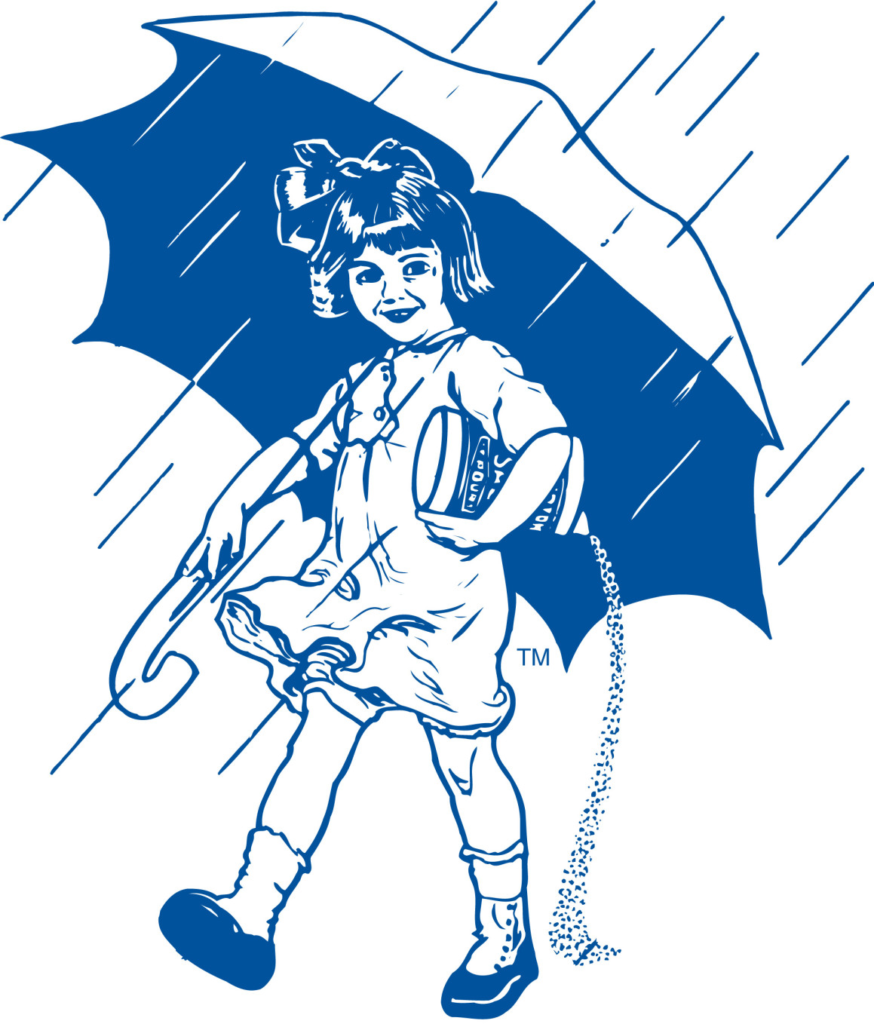
Her silhouette—a study in yellow efficiency—was designed to communicate a radical technological breakthrough: the addition of magnesium carbonate, which ensured that the salt would flow even in the humid saturation of a coastal storm. This functional promise was distilled into the iconic slogan, “When it rains, it pours,” a phrase that transformed a potential domestic failure into a rhythmic, industrial certainty.
Saving Bisbee’s Iconic Street Art
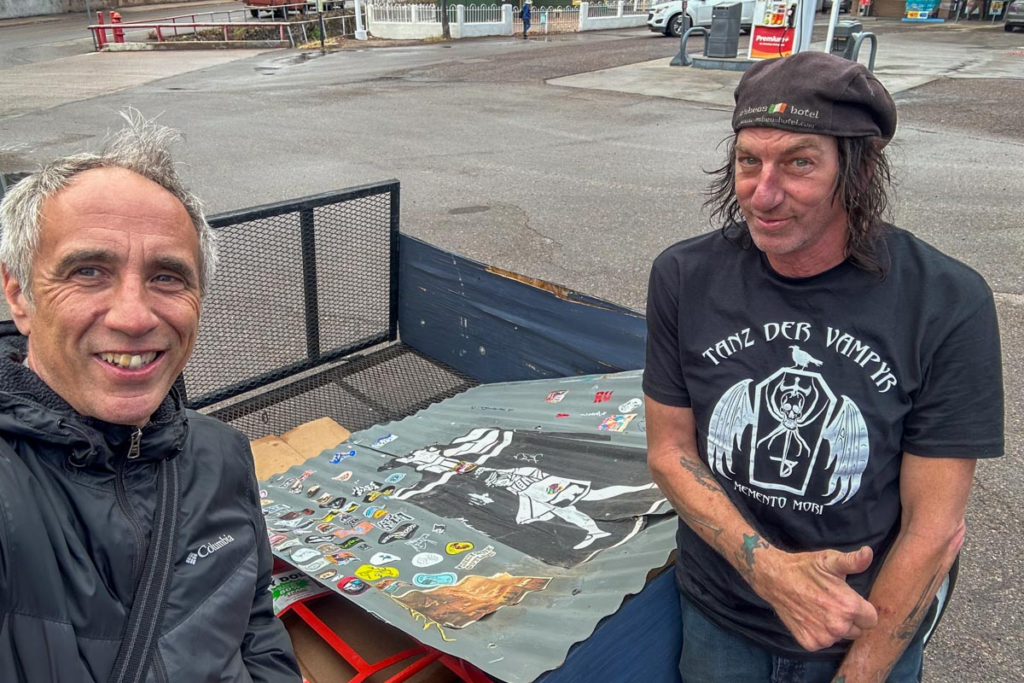
When the machinery of urban renewal arrived to dismantle the wall to which she was affixed, the act of demolition threatened to erase this localized myth. I decided to save the iconic piece of Bisbee street artwork and asked the owner if I could keep her. With the help of Kevin Starr from Le Cafe Cornucopia, we were able to safely remove the metal panels from the wall without damaging the artwork.
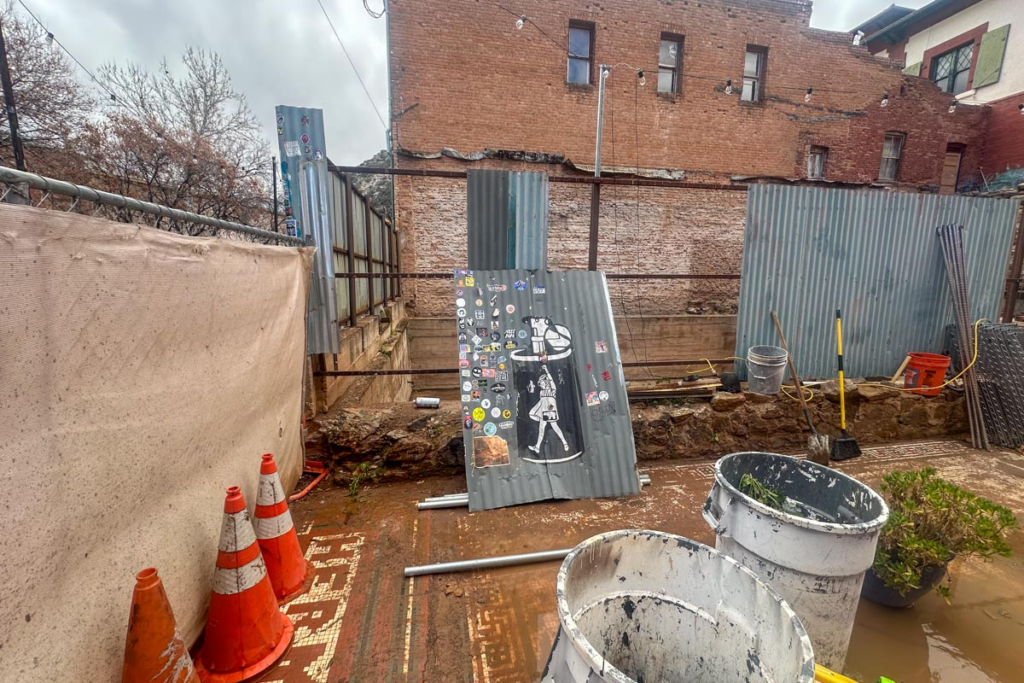
To save the artwork was not merely a gesture of preservation, but an extraction of a vital memory-trace from the path of renewal. The girl was carefully uncoupled from her crumbling reality and transported to the Jonquil Motel.
Her New Home at the Jonquil Motel
In her new home, she has transitioned from a stationary protestor to a permanent witness. She stands as a testament to the enduring power of graphic identity, a corporate ghost reclaimed by the high-desert fringe.
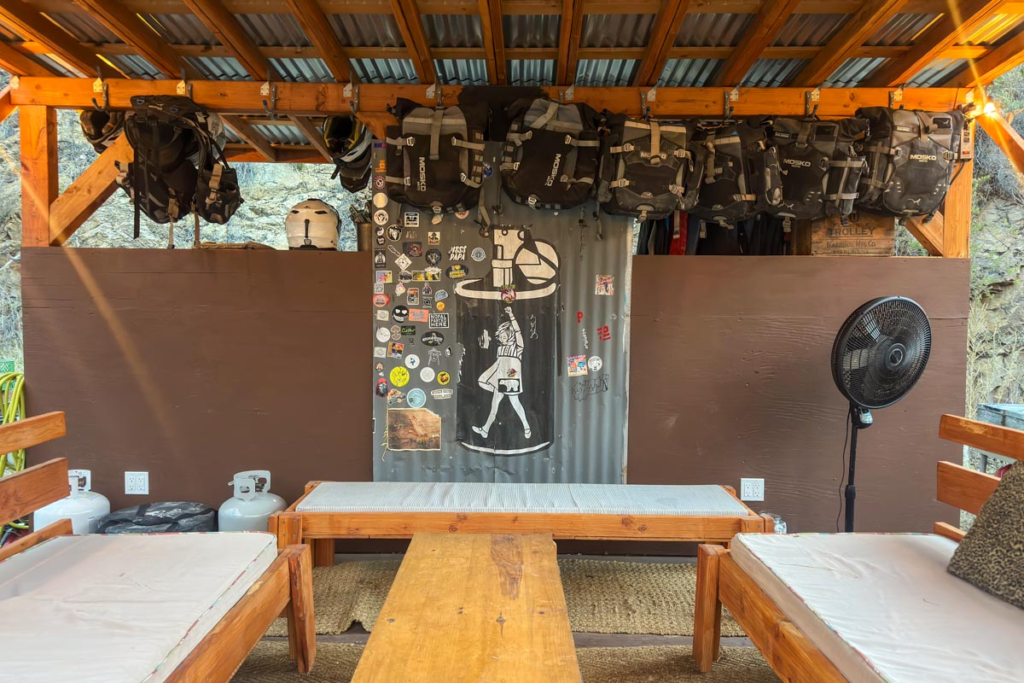
Visitors to the Jonquil now encounter her not as advertisement, but as an artifact of a rescued future, watching the performers with a gaze that bridges the gap between industrial iconography and the raw, melodic energy of the Bisbee nights.